

small-to-medium breed
Norrbottenspets
A small Swedish forest spitz that the Swedish Kennel Club declared extinct in 1948, found again on remote homesteads and readmitted in 1967. Norrbottenspets are keen, clean and affectionate, cost almost nothing to groom, and carry remarkable numbers behind them - the lowest illness claim rate of any breed or mix in a large Swedish insurance study in the 1990s. The offsets are a very loud dog and a recall with honest limits.

Pup Height
15.5-18.5 in
Males 17-18.5 in, females 15.5-17.5 in, with females a little longer in the body. Pure white with well-defined red or yellow patches, and color covering the ears and sides of the head. A short, hard, close-lying double coat shown untrimmed - an erect, stand-off coat is heavily penalized, and a docked or stumpy tail disqualifies. In the AKC's Miscellaneous Class with a Hound Group designation, and recognized by the FCI, whose standard also tolerates black, fawn or agouti patches. Source: AKC breed standard.

Pup Weight
20-30 lb

Pup Lifespan
14-17 years
Your pup, at a glance
What’s Life With This Pup Really Like?

High. Affectionate and companionable with their own family, and happy to settle close once the day's exercise has happened.

Good with respectful children they live with. Playful and sturdy, but with limited patience for grabbing, chasing and rough handling.

Mixed. Usually sociable with other dogs, but the hunting drive is fully intact and cats and small pets are at real risk.

Very high. Holding game with a sharp, high-pitched bark is the breed's working function, and it comes out with any excitement.

High. Ninety minutes with variety suits them, and they are calm indoors once they have had it.

Moderate. The short coat sheds lightly most of the year and heavily for a few weeks in spring and fall.

Lively, curious and inventive, with a strong chase instinct and plenty of interest in games that use the nose.

Minimal.

Moderate. Bright and food-motivated, but bred to think for themselves at a distance, so reliability under distraction is limited.

Good as an alarm. Alert and quick to announce arrivals, with a friendly rather than protective temperament behind it.

Low. A weekly brush and a few weeks of daily raking during the seasonal shed, with no trimming at all.

Moderate. The size and easy coat travel well and cold is no problem, but the voice and energy rule out many apartments.
Lifestyle fit
Could This Be Your Best Breed?
Norrbottenspets suit a rural or semi-rural house with a securely fenced yard and an owner who hunts, hikes or competes - ninety minutes a day with something for the nose in it. They are inexpensive to run at $1,000 to $1,900 a year and often live fourteen to seventeen years. The voice is the dealbreaker, and training does not solve it; close neighbors should choose quieter company.

Living Space
A house with a securely fenced yard suits them best. Norrbottenspets are small and clean enough for a smaller home, but the voice and the energy make apartments and close neighbors a real risk.

Pup Experience
Workable for a committed first-time owner who wants an active, vocal hunting dog. Norrbottenspets are friendlier and more cooperative than many Nordic spitz, but the prey drive, the independence and the barking all need an owner who plans for them.

Daily Pup Time
An hour to ninety minutes of exercise daily with some nose and brain work in it. Grooming is a quick weekly brush plus daily attention during the seasonal shed.

Allergies & Coat
The Norrbottenspets scores 6/10 for shedding and 1/10 for drooling. No dog is truly hypoallergenic. The allergens come from dander and saliva, and a dog that sheds this much will leave plenty of hair behind - especially on your furniture, floors, and clothes.
Quirks & challenges
The Not-So-Easy Stuff

Built to Bark
Holding game with the voice is the working function. Excitement brings it out, and it carries.
Real Prey Drive
A forest hunter at heart. Cats, small pets and wildlife all trigger the chase.
Limited Recall
Bred to range out of sight on their own judgment. A fence and a long line beat hope.
Rare and Hard to Find
Few breeders outside Sweden and Finland, so expect waiting lists and possibly travel.
Needs a Job
Underworked, a Norrbottenspets invents entertainment - usually loud or destructive.
Patience With Kids Varies
Affectionate with family, but not a dog for children who grab, chase or climb on them.
The good, the bad & the hairy
Health, Care & Costs
Understanding the health risks and ongoing costs of a Norrbottenspets helps you plan for a happy, healthy life together.

14-17 years
$45-$70
per groom (bath, de-shed, nails, ears), 2-3 times a year or done at home ($0-$200/year)
$1,000-$1,900/year
all-in (food, routine vet, grooming, insurance, incidentals)

Health Risks
Conditions this breed is prone to.

Worth stating first, with a caveat. A large Swedish insurance study in the 1990s found the Norrbottenspets had the lowest rate of illness claims of any breed or mix it covered. The breed is small in number, though, so health data is far thinner than for common breeds.
The hip joint develops loosely and wears into arthritis over time. It is uncommon in a breed this light, but the AKC lists a hip evaluation as a recommended test, so ask for results on both parents.
An annual eye examination by a veterinary ophthalmologist is the other test the AKC recommends. It catches inherited eye problems early, before breeding decisions are made.
The kneecap slips out of its groove, causing a skipping step and sometimes needing surgery. It is common in small, active dogs in general and is checked by a simple vet examination.
Commercial panels screen the breed for recessive conditions such as degenerative myelopathy and the Finnish Hound type of cerebellar ataxia. How often these variants actually occur in the breed is not well documented, so treat a result as a breeding tool rather than a verdict.
A small dog that bays moose and runs rough forest picks up cuts, torn pads and the occasional kick or bite, and porcupine quills where they share territory. Not inherited, but often the most likely reason for a vet visit.

Insurance & Health Coverage
A healthy, long-lived small breed, so premiums should be modest and the case for cover is mostly about accidents and old age.

Accident cover earns its keep. A dog with a strong prey drive and a limited recall is the dog that meets a car, a moose or a porcupine, and emergency surgery runs into the thousands. If you hunt with a Norrbottenspets, check whether the policy excludes injuries sustained while working, because several do.

Insure young anyway. A skipping knee or an eye finding noted on the record becomes a permanent exclusion, and a breed that lives to fifteen or more will reach the age where lifetime and per-condition caps start to matter.
 Get a Pet Insurance Quote
Care needs
The Daily Routine

Grooming
A short, hard double coat with a dense undercoat that needs only a weekly brush most of the year, and daily work with an undercoat rake for a couple of weeks during the spring and fall shed. Norrbottenspets are clean dogs with little odor, so baths are occasional. Trim the nails, check the ears, and never shave or trim the coat.

Exercise
An hour to ninety minutes daily, ideally with variety - hiking, running in a secure field, scent games and dog sports all suit them. Walks alone rarely satisfy a hunting breed, and any off-leash work belongs in fenced space or on a long line.

Food & Weight
Two measured meals on a quality diet. Norrbottenspets are efficient dogs and a pet that is not hunting needs less than the energy suggests; the AKC notes some put on weight easily, so count training treats and feel for the ribs.
Similar breeds
If This Isn’t Quite the One
Finnish Spitz
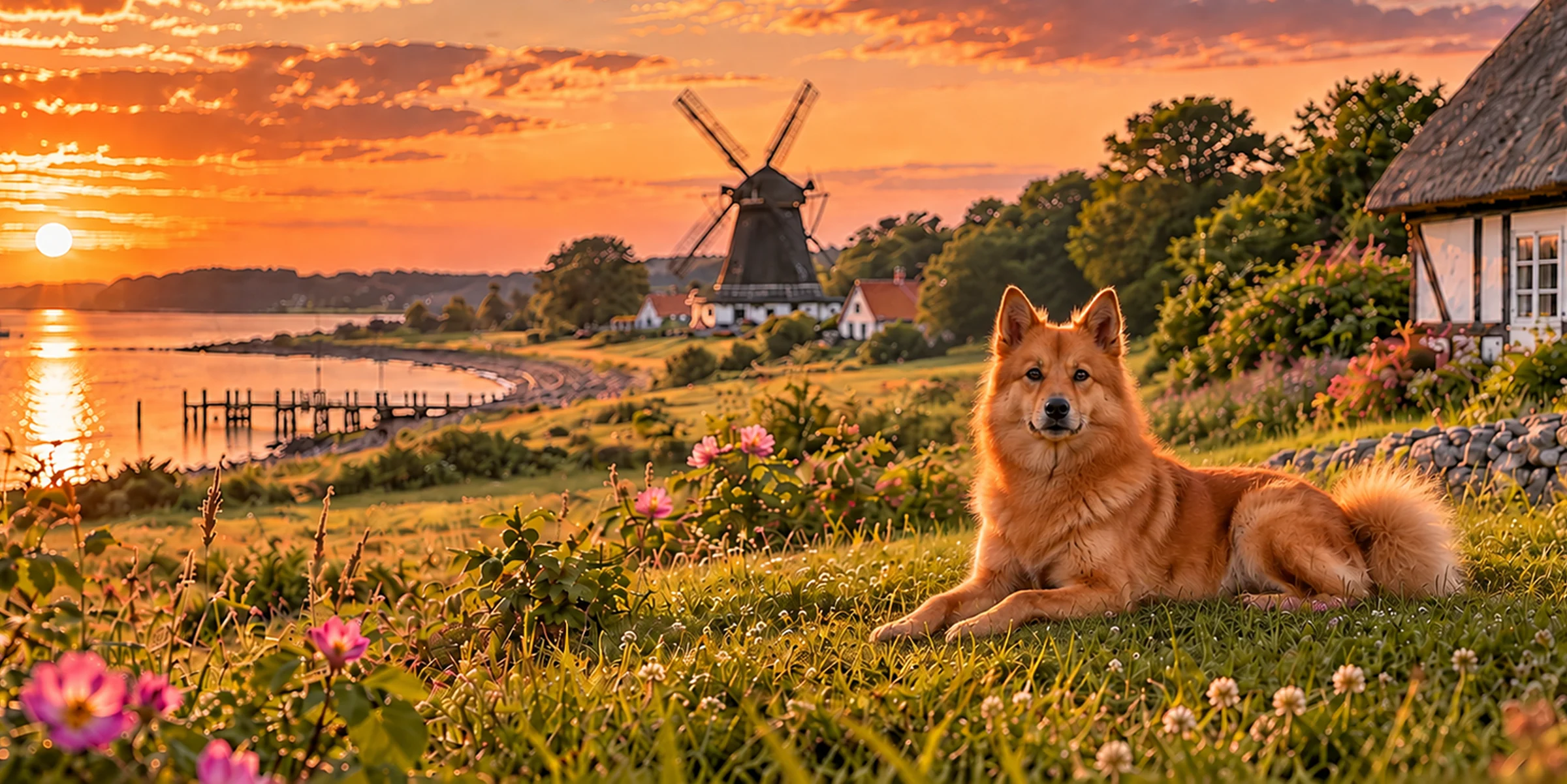
The closest relative in job and temperament - both are Nordic bark-pointers bred to hold forest birds with their voice. The Finnish Spitz is larger, red and fuller-coated, and even more vocal; the Norrbottenspets is smaller, white-based with red or yellow patches, and easier to keep groomed.

Karelian Bear Dog
Another white-and-colored Nordic baying dog from the same forests. The Karelian is far larger and harder, bred to stand up to bear, and often intolerant of other dogs; the Norrbottenspets is a much easier, friendlier companion.
Icelandic Sheepdog
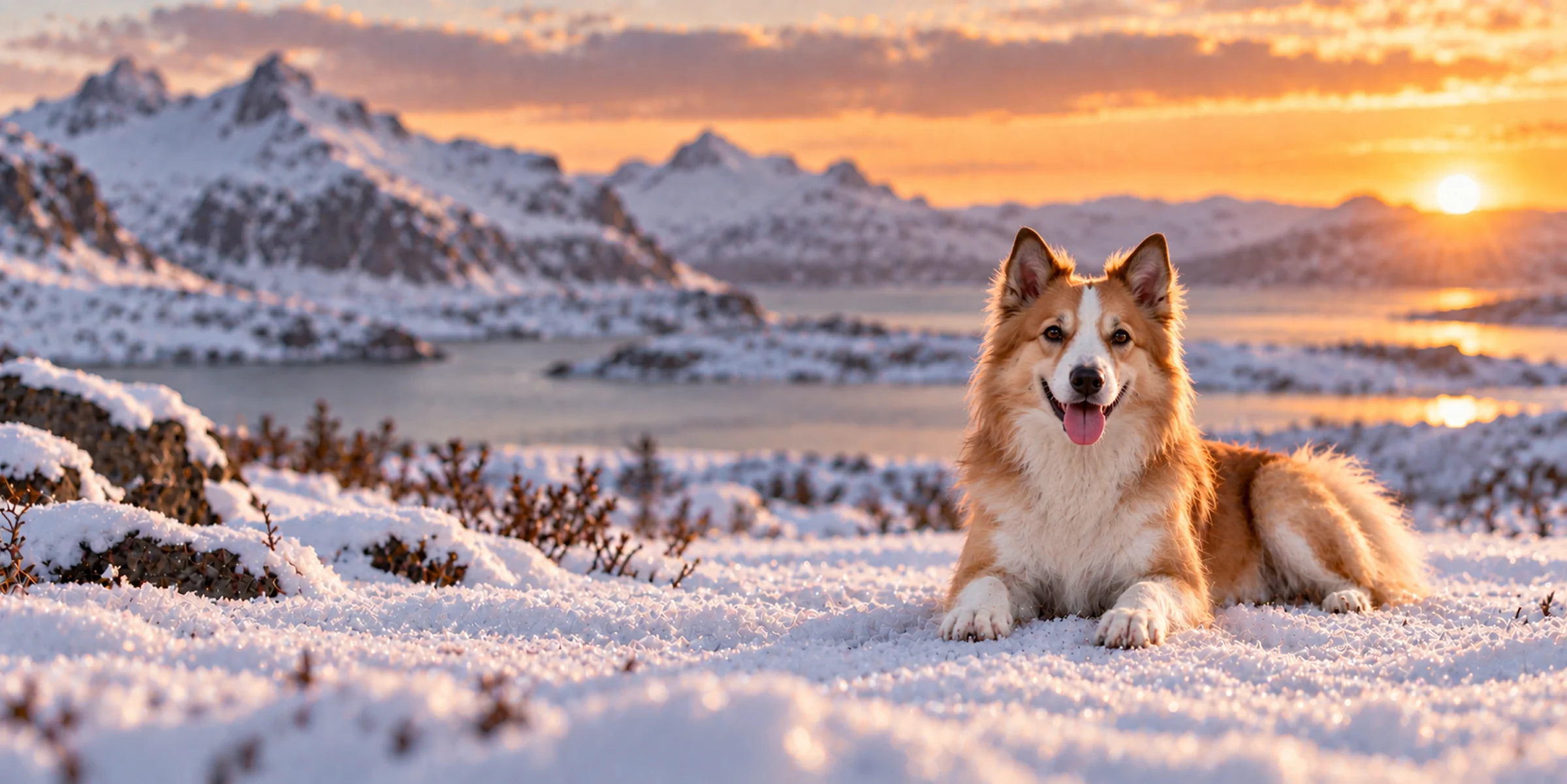
A similar-sized, vocal Nordic spitz with the same cheerful energy. The Icelandic is a herder and markedly more biddable, with little prey drive; the Norrbottenspets is a hunter with a stronger chase instinct and a less reliable recall.