

medium breed
Norwegian Buhund
A Norwegian farm spitz old enough to turn up in Viking graves, kept to herd stock, watch the yard and announce anyone coming up the valley. Buhunds are cheerful, sturdy, quick to learn and bonded to the whole household rather than one person. The announcing never left: the barking can be shaped but not switched off, and a short coat that looks easy drops far more undercoat than seems possible twice a year.

Pup Height
16-18.5 in

Pup Weight
26-40 lb
Males 17-18.5 in and 31-40 lb, females 16-17.5 in and 26-35 lb. Two colors: wheaten, from pale cream to bright yellow-red, often with black-tipped hairs and a black mask, or solid black, with small white markings on the chest and feet allowed in both. A harsh, weather-resistant outer coat over a soft, dense undercoat, shorter on the head and legs, with prick ears and a tail curled tightly over the back. Source: AKC breed standard.

Pup Lifespan
13-15 years
Your pup, at a glance
What’s Life With This Pup Really Like?

High. Affectionate and physically close with the family, though usually busy enough to prefer a game before a cuddle.

Excellent. Cheerful, sturdy and playful, with the herding caveat that running children may get their heels nipped.

Good. Usually sociable with other dogs and fine with cats raised alongside them, though the herding instinct can make them bossy.

Very high. Bred to announce everything on the farm, and training reduces the barking rather than removing it.

High. An hour or more daily with real activity, and they are ready for more.

Moderate to heavy. Steady light shedding year-round and a heavy blowout of the undercoat once or twice a year.

Lively and eager. They love games, fetch and anything that involves working with their person.

Very low.

Very good. Quick and food-motivated, but sensitive and easily bored, so short reward-based sessions work best.

Strong as an alarm. Alert and quick to sound off at anything unusual, then friendly once the visitor is accepted.

Low to moderate. A weekly brush most of the year, daily during the seasonal shed, and no trimming.

Moderate. Handles cold well and copes with most homes, but the barking and energy make apartments and long hours alone difficult.
Lifestyle fit
Could This Be Your Best Breed?
Norwegian Buhunds suit an active family in a house with a fenced yard, and they are one of the easier northern breeds to train - keen, food-motivated and sensitive to a raised voice. Thirteen to fifteen years at $1,200 to $2,000 a year, with most of the grooming done at home. Two households should pass: anyone sharing a wall, and anyone gone from eight until six.

Living Space
A house with a securely fenced yard suits the breed best. Norwegian Buhunds are a manageable size indoors, but they bark readily at every noise, and in an apartment or a townhouse with shared walls the neighbors will hear about everything the dog hears.

Pup Experience
Workable for a first-time owner who is ready to train consistently and put up with the noise. Buhunds are keen and quick to learn, but they are also clever enough to train their owners, and the barking needs managing from the first week.

Daily Pup Time
An hour or more of real exercise every day, with something for the brain in it - training, herding, agility or a long varied walk. Grooming is light most of the year and daily for a few weeks during each seasonal shed.

Allergies & Coat
The Norwegian Buhund scores 8/10 for shedding and 2/10 for drooling. No dog is truly hypoallergenic. The allergens come from dander and saliva, and a dog that sheds this much will leave plenty of hair behind - especially on your furniture, floors, and clothes.
Quirks & challenges
The Not-So-Easy Stuff

Barking
A farm alarm dog by design. Buhunds bark at sounds, visitors and passing wildlife, and a quiet cue has to be taught early.
Needs a Job
Bright and energetic, with a low tolerance for boredom. Without training or activity, they invent their own entertainment.
Heel Nipping
The herding instinct can be aimed at children, bikes and other pets. Redirect it into games and training from puppyhood.
Seasonal Shedding
A short coat that still blows out heavily once or twice a year. Expect tufts of undercoat everywhere for a few weeks.
Poor Alone
A people-focused breed that dislikes long absences. Separation stress often shows as noise the neighbors notice.
Rare in North America
Few breeders and waiting lists are normal. Be wary of anyone with puppies always available.
The good, the bad & the hairy
Health, Care & Costs
Understanding the health risks and ongoing costs of a Norwegian Buhund helps you plan for a happy, healthy life together.

13-15 years
$50-$80
per groom (bath, de-shed, nails, ears), a few times a year or done at home ($0-$300/year)
$1,200-$2,000/year
all-in (food, routine vet, grooming, insurance, incidentals)

Health Risks
Conditions this breed is prone to.

Worth saying first. Norwegian Buhunds are a hardy, moderately built breed with a short list of inherited problems, and responsible breeders screen for the main ones.
The hip joint develops loosely and wears into arthritis over time. It is the most significant orthopedic concern in the breed, and both parents should have hip scores from OFA or an equivalent scheme.
A form of inherited cataract is known in the breed, usually a small opacity that often does not affect sight much but can progress. There is no DNA test for it, so both parents should have a recent eye examination by a veterinary ophthalmologist.
A gradual degeneration of the retina leading to night blindness and eventually vision loss. It is reported in the breed but uncommon; annual eye examinations of breeding dogs are the screen, as no breed-specific DNA test is established.
The kneecap slips out of place, causing an occasional skip in the gait. Mild cases need no treatment, and severe ones may need surgery. A vet checks for it at routine visits.
Buhunds are food-motivated and the coat hides extra pounds. Excess weight worsens hip problems, so measure meals and go by feel through the ribs.

Insurance & Health Coverage
A sturdy, mid-sized breed with a long life, so premiums should be moderate and the case for cover is mostly the ordinary one: accidents, illness and the expensive surprises of a long-lived, active dog.

Insure young. Hip dysplasia and eye conditions tend to show up in young adults, and once either is noted on a record a new policy will exclude it for good.

An active herding dog also runs up accident claims - torn ligaments, cut pads and swallowed objects - so check that the policy covers accidents and illness together rather than illness alone. Eye examinations and routine screening are wellness costs that most policies do not pay for.
 Get a Pet Insurance Quote
Care needs
The Daily Routine

Grooming
A short-to-medium double coat that needs a brush once or twice a week for most of the year. When the undercoat blows, usually in spring and sometimes again in fall, brush daily with an undercoat rake for a few weeks. The coat sheds dirt well and needs only occasional baths. No trimming, and never shave the coat. Trim nails regularly and check the ears weekly.

Exercise
An hour or more a day of activity with mental work in it - brisk walks, hiking, fetch, herding, agility or trick training. Norwegian Buhunds have stamina for long days outdoors, and too little to do shows up quickly as barking and restlessness.

Food & Weight
Two measured meals a day of a quality diet suited to an active medium-sized dog. Buhunds love food and make good use of it in training, so count treats against the daily total and keep them lean to protect the hips.
Similar breeds
If This Isn’t Quite the One

Icelandic Sheepdog
The closest relative - the Icelandic almost certainly descends from Buhund-type dogs taken to Iceland by Norse settlers. Similar size, voice and friendliness; the Icelandic has a heavier coat and is a little calmer, while the Buhund is more energetic and more of a watchdog.
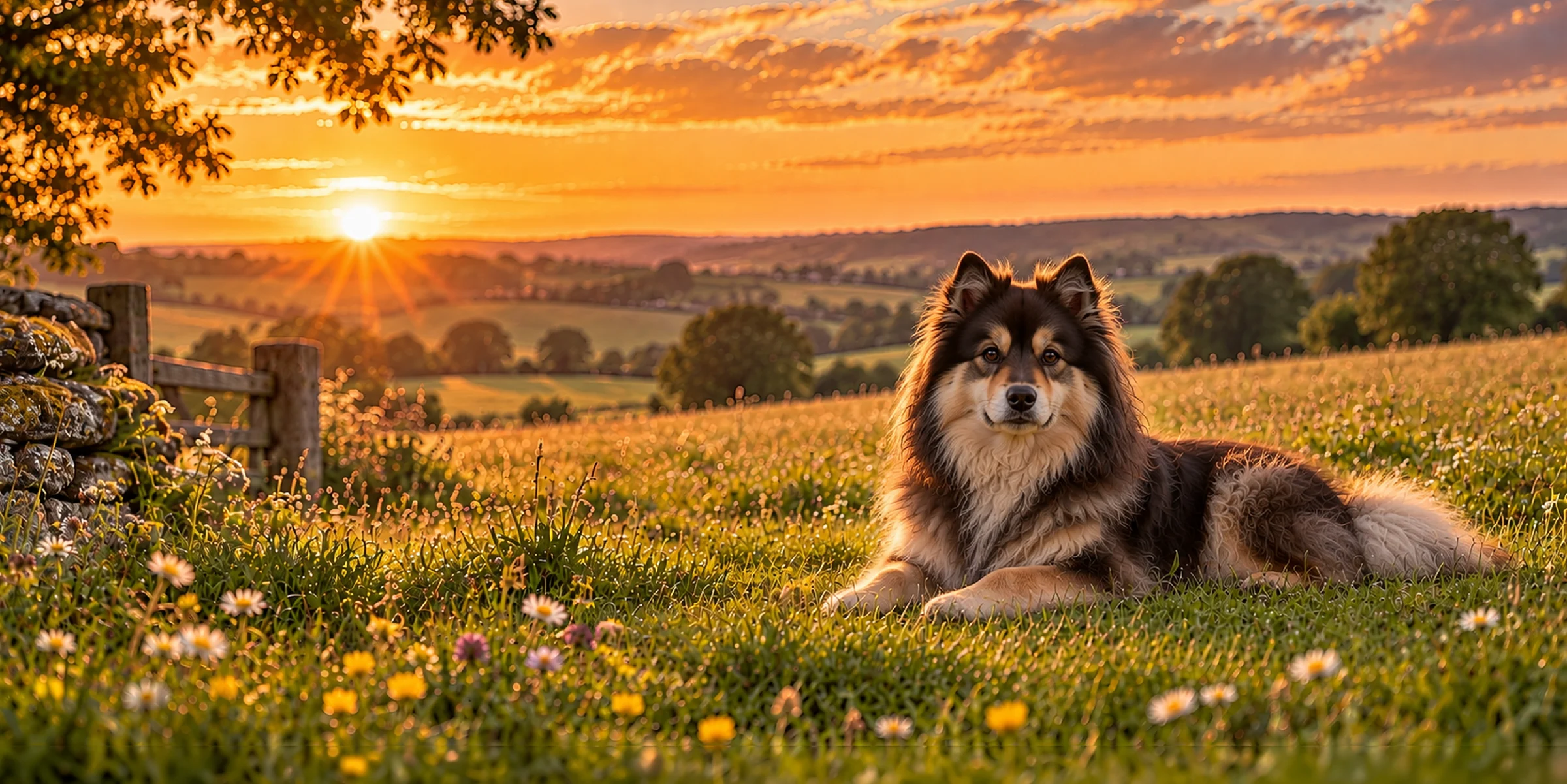
Finnish Lapphund
Another Nordic herding spitz with the same affectionate nature and strong bark. The Lapphund is larger, calmer indoors and far more heavily coated; the Buhund is leaner, busier and much easier to groom.

Lapponian Herder
A lean Nordic herder with a comparable short double coat and drive. The Lapponian Herder is a harder-driving reindeer worker that needs a genuine job; the Buhund is the more adaptable family companion.