

small breed
Petit Brabancon
The smooth-coated Brussels Griffon under the name the FCI uses for them - same Belgian dog, same litters, no beard. Eight to thirteen pounds of opinionated, human-faced companion who wants to be on a lap or at a heel all day. The short coat is the one genuinely easy thing about them: the flat face limits breathing and heat tolerance, the eyes sit forward enough to ulcerate, and the teeth need brushing every day.

Pup Height
7-10 in

Pup Weight
8-13 lb
Weight 3.5-6 kg (about 8-13 lb) for both sexes; the standard sets no height, so the height shown is typical rather than official. A short, harsh, glossy coat about 2 cm long, with no beard. Red, black and tan, black, or red mixed with black, and a black mask is desirable in every color. The FCI registers the Petit Brabancon as a separate breed from the rough-coated Griffon Bruxellois (red) and Griffon Belge (other colors), all three under one shared type. The AKC, UKC and The Kennel Club instead register this dog as the smooth coat of the Brussels Griffon. Source: FCI breed standard.

Pup Lifespan
12-15 years
Your pup, at a glance
What’s Life With This Pup Really Like?

Top of the scale. Petit Brabancons attach hard to one or two people and would spend the whole day pressed against them.

Better with older, careful children. The breed is bold rather than tolerant, objects to rough handling, and at ten pounds is genuinely easy to injure.

Good with dogs they are raised alongside and generally fine with cats. Some ratting drive remains, so rodents and birds are a different question.

Fairly high. The stable-ratter history left a voice and a strong opinion about who is at the door, and it is the trait most worth working on early.

Moderate for a toy. Twenty to thirty minutes covers them and much of it can happen indoors, which matters for a dog who should not exercise in heat.

Low to moderate. The short coat drops a light, steady amount year round - more noticeable than the rough Griffon, still easy to live with.

Comic and inventive, with far more terrier bounce than most toys. They play hard for their size and keep it up well into old age.

Low. A little drip after drinking and very little otherwise.

Reasonable. Bright and food-motivated, sensitive to correction, and opinionated enough to want a reason.

Good for the size. They notice everything and announce all of it, though at ten pounds the noise is the entire contribution.

Low for the coat - a weekly rubdown. The daily eye, face and teeth routine is where the actual work is.

High. Apartment, house, city or country - they settle quickly. What they do not adapt to is heat, or being left alone all day.
Lifestyle fit
Could This Be Your Best Breed?
A Petit Brabancon works best in an air-conditioned apartment with someone home most of the day - $1,200 to $2,200 a year, twelve to fifteen years, and a vet who is comfortable with flat-faced anesthesia. Small children are the wrong company for a ten-pound dog with prominent eyes. The people who regret one usually wanted a toy breed with no medical routine attached.

Living Space
An apartment suits them completely - Petit Brabancons are tiny, need no yard and take very little exercise. Plan for the barking, which shared walls make everyone's business, and for air conditioning, because a flat-faced dog cools down badly.

Pup Experience
Fine for a first-time owner who has read the breathing and eye sections and taken them seriously. The temperament is bold, funny and easy to live with; what catches people out is that a ten-pound toy dog carries real medical considerations and a genuine dislike of being left alone.

Daily Pup Time
Twenty to thirty minutes of walking and play, taken in the cool part of the day, plus a daily eye and face check, daily toothbrushing and a quick weekly rubdown of the coat.

Allergies & Coat
The Petit Brabancon scores 3/10 for shedding and 2/10 for drooling. No dog is truly hypoallergenic. The allergens come from dander and saliva, and a coat that sheds this little leaves far less of them on your furniture, floors, and clothes.
Quirks & challenges
The Not-So-Easy Stuff

A Flat Face Is a Real Cost
A shortened airway means noisy breathing, poor heat tolerance and limited stamina. Labored breathing at rest is an emergency, not a quirk.
Those Eyes Get Injured
Large, prominent eyes with little brow to protect them, and no beard or furnishings around the face either. Corneal ulcers are common and need same-day treatment.
Hates Being Left Alone
Bred purely for company and closely attached to one or two people. Separation anxiety is the problem owners report most often.
Two Names, One Dog
In the US a Petit Brabancon is registered as a smooth Brussels Griffon. Search both names when you look for a breeder or a rescue.
Bold, Not Placid
There is real terrier in them. They are vocal, opinionated and quite prepared to argue with dogs several times their size.
Most Litters Need Surgery
Big heads and narrow hips make cesareans routine and litters small, which is part of why well-bred puppies are hard to find.
The good, the bad & the hairy
Health, Care & Costs
Understanding the health risks and ongoing costs of a Petit Brabancon helps you plan for a happy, healthy life together.

12-15 years
$0-$50
per visit - the smooth coat needs no professional grooming, so a nail trim and the odd bath are the whole bill ($0-$250/year)
$1,200-$2,200/year
all-in (food, routine vet, dental, insurance, incidentals)

Health Risks
Conditions this breed is prone to.

A shortened skull packs the same soft tissue into less space, so narrow nostrils and an overlong soft palate make breathing hard work. It ranges from snoring to real distress, and surgery on the nostrils and palate is common and effective. Noisy breathing at rest, or gums turning blue, is an emergency.
Large prominent eyes in shallow sockets with almost no brow to shield them. Scratches from a paw, a carpet or a branch are common, and an untreated ulcer can cost the eye within days. Squinting, pawing or cloudiness means a same-day vet visit.
Fluid-filled cavities form in the spinal cord, usually because the skull is too small for the brain it holds (Chiari-like malformation). Signs are neck pain, air-scratching at the shoulder and sensitivity around the head. An MRI diagnoses it, and it is managed with medication rather than cured.
The kneecap slips out of its groove, causing a skipping step or a hind leg held up for a stride or two. Very common in toy breeds. Mild cases are managed; severe ones need surgery.
A short jaw holding a full set of teeth crowds them badly, so tartar builds fast and neglect means extractions under anesthetic by middle age. Daily brushing genuinely changes the outcome, and insurance rarely covers it.
Puppies with large heads and dams with narrow pelvises make natural delivery risky, so most litters arrive by cesarean. It matters to an owner mainly as a reason to spay unless there is a serious breeding plan with a vet on call.

Insurance & Health Coverage
A long-lived breed with predictable costs, and the timing of the policy matters more than the premium.

Airway surgery is the significant one. Widening the nostrils and shortening an overlong soft palate runs into the low thousands, transforms life for a dog who needs it, and is most often done between one and three years old. An owner who waits until the snoring becomes a problem finds the airway already noted in the file and excluded.

Eyes are the recurring line - corneal ulcers are common, need prompt treatment, and each episode is a bill. Syringomyelia is the expensive outlier: diagnosis needs an MRI and management is lifelong medication. Dental is the honest exception: predictable, excluded by most policies, and prevented by brushing rather than paid for.
 Get a Pet Insurance Quote
Care needs
The Daily Routine

Grooming
The easy part. The short coat needs a weekly rub with a rubber brush or a damp cloth, a bath every month or two, and nails trimmed regularly - no stripping and no clipping. The real routine is daily and at the front end: check the eyes for redness or squinting, wipe the facial folds and under the chin, and brush the teeth.

Exercise
Twenty to thirty minutes a day, split between short walks and indoor play, and timed for the cool part of the day in summer. Petit Brabancons are game rather than athletic, and a session that leaves them gasping was too much regardless of its length.

Food & Weight
Measure carefully - on a ten-pound dog a few extra treats a day is a large share of the intake, and every extra ounce presses on an airway already working hard. Keeping them lean is the most effective non-surgical help for a flat-faced dog who struggles to breathe.
Similar breeds
If This Isn’t Quite the One
Brussels Griffon
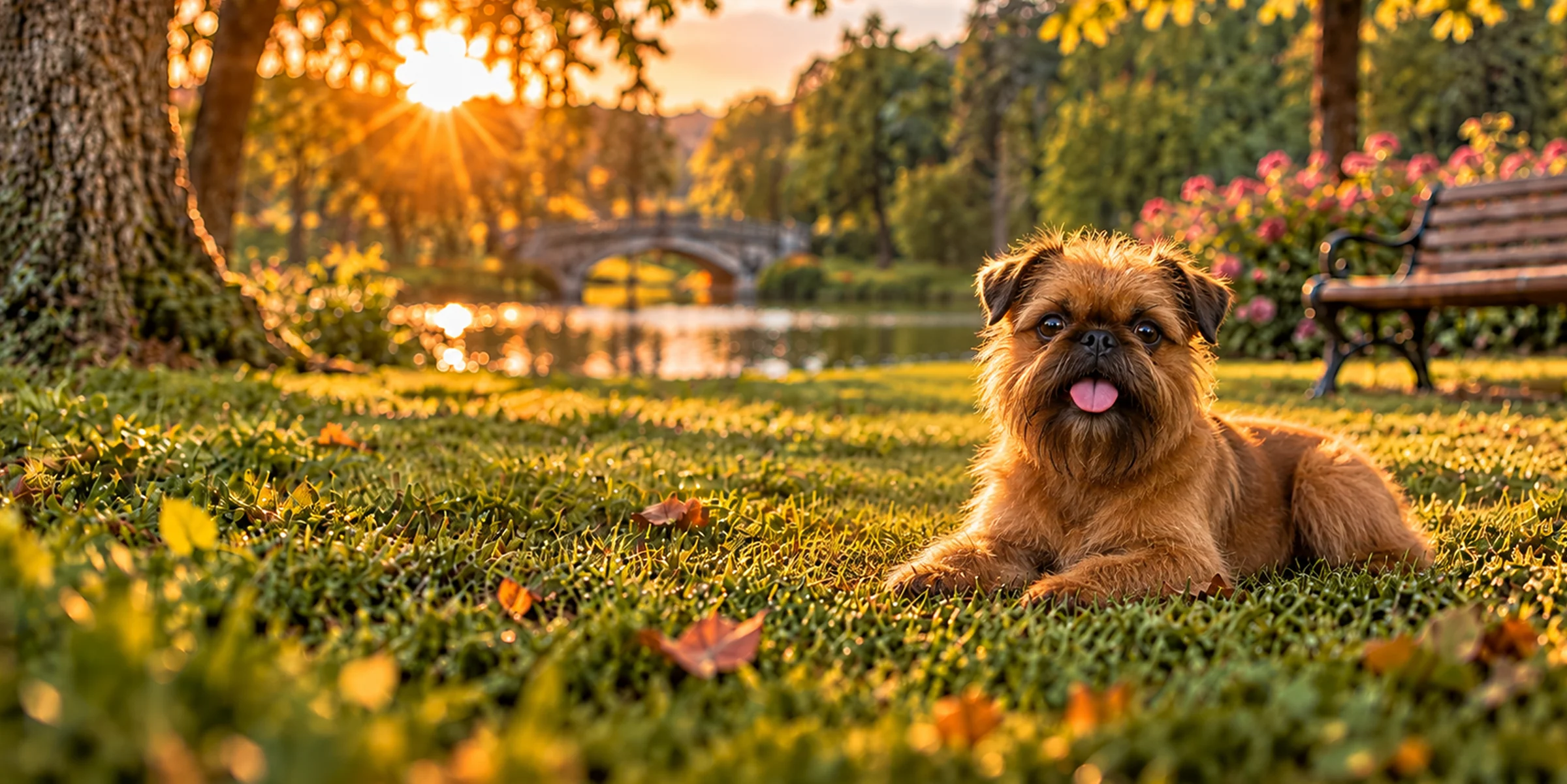
The same dog in the rough coat - in the US the Petit Brabancon simply is a smooth Brussels Griffon, and both coats can turn up in one litter. Temperament and health are shared; the rough needs hand-stripping every few months, while the smooth needs a weekly rubdown and sheds a little more.

Affenpinscher
The Griffon family's close relative, with the same size and comic self-importance. The Affenpinscher has a longer muzzle and a wiry coat, which means easier breathing and better heat tolerance but more grooming than the Petit Brabancon.

Japanese Chin
Another small flat-faced companion with the same eye exposure and heat sensitivity. The Chin is quieter, more catlike and more independent; the Petit Brabancon is busier, louder and more attached to one person.

Pekingese
A flat-faced toy with a similarly strong opinion of themselves. The Pekingese is heavier, calmer and far more aloof, with a long coat that needs daily work; the Petit Brabancon is livelier and needs almost no grooming.