

small breed
Russian Tsvetnaya Bolonka
A small colored lapdog made for postwar apartment living in Leningrad, and it shows - seven to nine pounds, quiet enough for shared walls, content with a short walk and a person to sit beside. Bolonki are cheerful, quick to learn and friendly with children, strangers and other animals alike. The coat is the work: brushed through to the skin every day, or it mats.

Pup Height
10.25 in or under

Pup Weight
7-9 lb
One size for both sexes: up to 10.25 in at the withers, with over 11 in a disqualification, and an ideal weight of 7-9 lb. Any color is allowed except solid white, spotted, parti-color or merle, with small white marks on the toes and chest permitted. The coat is long, dense and soft over a real undercoat, in large curls or heavy waves, with a full beard and mustache; only the feet may be neatened. Fully recognized in the AKC Toy Group from January 1, 2026; not recognized by the FCI. Source: AKC breed standard.

Pup Lifespan
14-20 years
Your pup, at a glance
What’s Life With This Pup Really Like?

Very high. Bred to be a lapdog, and most Bolonki would happily spend the evening pressed against their person.

Good. Friendly and patient with respectful children, but at seven to nine pounds a Bolonka can be hurt by rough handling or a fall from arms.

Excellent. Sociable with other dogs and usually easy with cats, with little prey drive to manage.

Low. They alert to visitors and unusual noises, then settle quickly - unless left alone too long.

Moderate. Livelier than many lapdogs and fond of play, but satisfied with short walks and indoor games.

Low. The curly coat holds loose hair until it is brushed out, so little ends up on the floor - but it is not allergy-proof.

Cheerful and playful. Bolonki enjoy toys, tricks and games with their people well into adulthood.

Minimal. A dry mouth, though the beard picks up water and food.

High. Eager to please and food-motivated, and quick to learn - housetraining is the slow part.

Low. They will announce someone at the door and then greet them as a friend.

High. Daily brushing to the skin and regular baths and blow-drying, or a shorter pet trim to lighten the load.

High. Apartment or house, city or suburb, they settle easily. Long hours alone are the one thing they do not adapt to.
Lifestyle fit
Could This Be Your Best Breed?
A Russian Tsvetnaya Bolonka suits an apartment, a first-time owner, and a household that is home most of the day. Costs run $1,200 to $2,200 a year, grooming included, and the breed can reach twenty. Left alone from morning to evening a Bolonka turns anxious and vocal, so a household out at work all day should pass on this one.

Living Space
Made for an apartment, quite literally - the breed was developed for city apartments in Leningrad. A Bolonka needs no yard, settles well in a small space and is quiet enough for shared walls. The one thing the space needs is a person in it for most of the day.

Pup Experience
A good first dog. Bolonki are eager, forgiving and easy to live with; the skills that matter are keeping up with the coat and teaching a tiny dog to be comfortable alone.

Daily Pup Time
Thirty to forty-five minutes of walks and play, daily brushing through to the skin, teeth brushed most days, and a bath and blow-dry roughly weekly if the coat is kept long.

Allergies & Coat
The Russian Tsvetnaya Bolonka scores 2/10 for shedding and 1/10 for drooling. No dog is truly hypoallergenic. The allergens come from dander and saliva, and a coat like this one holds on to them rather than spreading them around your home - which is what a groomer is clearing out every six to eight weeks.
Quirks & challenges
The Not-So-Easy Stuff

Wants Company
Bred purely as a companion. Long days alone tend to produce separation anxiety and barking.
Daily Coat Work
A long, curly coat over a thick undercoat mats quickly. Skipped brushing turns into a shave-down.
Low-Shedding, Not Allergy-Proof
The coat holds hair rather than dropping it, but no dog is truly hypoallergenic. Allergy sufferers should spend time with the breed first.
Hard to Find
Rare in the United States, with few breeders and waiting lists. Be wary of anyone with puppies always available.
Fragile Size
Seven to nine pounds. Jumps off furniture and rough play from young children can cause real injuries.
Slow to Housetrain
The usual toy-breed problem of a small bladder. Consistency and frequent trips outside win.
The good, the bad & the hairy
Health, Care & Costs
Understanding the health risks and ongoing costs of a Russian Tsvetnaya Bolonka helps you plan for a happy, healthy life together.

14-20 years
$60-$90
per groom (bath, blow-dry, brush-out, feet, nails), every 4-8 weeks, or less if you bathe and brush at home ($0-$900/year)
$1,200-$2,200/year
all-in (food, routine vet, grooming, dental, insurance, incidentals)

Health Risks
Conditions this breed is prone to.

The kneecap slips out of place, causing a skipping step or a hind leg held up for a few strides. Common across toy breeds. Mild cases are managed with weight control; severe ones need surgery. The breed club recommends a patella evaluation on breeding dogs.
An inherited disease that slowly destroys the retina, starting with night vision and ending in blindness. There is no treatment. A DNA test for the prcd form exists and is on the breed club's recommended list, so ask for results on both parents.
Cataracts and other inherited eye problems turn up in small companion breeds, and a long coat around the face can irritate the eyes. An annual exam by a veterinary ophthalmologist is recommended for breeding stock.
The breed club recommends a cardiac exam, as heart murmurs and valve disease are a known concern in small breeds. A murmur found early can be monitored and treated before it causes symptoms.
A full set of teeth in a very small mouth crowds together and gathers tartar fast. Without daily brushing, extractions under anesthesia in middle age are likely, and most policies do not cover them.
The population is small and young, so there are few published health surveys. Beyond the recommended tests, ask breeders what problems they have seen in their own lines.

Insurance & Health Coverage
A small, generally sound breed whose likely costs are the toy-breed set: knee surgery for patellar luxation, eye problems, and a heart murmur that may need medication later in life. None is catastrophic, but surgery on a knee or an eye still runs into the thousands, and cover arranged while the dog is young keeps those conditions from becoming exclusions.

Dental work is the predictable expense and most policies exclude it. Daily brushing is the real answer, with a separate budget for cleanings.

There is very little published health data on a breed this rare, so ask the breeder for the club's recommended results - patella, cardiac, eye exam and the PRA DNA test - on both parents before you commit.
 Get a Pet Insurance Quote
Care needs
The Daily Routine

Grooming
Brush daily with a pin brush and follow with a comb to reach the undercoat, where mats start. A weekly bath with a thorough blow-dry keeps the curls from felting. The standard allows only the feet to be neatened, but many pet owners choose a shorter teddy-bear trim to cut the work. Wipe the beard after meals, check the ears weekly and brush teeth most days.

Exercise
Thirty to forty-five minutes a day of walks and play keeps a Bolonka content. They have more go than the calmer lapdog breeds and enjoy games, tricks and beginner agility, but they are just as happy to finish the day on the sofa.

Food & Weight
Measure every meal. On an eight-pound dog a few extra treats add up quickly, and extra weight puts pressure on knees already prone to slipping. Puppies need small, frequent meals, since toy breeds have little reserve against low blood sugar.
Similar breeds
If This Isn’t Quite the One

Havanese
The closest match in feel - a small, cheerful companion in any color with a soft coat that needs daily work. The Havanese is more widely available and a little larger; the Bolonka has a curlier, denser coat and is much harder to find.

Bolognese
One of the breeds behind the Bolonka, with the same low-shedding, brushed-not-trimmed coat. The Bolognese is white only and calmer and more reserved; the Bolonka comes in every color but white and is more outgoing and playful.
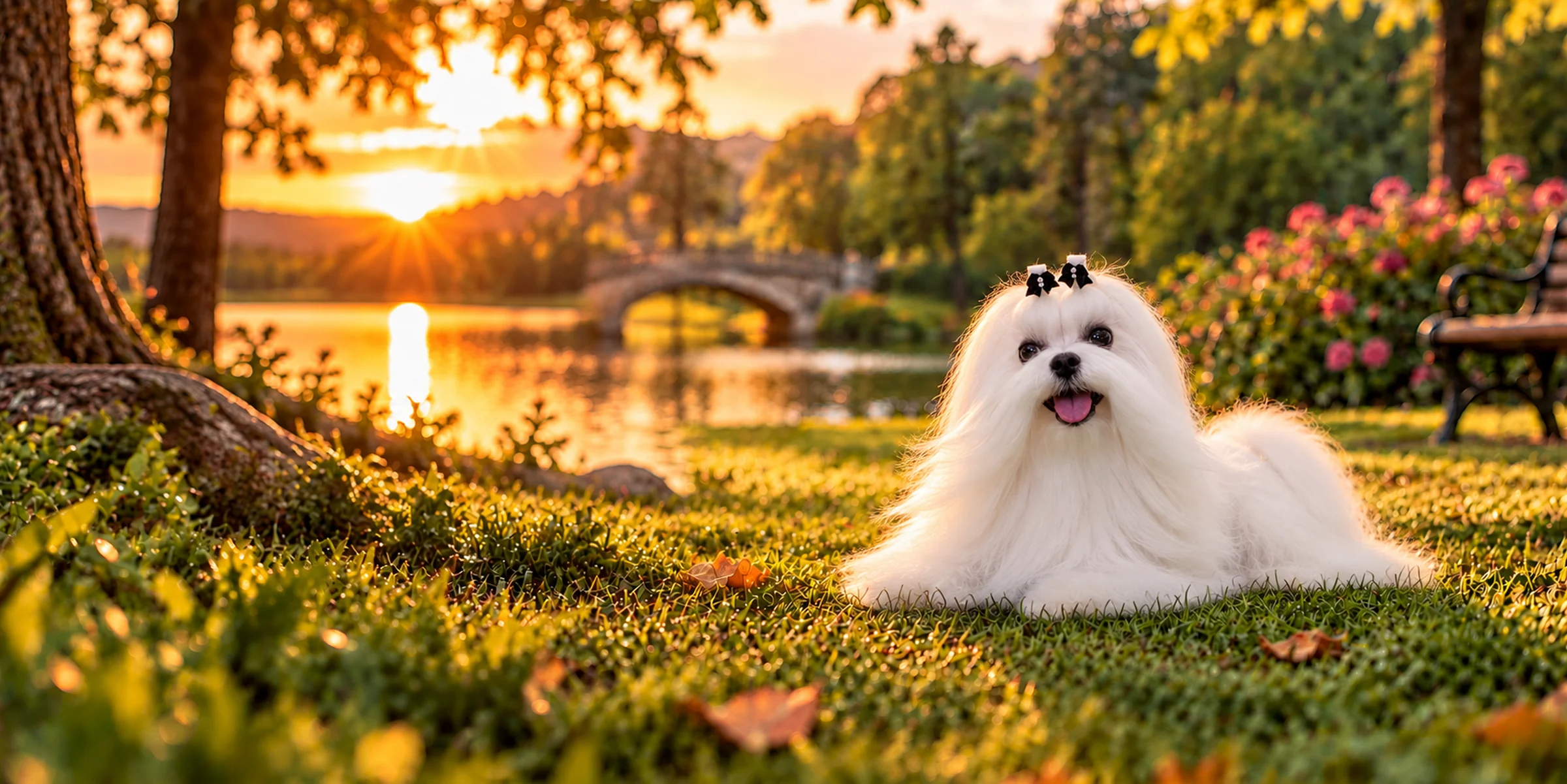
Maltese
Another ancestor and a similar size, with a similar need for company. The Maltese is white with a flat, silky single coat; the Bolonka is sturdier, curlier and generally easier to train.

Russian Toy
The other Russian toy here, and the finer-boned of the two. Russian Toys top out around 6.5 lb with a near wash-and-go coat in either variety, where the Bolonka is sturdier and needs daily work on the curls.