

small breed
Sealyham Terrier
A low-slung white Welsh terrier with a big head, a beard and a far calmer disposition than the group average, bred at the Sealyham estate in Pembrokeshire to face badger and otter underground. Sealyhams are sturdy, comic and happy to lie about between walks, which is not a sentence that fits most terriers. The Kennel Club lists the breed as a Vulnerable Native Breed, so a puppy usually means a waiting list.

Pup Height
10.5 in

Pup Weight
18-24 lb
About 10.5 in at the withers. The AKC standard puts males at 23-24 lb with females slightly less; The Kennel Club gives about 20 lb for dogs and 18 lb for bitches. All white, or white with lemon, tan, blue or badger markings on the head and ears - heavy body markings and excessive ticking are discouraged. A weather-resistant double coat, hard and wiry on top over a soft, dense undercoat. Recognized by the AKC in the Terrier Group since 1911 and by The Kennel Club. Source: AKC breed standard.

Pup Lifespan
12-14 years
Your pup, at a glance
What’s Life With This Pup Really Like?

High. Sealyhams are devoted to their own people and happy to settle beside them once the walk is done.

Good. Sturdy and good-humored with considerate children, though they will not put up with rough handling indefinitely.

Mixed. Often fine with dogs they grew up with, but some are scrappy with same-sex dogs, and small pets trigger the prey drive.

Moderate. They bark at visitors and wildlife with a surprisingly deep voice, then usually settle.

Moderate. Lively outdoors and calmer indoors than most terriers.

Low. The wiry coat drops little hair, especially when kept stripped.

Clownish and game. Sealyhams enjoy tug, digging and anything involving a nose.

Minimal, though the beard carries water from the bowl to the floor.

Moderate. Bright and quick to learn, but independent - short, rewarding sessions get far more than repetition.

Good. Alert, reserved with strangers and loud enough to sound bigger than they are.

High. Combing several times a week, beard cleaning, and stripping or clipping every six to eight weeks.

High. Small and calm enough for apartment life, provided the walks, the grooming and some company happen.
Lifestyle fit
Could This Be Your Best Breed?
A Sealyham Terrier works in an apartment or a house, with 45 minutes of walking a day, a strip or clip every six to eight weeks, and an owner who wants a terrier rather than a pushover. Grooming alone runs $450 to $850 a year, inside $1,500 to $2,600 all-in. If that standing cost is not workable for the next twelve to fourteen years, this is not the breed.

Living Space
Apartment or house. Sealyhams are small, sturdy and fairly calm indoors, so a city home works well once the daily walk is done. A yard is welcome but needs a fence that goes down as well as up - this is a digging terrier.

Pup Experience
Workable for a first-time owner who is patient and consistent, and who wants a terrier rather than a pushover. The Sealyham is steadier than most of the group, but still independent, stubborn about things they have decided on, and quick to argue with a dog who argues back.

Daily Pup Time
About 45 minutes to an hour of walking and play, plus a brush and comb a few times a week and professional grooming every six to eight weeks.

Allergies & Coat
The Sealyham Terrier scores 2/10 for shedding and 1/10 for drooling. No dog is truly hypoallergenic. The allergens come from dander and saliva, and a coat like this one holds on to them rather than spreading them around your home - which is what a groomer is clearing out every six to eight weeks.
Quirks & challenges
The Not-So-Easy Stuff

Coat Upkeep
A wiry white coat that needs stripping or clipping every six to eight weeks, plus combing in between so the furnishings do not mat.
White Shows Everything
Mud, grass stains and a yellowing beard after meals. Expect a lot of wiping.
Stubborn Streak
Cooperative on their own terms. Repetition bores them and pressure makes them dig in.
Scrappy With Some Dogs
Usually fine with familiar dogs, but some will not back down from a same-sex dog who starts something.
Digging and Prey Drive
Bred to go to ground after quarry. Holes in the lawn and a keen interest in anything small that runs.
Hard to Find
A vulnerable breed with few litters a year. Expect to wait and to travel to a breeder.
The good, the bad & the hairy
Health, Care & Costs
Understanding the health risks and ongoing costs of a Sealyham Terrier helps you plan for a happy, healthy life together.

12-14 years
$65-$100
per groom (strip or clip, bath, beard, nails, ears), every 6-8 weeks ($450-$850/year)
$1,500-$2,600/year
all-in (food, routine vet, grooming, insurance, incidentals)

Health Risks
Conditions this breed is prone to.

The lens of the eye slips out of place, which is painful and can cause glaucoma and blindness unless treated quickly. It has a long history in the breed, and a DNA test (ADAMTS17) lets breeders avoid producing affected puppies - ask for both parents' results.
Raised pressure inside the eye, most often following a luxated lens. It is an emergency: a red, cloudy or painful eye needs a vet the same day to save sight.
An inherited malformation of the retina, present from birth, that ranges from minor folds to detachment and blindness. There is no DNA test; puppies and breeding dogs should have eye examinations by a veterinary ophthalmologist.
Deafness in one or both ears occurs in the breed, as in several predominantly white breeds. A BAER hearing test on puppies identifies it before they go home.
Itchy skin, paw licking and ear infections from environmental or food allergies. Usually manageable, but often a lifelong cost in medication and special diets.
A long back on short legs puts extra load on the spine, and disc problems can occur. Keeping them lean and limiting jumping off furniture does most of the prevention.

Insurance & Health Coverage
Insure early. A small terrier with a long life will run up plenty of routine claims, and anything noted before a policy starts - an itchy spell, a cloudy eye, a sore back - can become a permanent exclusion.

The eyes are the reason to read the policy carefully. Glaucoma and lens problems are emergencies with specialist bills, and a policy with low per-condition limits will not go far. PLL itself is inherited and DNA testable, so the parents' results matter more than any policy.

Skin allergies are the slow cost. Check how a policy handles chronic conditions across renewal years, and remember that grooming every six to eight weeks for life sits outside any cover.
 Get a Pet Insurance Quote
Care needs
The Daily Routine

Grooming
A hard, wiry outer coat over a soft undercoat, with long furnishings on the face, legs and underside. Comb and brush two or three times a week so the furnishings do not mat, and wipe the beard after meals. Show dogs are hand-stripped to keep the texture; many pet Sealyhams are clipped instead, which is easier but softens the coat. Either way, plan on a groomer every six to eight weeks.

Exercise
About 45 minutes to an hour a day of brisk walks and play. Sealyhams enjoy a longer country ramble and scent games, then settle well indoors. Keep off-leash running to fenced areas, and go easy on stairs and repeated jumping for the sake of the long back.

Food & Weight
Sturdy, food-motivated and easy to overfeed. Measure meals and count treats - extra weight on a long, low back is exactly what the spine does not need. Feel for the ribs under the coat rather than trusting the outline.
Similar breeds
If This Isn’t Quite the One
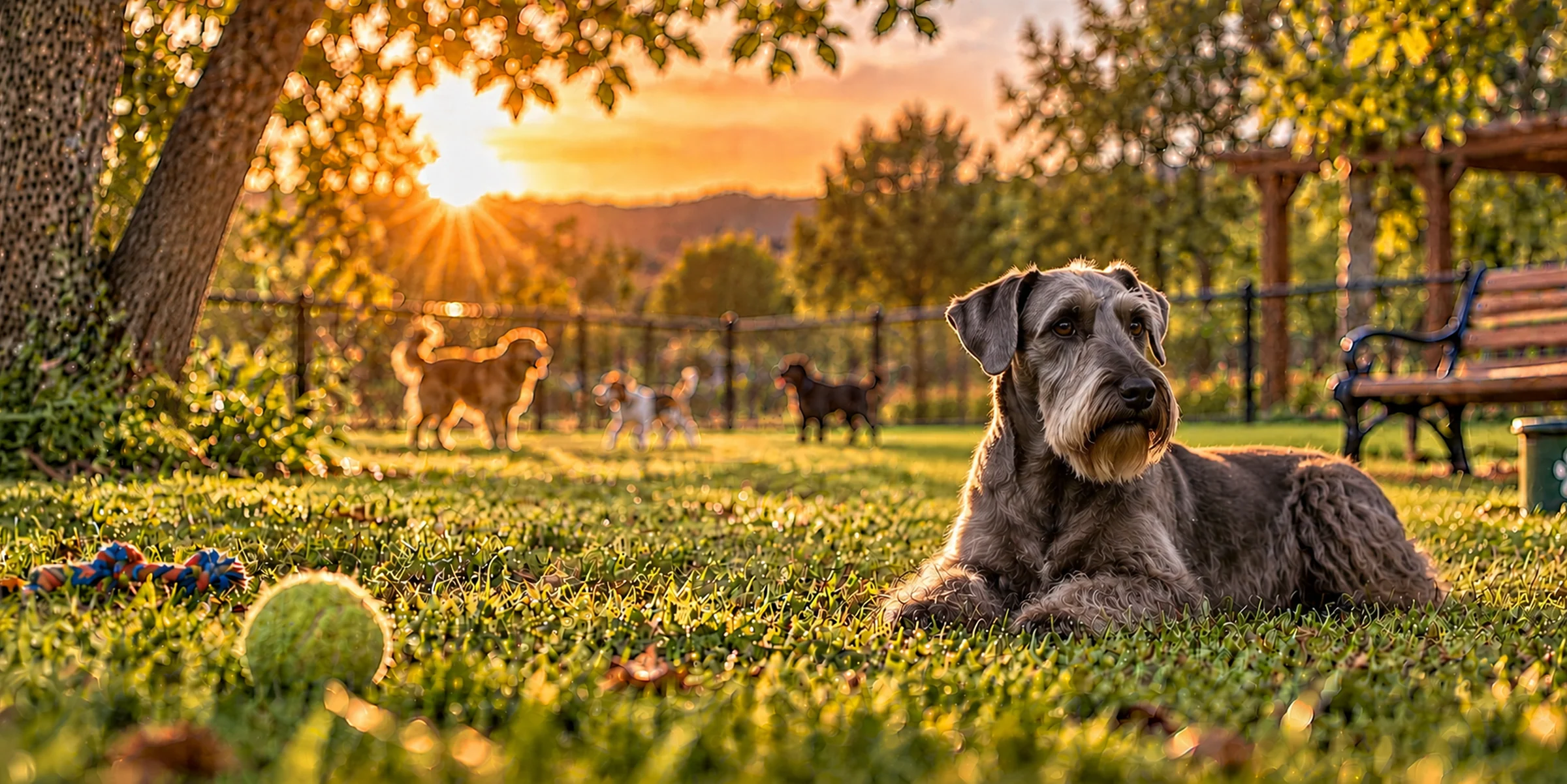
Cesky Terrier
A Czech breed created from Sealyham and Scottish Terrier crosses, with a similar long, low build and a calm temperament for a terrier. The Cesky is gray, clipped and more sociable with other dogs; the Sealyham is white, wiry-coated and more independent.

Lucas Terrier
Developed in England from Sealyham and Norfolk Terrier crosses to be a softer-tempered working terrier. The Lucas is smaller, with a natural tan or grizzle coat that needs less upkeep; the Sealyham carries more coat, more head and more stubbornness.

Dandie Dinmont Terrier
Another rare, long-bodied, short-legged British terrier that is calmer indoors than most of the group. The Dandie has a distinctive topknot and a curved topline; the Sealyham is level-backed, white and a little more outgoing.