

medium breed
Sloughi
The sighthound of the Maghreb, coursed across Morocco, Tunisia, Algeria and Libya and kept inside the tent rather than in a kennel. Sloughis are lean, fast, almost silent indoors, and gravely devoted to a small circle of people while staying unavailable to everyone else. The hard limits come as a set: a chase that overrides any recall, a cat that will not be safe, and thin skin with no fat to spare in a cold, damp climate.

Pup Height
26-29 in

Pup Weight
35-50 lb
Height figures are for males; females are normally 24-27 in, and somewhat taller dogs are allowed. The standard sets no weight, and the 35-50 lb figure is the AKC's general guide. The coat is always smooth - short, tight and fine all over - and feathering on the ears, tail or legs is a disqualification. Colors run through every shade of light sand to mahogany red fawn, with or without brindling and with or without black markings: a black mask, black ears, a dark overlay or a black mantle. A small white mark on the chest or the toes is a fault, and larger white markings are a disqualification. Recognized by the AKC in 2016 after years in the Foundation Stock Service. Source: AKC breed standard.

Pup Lifespan
10-15 years
Your pup, at a glance
What’s Life With This Pup Really Like?

High, and narrow. Sloughis are devoted to their own household, lean in hard and seek out warmth because there is no coat to supply it. Everyone else gets polite distance.

Fair. Best with calm, older children. Sloughis are gentle rather than tolerant, dislike rough handling and will leave the room instead of putting up with chaos.

Low. Usually fine with other sighthounds and settled dogs, but cats, rabbits and small dogs trigger the drive the breed exists for.

Low. Very quiet at home, with the occasional serious alarm at something genuinely out of place.

High in bursts. A couple of full-speed gallops a week matter more than mileage, and Sloughis sleep through most of the rest of the day.

Very low. A short, tight coat with no undercoat leaves little behind.

Dignified rather than silly. Coursing and chase games suit Sloughis; fetch and tug usually get a blank look.

Almost none. A dry, fastidious, clean-smelling dog.

Independent and sensitive. Sloughis learn quickly and cooperate for a relationship rather than for praise, and pressure sets the whole thing back.

Moderate. Watchful and reserved enough to notice and announce, without the Azawakh's willingness to take the matter further.

Very low. A weekly hound glove, nails and ears, and the routine is finished - the effort goes into keeping them warm instead.

Moderate. Sloughis settle beautifully into a quiet household and cope poorly with cold, constant strangers and anywhere they cannot occasionally run.
Lifestyle fit
Could This Be Your Best Breed?
A Sloughi belongs with a calm household that has six-foot fencing, somewhere enclosed to gallop twice a week, and no need for a sociable dog. Reckon on $1,500 to $2,600 a year, much of it coats and soft bedding rather than grooming, across a life of ten to fifteen years. Without fencing you would trust against a hound at full speed, do not bring one home.

Living Space
A house with a six-foot fence and a warm, soft place to lie down. Sloughis are still and almost invisible indoors, so the space itself is not the problem - an apartment can work with a reliable plan for running somewhere fully enclosed - but a short-coated desert hound in a cold, damp climate needs the indoor half of the arrangement taken seriously.

Pup Experience
Not a beginner's dog, and not because Sloughis are difficult. They are reserved to a degree that unsettles people, they were bred to chase and to make decisions alone, and they hold a grudge against handling that felt unfair. An owner who expects a dog to warm to visitors, or to come back mid-chase, will be disappointed by a perfectly normal Sloughi.

Daily Pup Time
About an hour a day - leashed walking plus two or three real gallops a week in a securely fenced space. Grooming takes a few minutes a week. The ongoing work is management: gates, leashes, fences and a coat in winter.

Allergies & Coat
The Sloughi scores 2/10 for shedding and 1/10 for drooling. No dog is truly hypoallergenic. The allergens come from dander and saliva, and a coat that sheds this little leaves far less of them on your furniture, floors, and clothes.
Quirks & challenges
The Not-So-Easy Stuff

Aloof With Strangers
Sloughis are reserved in a way that surprises people who expect a Greyhound's easy indifference. Pushing a Sloughi to greet a stranger makes the reserve deeper, not shallower.
Prey Drive Beats Recall
Bred to course hare and gazelle over open ground. Once a Sloughi is running, recall stops applying - a fenced space is the only honest answer.
Thin Coat, Thin Skin
Almost no coat and very little fat, so cold weather needs a jacket and a warm bed. The skin also tears on wire and brush more easily than most.
Tell the Vet: Sighthound
Standard anesthetic doses can be dangerous in a dog with this little body fat, and normal sighthound bloodwork reads as abnormal on a standard range.
A Small Gene Pool
Few Sloughis in North America and a narrow breeding base. Expect a wait, a long drive, and a breeder who asks a lot of questions.
Pressure Shuts Them Down
Sensitive and long-memoried. Correction-based training produces a hound who disengages, and that trust takes months to rebuild.
The good, the bad & the hairy
Health, Care & Costs
Understanding the health risks and ongoing costs of a Sloughi helps you plan for a happy, healthy life together.

10-15 years
$30-$55
per visit (bath, nails, ears) if you outsource it, every 8-12 weeks - or close to nothing at home ($0-$275/year)
$1,500-$2,600/year
all-in (food, routine vet, coats and bedding, insurance, incidentals)

Health Risks
Conditions this breed is prone to.

The breed's one well-defined inherited disease - the retina degenerates and vision is gradually lost, usually starting with night blindness in a young dog. A DNA test for the Sloughi form exists, so both parents should have results, and the AKC's recommended screening also includes an ophthalmologist evaluation.
Sighthounds carry very little body fat, so drugs normally buffered in fat stay in circulation and standard doses can be dangerous. Any vet should know a Sloughi is a sighthound before sedation for anything, a routine dental included.
Sighthounds naturally run a higher red cell count and lower thyroid values than other breeds, so a standard reference range makes a healthy Sloughi look sick. It leads to treatment for conditions they do not have - worth raising before the bloodwork, not after the results.
Not a disease, but the reason to care about the rest of this list. The population in North America descends from a small number of imports, and a narrow base makes any recessive problem more likely to surface. Ask what a breeder does about diversity as well as what they test for.
A short, tight coat with no undercoat and almost no fat layer means real risk in cold weather, pressure sores on hard floors, and skin that tears on fencing and rough cover. Predictable vet visits rather than inherited disease, and mostly preventable with bedding and a coat.
Reported in the breed, as in most sighthounds - weight change, coat loss and flat energy. A daily tablet manages it completely, provided the diagnosis is made against sighthound reference values rather than the general canine range.

Insurance & Health Coverage
A genuinely sound breed. Centuries of selection in country that killed anything fragile left a hound with a short inherited-disease list, and premiums should reflect that.

Insure young anyway, for two reasons. Thyroid disease and eye changes tend to show up in the first few years, and a note on the record before cover starts becomes a permanent exclusion. Accidents are the other half: a hound running at full speed collides with things, opens thin skin on fencing, and if a gate is left open, meets traffic. Accident cover earns its keep here more than illness cover does.

Progressive retinal atrophy is not an insurance question at all - it is inherited, so no policy touches it, and the DNA results on both parents are the only real protection. Ask for the paperwork before you commit to a puppy.
 Get a Pet Insurance Quote
Care needs
The Daily Routine

Grooming
Close to nothing. A weekly going-over with a hound glove or a rubber curry brush, nails kept short, and ears checked and dried. Sloughis are clean, low-odor dogs who need only the occasional bath. What replaces a grooming routine is a clothing one: a warm coat below about fifty degrees, and somewhere padded to sleep, because there is no cushioning between those hip bones and the floor.

Exercise
An hour of daily walking plus two or three chances a week to run flat out in a securely fenced space or at a lure coursing event. Sloughis have more endurance than a Greyhound and less need for constant motion than a herding breed - a proper gallop twice a week does more than doubling the walks. Off-leash in open ground is not an option at any age.

Food & Weight
Lean is correct. A Sloughi in condition shows the last ribs and the hip bones, the standard asks for exactly that, and padding one out to stop strangers commenting does the dog no favors. Two measured meals, food matched to what the week actually demanded, and hard running kept away from mealtimes.
Similar breeds
If This Isn’t Quite the One
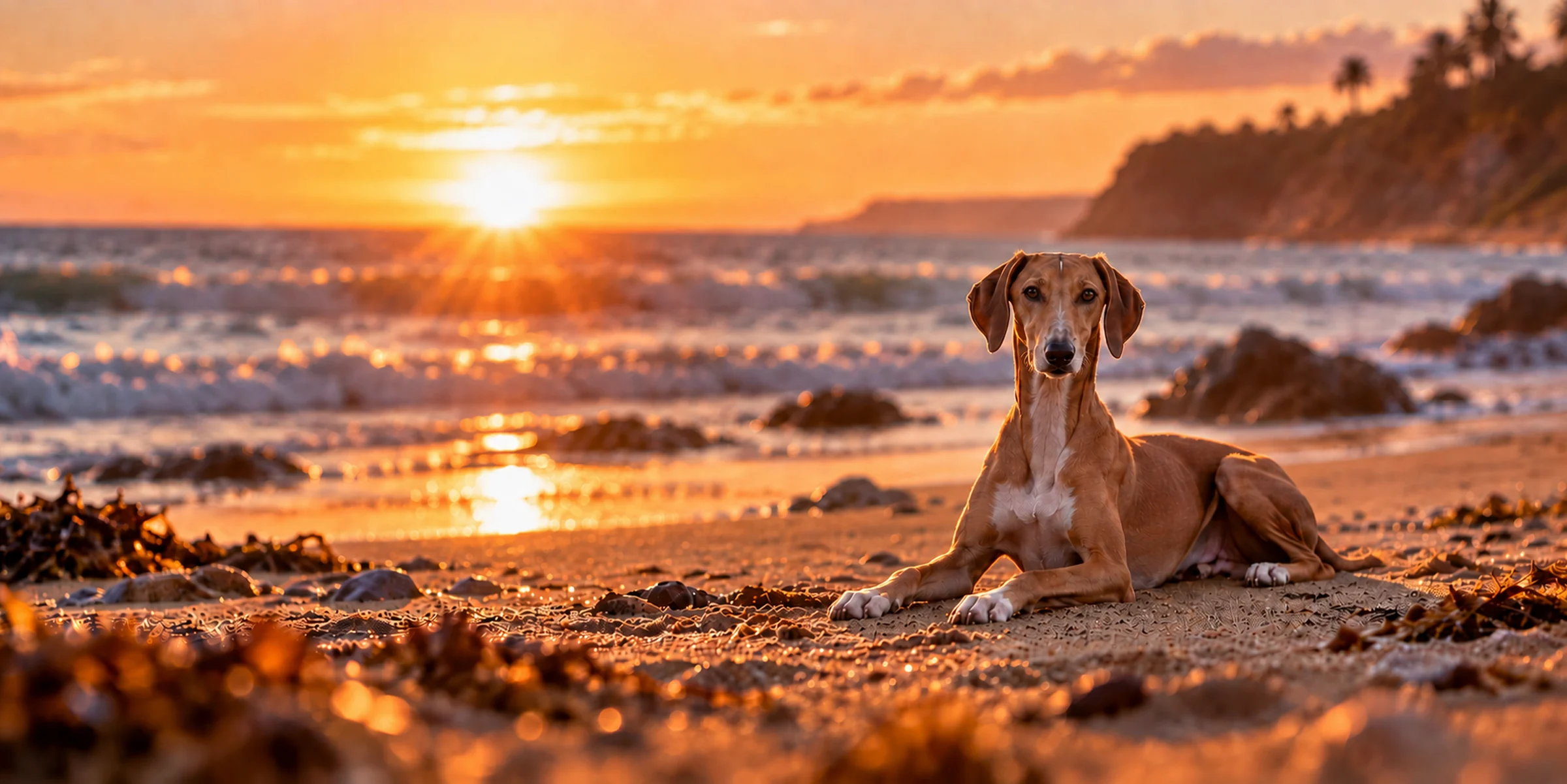
Azawakh
The other North African sighthound, and the one Sloughis are most often confused with. The Azawakh comes from the Sahel further south, stands leggier and more extreme in build, and carries a real guarding instinct; the Sloughi is heavier-boned, softer in expression and watchful rather than territorial.
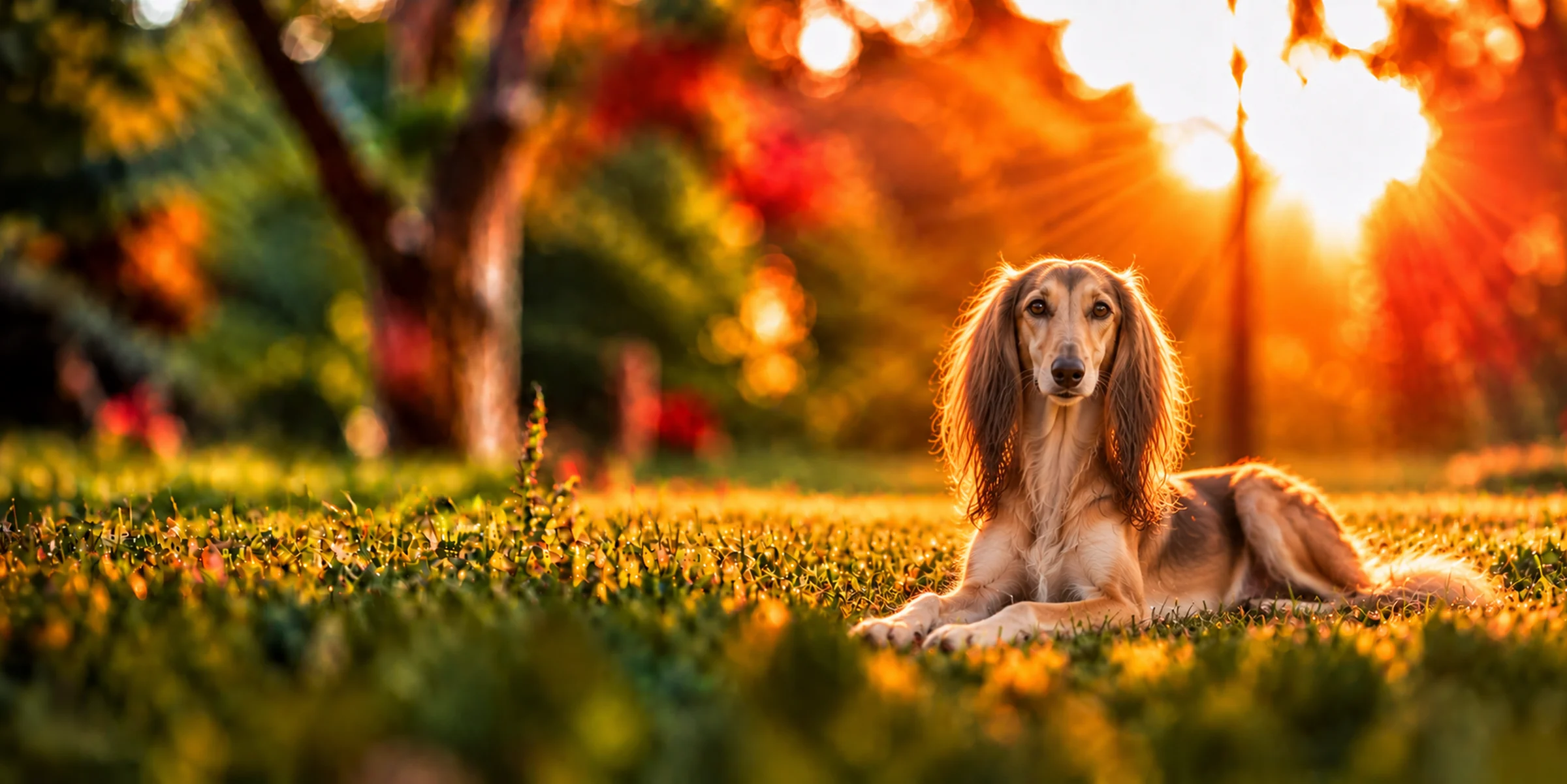
Saluki
Closely comparable in job and reserve, and the two get mixed up constantly. The Saluki is often feathered on the ears, legs and tail, where feathering anywhere disqualifies a Sloughi, and Salukis tend to be shyer and more likely to retreat; the Sloughi is aloof but composed.
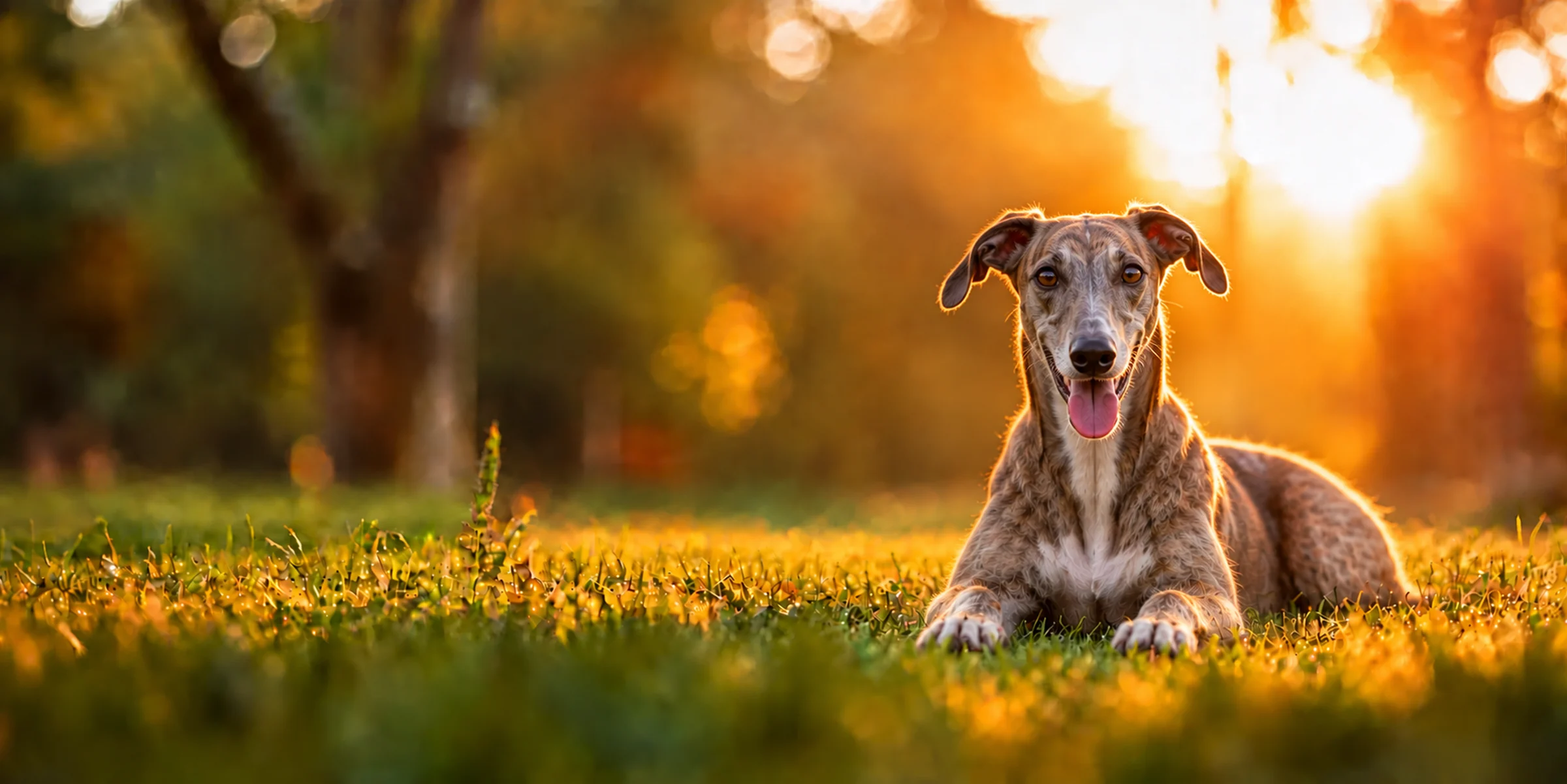
Greyhound
The easy version of this shape. Greyhounds are bigger, friendlier with strangers, content on a sofa and simple to find through racing adoption; the Sloughi is scarcer, far more reserved and considerably more sensitive to how they are handled.