

large-to-giant breed
Tornjak
A Balkan flock guardian from the Vlasic mountains, named for the tor - the night pen for sheep - and rebuilt from surviving working dogs after the breed nearly went out with the shepherding. Tornjaks are steadier and more willing to take an instruction than the heavy mountain guardians, dignified indoors and genuinely attached to the family. What comes with that is night barking, a coat that drops in sheets, and a dog who needs land.

Pup Height
23.5-27.5 in

Pup Weight
62-110 lb
Males 25.5-27.5 in and 77-110 lb, females 23.5-25.5 in and 62-88 lb. A long, thick double coat with a heavy mane over the neck and shoulders and feathering on the legs and tail, short and smooth on the face and the front of the legs. Parti-color with a white base is the usual pattern - black and white most often, also chestnut, tan, gray and tricolor combinations, and a largely black dog with white markings is equally correct. Recorded in the AKC's Foundation Stock Service since 2012, with a Working Group designation. Source: AKC Foundation Stock Service breed standard.

Pup Lifespan
12-14 years
Your pup, at a glance
What’s Life With This Pup Really Like?

Moderate. Affectionate and openly attached to their own people, though a guardian settles by the door rather than on the couch.

Very good with the children of the household - patient, gentle and protective of them. Visiting children still need supervising around a dog this size.

Mixed. Excellent with stock and with dogs raised alongside them, but same-sex friction between adults is common and strange dogs at the fence are treated as intruders.

High. A deep, carrying bark used freely after dark, because night is when the predators came. Training tempers the habit and does not remove it.

Moderate. Long stretches of lying and watching, then a fast response to anything out of place. Working stamina without a companion breed's restlessness.

Very heavy. A thick mountain coat that sheds year-round and blows out in handfuls twice a year.

Reserved. Puppies play properly, adults keep the fun brief and go back to watching.

Low. A dry-mouthed breed with none of the loose flews that make a mastiff drip.

Good for a guardian. Tornjaks learn quickly and hold onto training for a long time, which sets them apart from the sharper mountain breeds - but independent judgment is still in there, and compliance near a boundary is negotiated.

As serious as guarding gets. Territorial, courageous and willing to back the bark up, with centuries of predator work behind the instinct.

Moderate to high. Two or three thorough brushings a week down to the skin, daily raking during the blowouts, and no shaving.

Low. A cold-climate coat, a boundary habit and a night voice make town living a poor fit, though the calmer temperament travels better than most guardians manage.
Lifestyle fit
Could This Be Your Best Breed?
A Tornjak belongs on a farm, a smallholding or a house with real acreage and fencing that holds, with an owner who wants a working guardian rather than a large pet and can absorb $1,700 to $2,900 a year. Finding one outside the Balkans takes patience. Without land and neighbors who can live with a dog answering the night, do not.

Living Space
A farm, a smallholding or a house with real acreage and fencing that holds. The Tornjak is calmer indoors than most flock guardians and settles well once the day is done, but the breed still works a boundary, still answers the night, and still needs ground to walk. An apartment is out.

Pup Experience
Manageable for a determined owner who has done the reading, which is not something worth saying about most livestock guardians. The Tornjak takes direction more readily than the heavy mountain breeds and holds onto what they learn. What no amount of handling changes is the guarding instinct, so the owner still has to want a dog who assesses every arrival.

Daily Pup Time
An hour or more of walking, patrolling or work with stock, plus a couple of thorough brushings a week and daily raking for a few weeks in spring and fall.

Allergies & Coat
The Tornjak scores 9/10 for shedding and 3/10 for drooling. No dog is truly hypoallergenic. The allergens come from dander and saliva, and a dog that sheds this much will leave plenty of hair behind - especially on your furniture, floors, and clothes.
Quirks & challenges
The Not-So-Easy Stuff

Barks Through the Night
The night shift is the job - a deep carrying voice answering foxes, deer and headlights. Close neighbors will hear all of it.
Judgment Before Obedience
More biddable than most guardians, but still a dog bred to decide alone. A recall near the boundary gets considered first.
Guards the Boundary
Deliveries, contractors and visiting friends all need a routine. A Tornjak who has not met the world becomes suspicious of all of it.
A Heavy Double Coat
Thick mountain coat that sheds all year and comes out in sheets twice a year. Hair on the furniture, the car and the clothes.
Land and Work, Not Walks
Stock to watch or ground to patrol. Two laps around the block leaves a guardian looking for a job of their own.
Rare Outside the Balkans
Few breeders in North America, long waits, and most litters placed into working or rural homes.
The good, the bad & the hairy
Health, Care & Costs
Understanding the health risks and ongoing costs of a Tornjak helps you plan for a happy, healthy life together.

12-14 years
$80-$130
per groom (bath, blow-out, de-shed, nails, ears), every 8-10 weeks or done at home ($0-$650/year)
$1,700-$2,900/year
all-in (food, routine vet, grooming, insurance, incidentals)

Health Risks
Conditions this breed is prone to.

Worth saying first. The Tornjak came back through working dogs selected for survival in hard mountain conditions rather than for looks, and the breed has no long list of inherited disease. The caveat is that the population is small, so there is less data than for a popular breed.
The hip joint develops loosely so the ball wears in the socket instead of gliding, ending in arthritis and sometimes surgery. Both parents should have scored or graded hips, and a growing puppy needs controlled exercise and a lean frame rather than mileage.
Developmental faults in the elbow and shoulder that show as front-end lameness in a young dog. Overfeeding a heavy-boned puppy and pushing fast growth make both considerably more likely, and a bad case needs surgery.
The stomach fills with gas and twists on itself, cutting off circulation, and a dog dies within hours without emergency surgery. A deep-chested breed at real risk - split the meals and keep hard exercise clear of feeding.
Everything alive today traces to the small number of dogs found in the mountains in the 1970s. There is no breed-specific DNA test to lean on, so ask a breeder for hip and elbow scores on both parents and for the inbreeding coefficient of the litter - that paperwork is doing most of the work here.
A mountain coat on a dog built for cold winters. Summer exercise belongs at dawn and dusk, and damp trapped under a dense undercoat turns into an angry patch of inflamed skin fast, so dry them properly after rain or a swim.

Insurance & Health Coverage
Take a policy out young. A guardian breed's orthopedic trouble shows up as a stiff hind end long before anyone puts a name to it, and a single note about a limp on the record is enough for an insurer to exclude hips for life.

The claims to plan for are joints and emergencies rather than chronic illness. A hip or elbow repair on a 95-pound dog runs into the thousands and bloat surgery can be a five-figure night, so read the annual limit and the per-condition cap rather than comparing monthly premiums - the cap is where a cheap policy stops being cover.

One clause matters more for this breed than for most. Plenty of policies restrict or exclude injuries picked up while a dog is working, and a Tornjak living out with stock is working by any definition. Check that wording before you buy a policy, because it can remove exactly the protection you wanted.
 Get a Pet Insurance Quote
Care needs
The Daily Routine

Grooming
A long, dense double coat that needs a thorough brush two or three times a week, right down to the skin - surface work leaves mats forming in the mane, behind the ears and in the trousers. Twice a year the undercoat blows and it becomes a daily job with a rake for a few weeks. Never shave the coat: the layers that hold heat in also keep it out. Nails, ears and the hair between the toes want a weekly look, and a dog living outdoors needs checking over for burrs and ticks after every long day out.

Exercise
An hour or so of steady work a day - walking, patrolling a boundary, hiking or watching stock, which is what the breed would pick. Tornjaks are not distance runners or fetch fanatics, and a young dog's joints need the miles kept moderate until growth finishes at around two. The mental half counts for more than another lap of the block: ground to mind does more for this dog than extra distance.

Food & Weight
A famously modest feeder for the size - these dogs were kept by shepherds who had little to spare. Two measured meals rather than one, with hard exercise kept clear of feeding given the bloat risk, and large-breed puppy food with slow growth, because weight pushed onto developing joints causes damage that never fully goes away. Keep the ribs findable under all that coat.
Similar breeds
If This Isn’t Quite the One
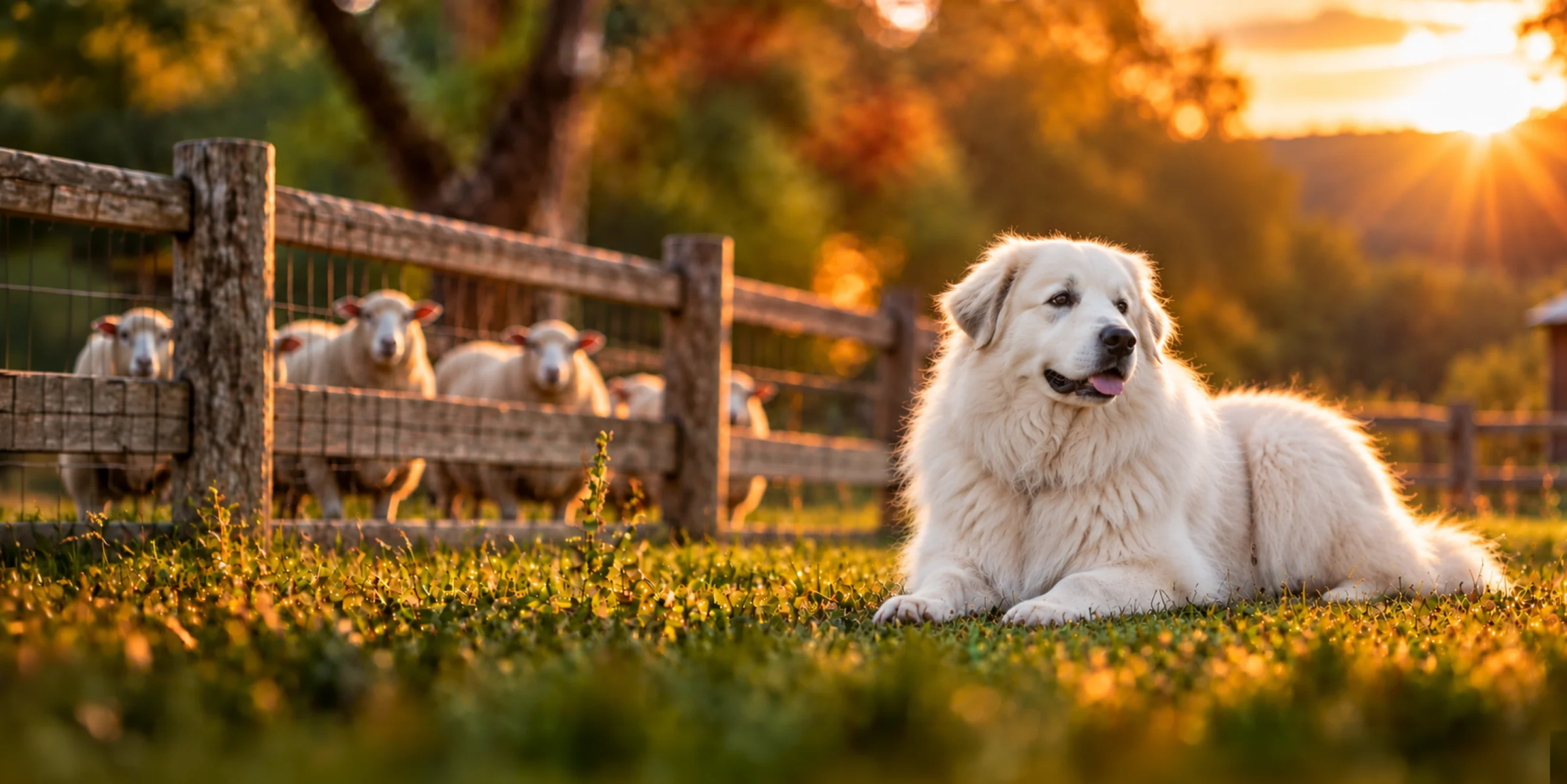
Great Pyrenees
The best-known version of the same job, and the easiest comparison to find in person. The Pyr is taller and heavier, white with occasional markings, and just as vocal at night; the Tornjak is more compactly built, usually parti-colored, and noticeably more willing to take direction from a handler.
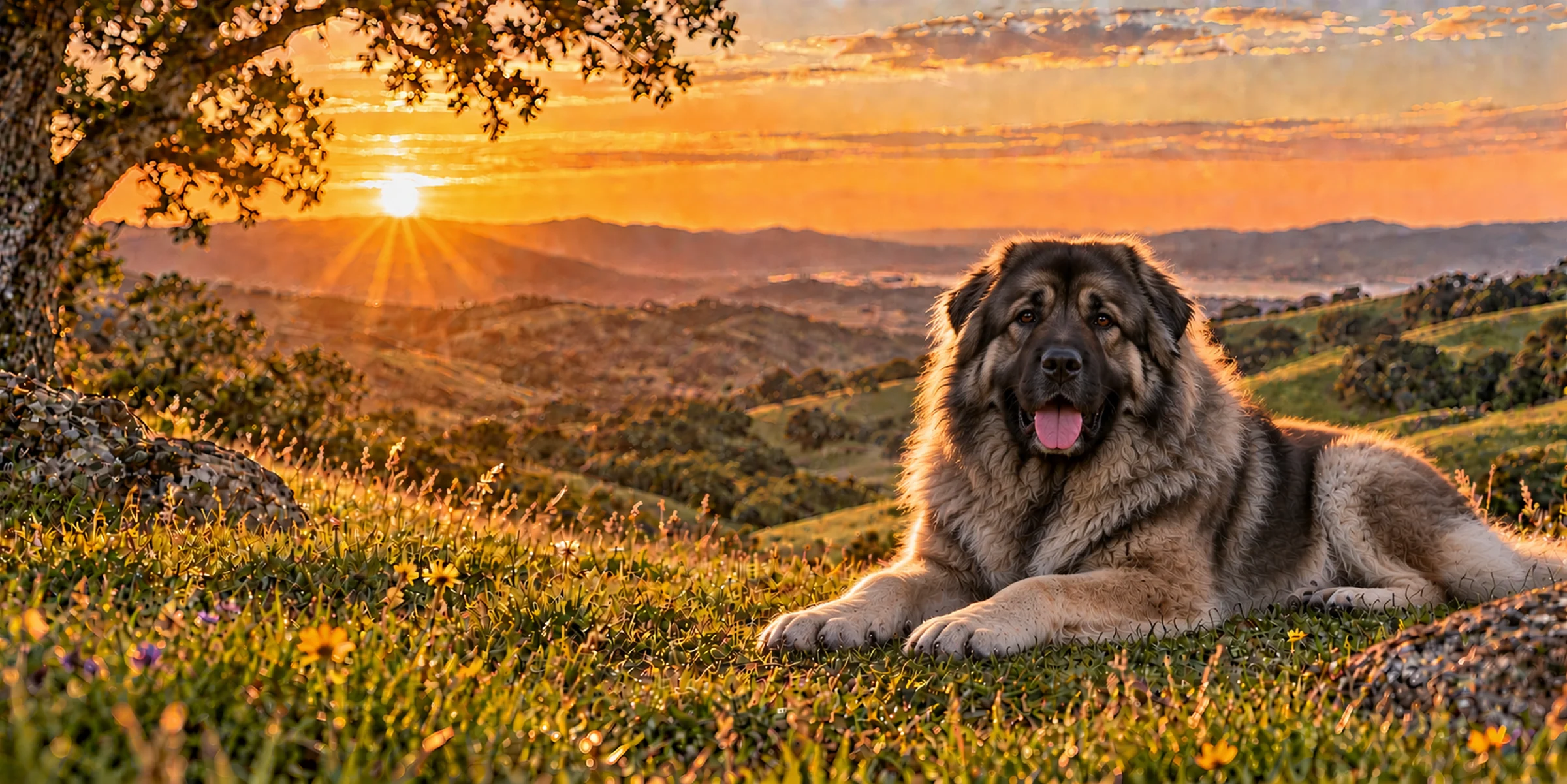
Caucasian Shepherd Dog
The guardian at the other end of the temperament range. The Caucasian is a giant, sharply protective dog that most households should not take on; the Tornjak does the same work with far less edge and is the one of the two a capable pet home can realistically live with.
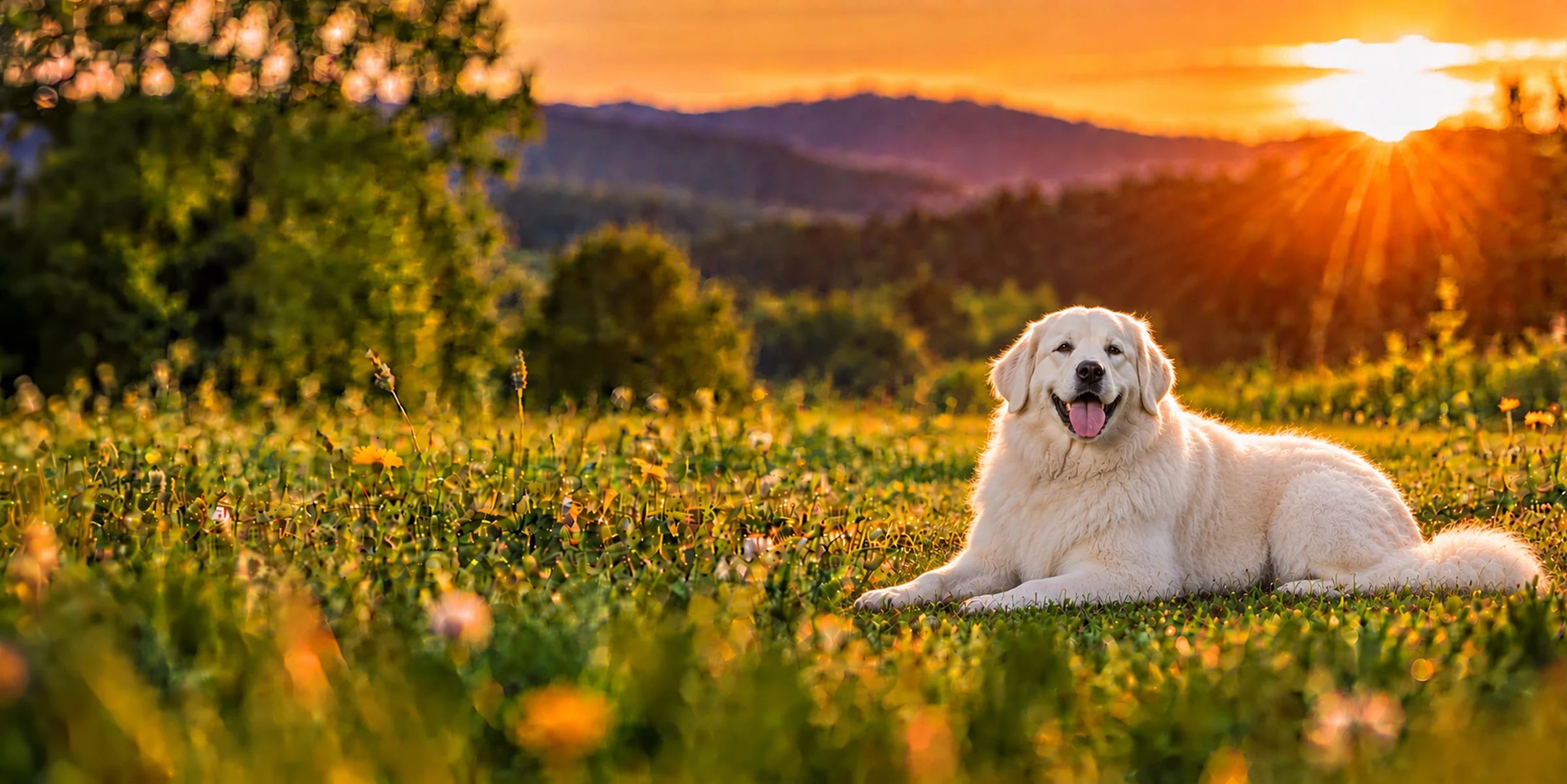
Slovensky Cuvac
A close parallel - another Central European flock guardian rebuilt from near-extinction and still rare. The Cuvac is white by rule, louder and more reactive about the fence line; the Tornjak is steadier, quieter to handle and easier to teach, though both need land and a job.