

large breed
Spinone Italiano
An old Piedmontese pointing breed built for heavy cover and marsh, working at a steady trot where a faster dog would skim over the top. Spinoni are gentle, comic, tolerant of children and deeply attached to their people, which makes them fine family dogs and hopeless kennel dogs. The daily realities are a beard that carries half the water bowl across the floor, a coat that needs hand-stripping, and a goofy adolescence running well past two.

Pup Height
22-27 in

Pup Weight
62-82 lb
Males 23-27 in and 70-82 lb, females 22-25 in and 62-71 lb. A single harsh wiry coat about 1.5-2.5 in long with no undercoat, plus the heavy eyebrows, mustache and beard that frame the face. White, white and orange, orange roan, white with brown markings, or brown roan; black is not permitted. The easy, far-reaching trot is the characteristic gait. Source: AKC breed standard.

Pup Lifespan
10-12 years
Your pup, at a glance
What’s Life With This Pup Really Like?

Very high. Spinoni lean, follow their people from room to room and would sleep on the sofa given any encouragement.

Excellent. Patient and tolerant with children, sturdy enough for the rough and tumble, and clumsy enough to knock a toddler over by accident.

Very good with other dogs, having been bred to work alongside them. Cats are usually fine with early socialization, though the prey drive is real.

Low. Spinoni announce a visitor and then leave the matter there.

Moderate for a gundog. An hour to ninety minutes daily with scent work in it, then a long snooze across a doorway.

Low to moderate. A single harsh coat with no undercoat sheds far less than a double-coated breed, but stripping season leaves hair around.

Comic and endlessly good-humored, with a real love of water and mud. Adolescents stay goofy well past their second birthday.

High, and not only drool - the beard holds water from the bowl and drips a trail across the floor after every drink.

Good. Willing, food-motivated and quick to learn, though thoughtful rather than snappy and easily bored by repetition.

Low. Spinoni notice arrivals and are far more likely to greet a stranger than to challenge one.

Moderate to high. Twice-weekly brushing, hand-stripping every few months, and daily attention to a beard that soaks up everything.

Moderate. Calmer indoors than most gundogs and easy to travel with, but the size, the wet beard and the need for scent work limit how small a home works.
Lifestyle fit
Could This Be Your Best Breed?
A Spinone Italiano suits a patient household with a fenced yard, floors that forgive water, and an hour or ninety minutes a day with scent work in it. Expect $1,600 to $2,800 a year and ten to twelve years, which is short for a dog of this build. Nobody should choose a Spinone to be a fast, wide-ranging pointer, or train one by correction - both go badly.

Living Space
A house with a securely fenced yard and floors that forgive water. Spinoni are calm indoors and less frantic than most gundogs, but a large dog who carries half the water bowl out in a beard is a poor match for a small apartment.

Pup Experience
Workable for a patient first-time owner with time for a large gundog. Spinoni are soft, sociable and genuinely slow to grow up, and the common mistake is impatience - pushing a dog who takes three years to mature, or correcting hard a breed that shuts down under pressure.

Daily Pup Time
An hour to ninety minutes of walking with real scent work in it, plus a thorough brush twice a week, a beard wipe after meals and drinks, and hand-stripping every few months.

Allergies & Coat
The Spinone Italiano scores 4/10 for shedding and 7/10 for drooling. No dog is truly hypoallergenic. The allergens come from dander and saliva, and a dog that sheds and drools this much will leave plenty of both behind - especially on your furniture, floors, and clothes.
Quirks & challenges
The Not-So-Easy Stuff

Beard Drips Everywhere
The beard soaks up the water bowl and carries it across the room. Owners keep a cloth by the bowl and wipe the beard after meals.
Coat Needs Hand-Stripping
Clippers soften the harsh jacket the breed is supposed to have. Stripping every few months keeps the texture and the weatherproofing.
Slow to Mature
Bodies grow up long before brains do. Expect a large, goofy adolescent well past the second birthday.
Soft to Correction
Harsh handling shuts a Spinone down rather than sharpening them up. Rewards and patience get far more done.
The Nose Wins Outdoors
A pointing dog working a scent is only half listening. Long lines and fenced ground until recall is genuinely proofed.
Opportunist Food Thief
Tall enough to reach a counter and cheerfully motivated by food. Anything edible left out is considered fair game.
The good, the bad & the hairy
Health, Care & Costs
Understanding the health risks and ongoing costs of a Spinone Italiano helps you plan for a happy, healthy life together.

10-12 years
$70-$120
per groom (hand-strip, bath, beard, ears, nails), every 8-12 weeks or done at home ($0-$600/year)
$1,600-$2,800/year
all-in (food, routine vet, grooming, insurance, incidentals)

Health Risks
Conditions this breed is prone to.

An inherited disease that destroys the balance center of the brain. Affected puppies begin to stumble and fall within their first months and do not recover. A DNA test has been available for years, so both parents should be tested clear or clear by parentage - ask for the certificates.
The joints develop loosely and wear into arthritis, sometimes needing surgery that runs into the thousands on a dog this size. Both parents should have scored hips and elbows, and puppies need controlled growth and no forced running while the joints are still forming.
The stomach fills with gas and twists on itself, cutting off circulation, and it kills within hours without emergency surgery. Deep-chested breeds are at real risk - split meals, use a slow feeder and keep hard exercise clear of feeding.
Breed club health surveys put cancer among the leading causes of death in the Spinone, with no screening test available in advance. Lumps, unexplained weight loss and lameness in a middle-aged dog are all worth a same-week appointment.
Long drop ears on a dog who works wet cover trap warmth and moisture against the canal. Weekly checking, cleaning and thorough drying is most of the prevention; ignored, an infection becomes chronic and expensive.
The loose lower eyelids roll inward or sag outward, so lashes rub the eye or the lid stops protecting it. Surgical correction is straightforward but not cheap, and annual eye examinations catch these and cataracts early.

Insurance & Health Coverage
Take out a policy while the dog is young. The conditions that cost real money in this breed - arthritic joints, cancer, eyelid surgery - arrive in middle age, and anything already noted on the record by then becomes a permanent exclusion.

Cancer is the claim to plan for. Treatment runs into the thousands and a policy with a low per-condition or lifetime cap will not cover a course of it, so read the caps rather than the premium. Bloat is the other big one: emergency surgery is a four-figure bill arriving overnight, with no warning to insure against.

Cerebellar ataxia is different. The disease is congenital, so no policy covers it, and DNA results on both parents are the only protection there is. Underneath all of that sits the steady drip of ear infections and grass-seed removals, never large on their own and never really finished.
 Get a Pet Insurance Quote
Care needs
The Daily Routine

Grooming
A harsh single coat with no undercoat, brushed thoroughly a couple of times a week and hand-stripped every three to four months - clipping softens the jacket and costs the weatherproofing. The beard and mustache are the daily job: comb them out, wipe them after meals and drinks, and dry them after water work, or they sour. Check and dry the ears weekly, and go through the coat for grass seeds after any outing in cover.

Exercise
An hour to ninety minutes daily, with scent work in a good share of it. The breed moves at a steady trot rather than a gallop, so long rambling walks, tracking games and water retrieves suit them far better than trying to run them flat out.

Food & Weight
Two measured meals a day, fed from a slow feeder and kept well clear of hard exercise given the bloat risk. Spinoni are enthusiastic about food and quietly good at acquiring extra, so weigh the portions and count the treats - carrying weight on loose-jointed dogs is how arthritis arrives early.
Similar breeds
If This Isn’t Quite the One
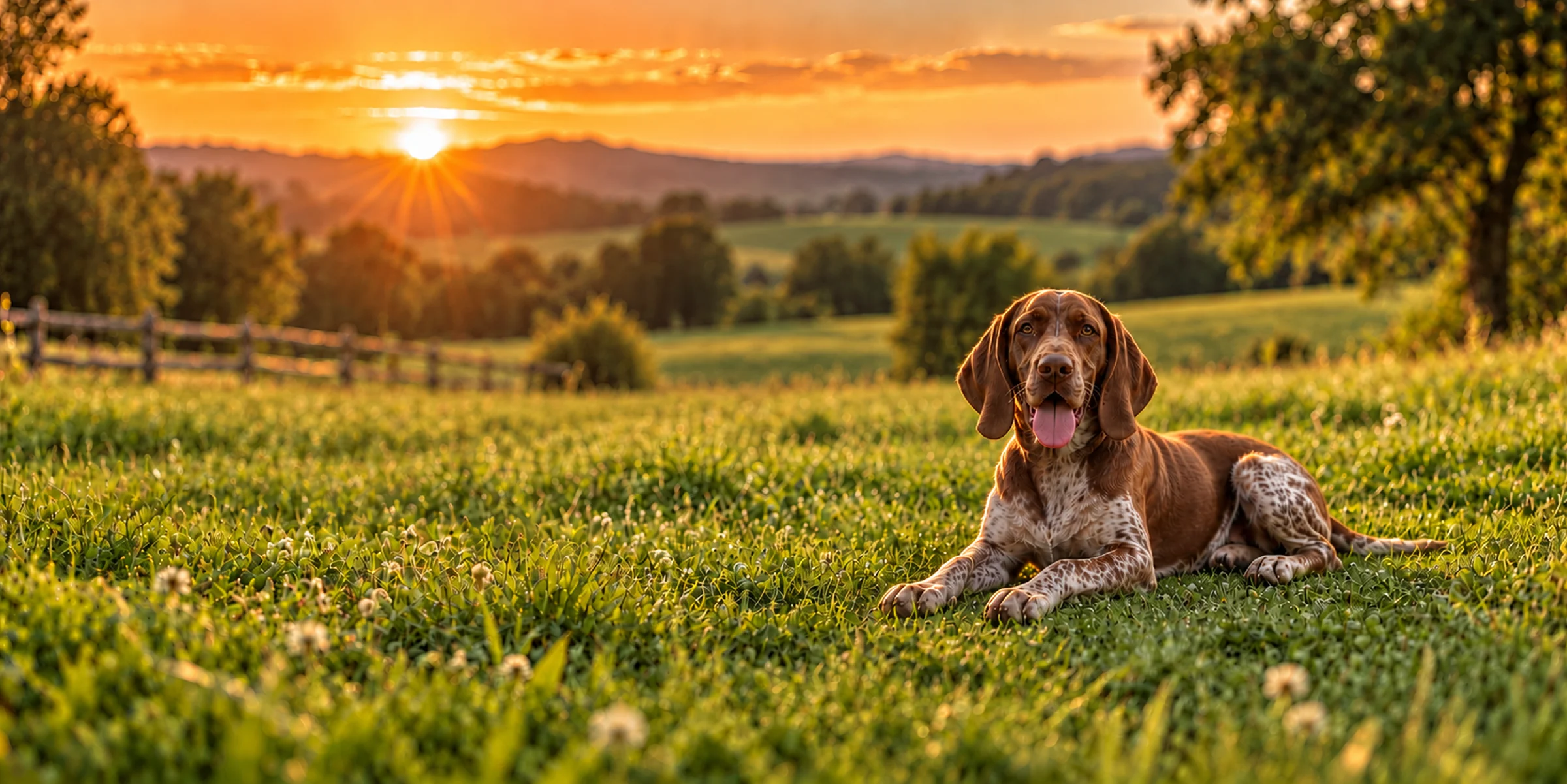
Bracco Italiano
The other Italian pointing breed, and the closer of the two in build and outlook. The Bracco carries a short smooth coat and a houndy head with no beard to dry; the Spinone is wire-coated, shaggier and softer-tempered, and needs stripping rather than a wipe down.
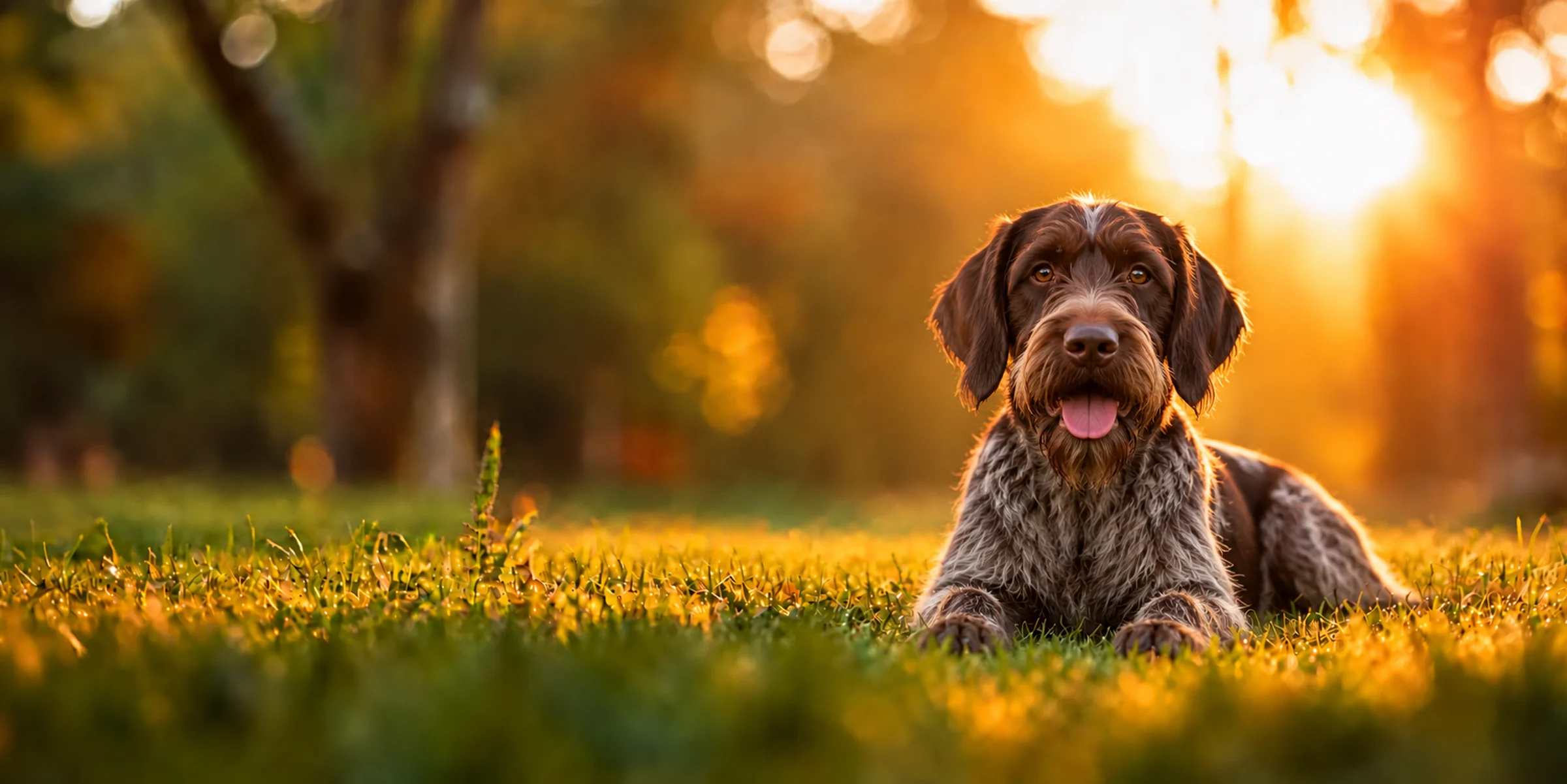
German Wirehaired Pointer
A similar harsh wire coat with the same eyebrows and beard, bred for the same all-round job. The German dog is faster, sharper and far more driven, and wants a serious working home; the Spinone works at a trot and settles more easily as a family dog.
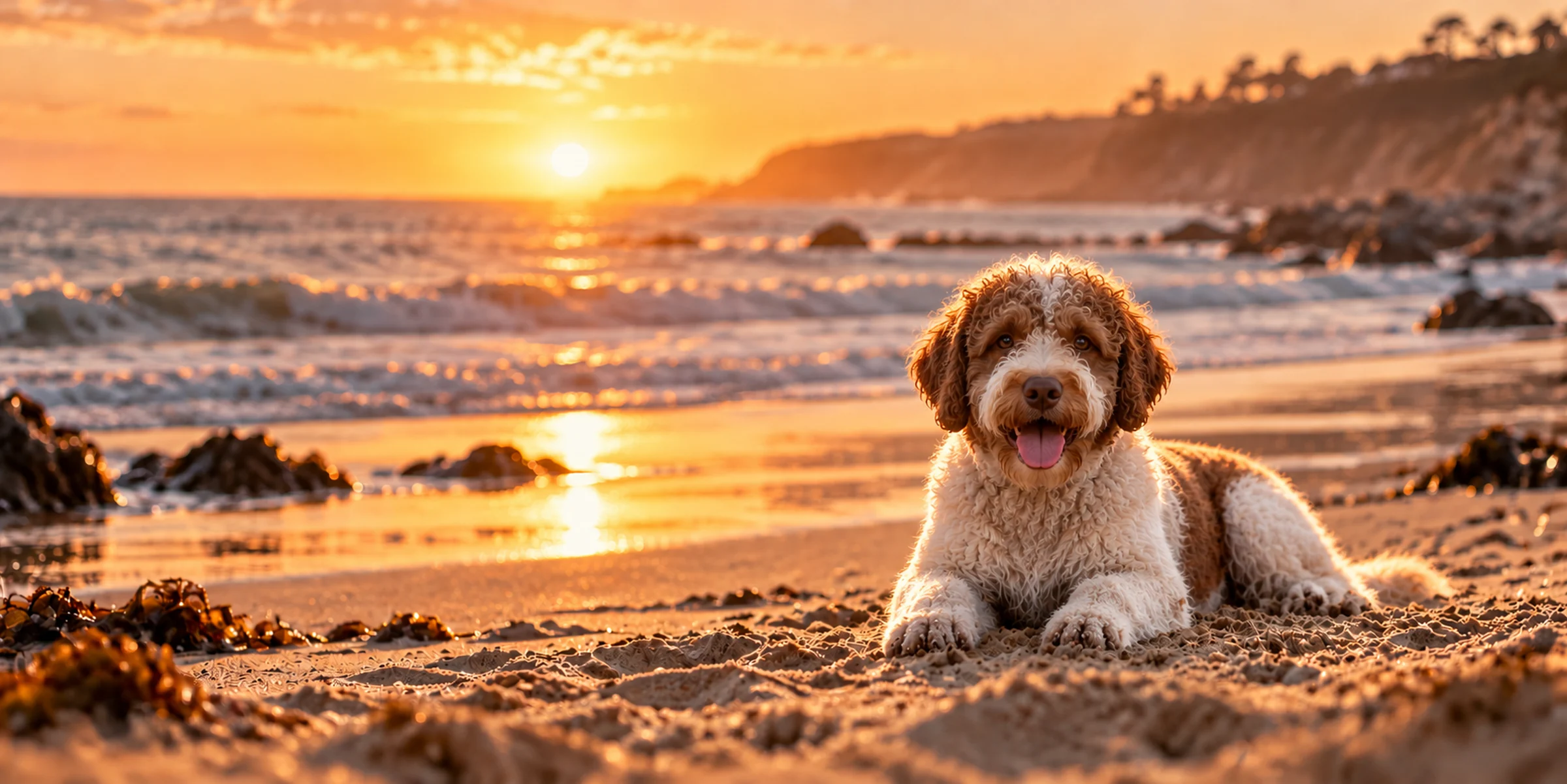
Lagotto Romagnolo
Another bearded Italian working breed with a strong nose, but a much smaller one at around 30 pounds, with a curly coat that is clipped rather than stripped. The Lagotto searches for truffles; the Spinone is still a full-size pointing and retrieving gundog.
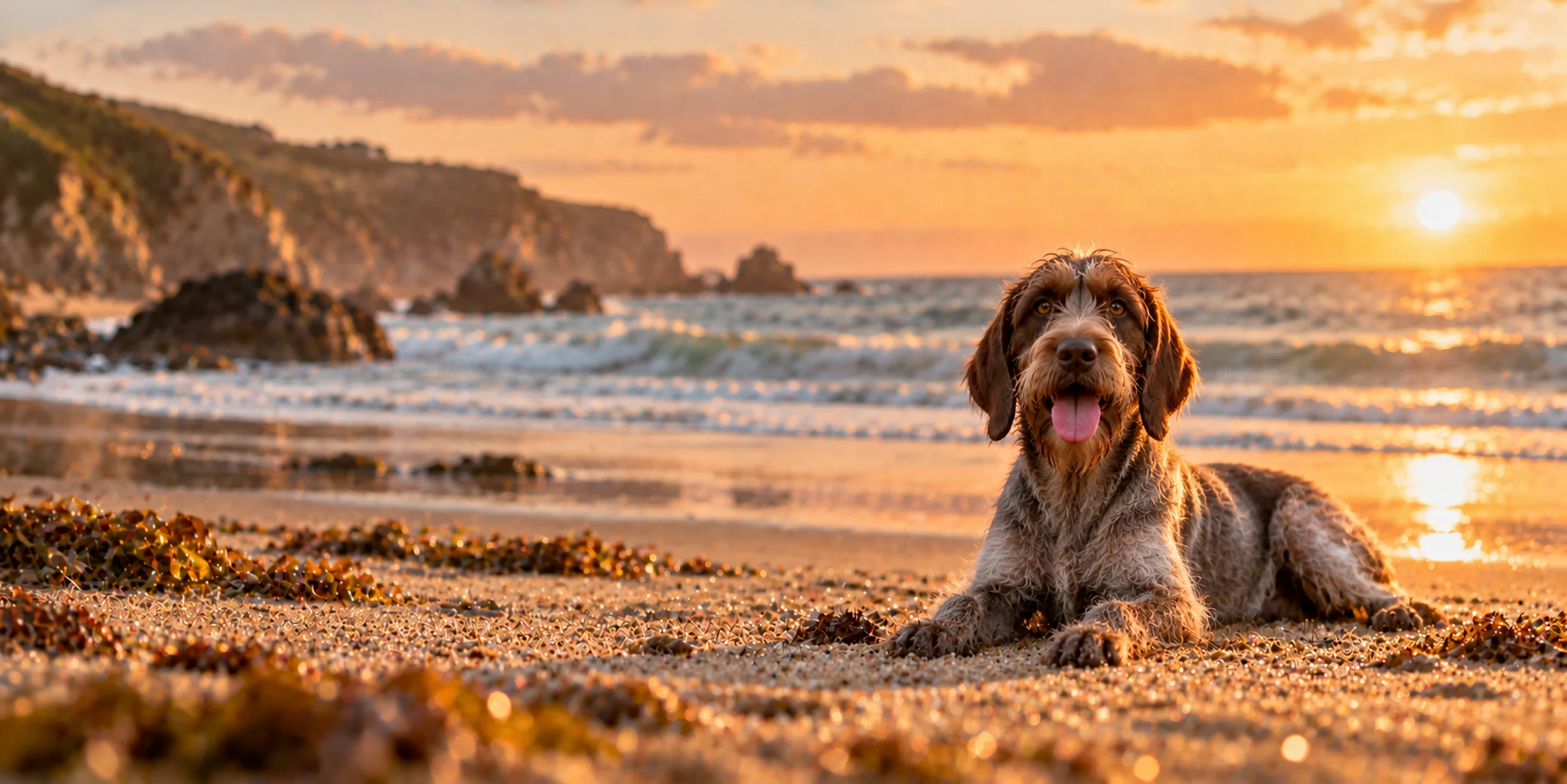
Wirehaired Pointing Griffon
The other bearded wire gundog that works at a walk, and the lighter of the two at 35-70 lb. Griffons check in constantly and drool far less; a Spinone is the heavier, slower, wetter-bearded option.