

medium-to-large breed
American Pit Bull Terrier
Bred from bulldog and terrier stock for the fighting pit, and shaped by that same history into one of the friendliest dogs toward people you will ever meet - a forty-five pound dog with a whole-body wag and no suspicion of strangers at all. The edge the pit left is toward other dogs, often surfacing at two or three years old, and there is real strength behind it. Both halves are true at once.

Pup Height
17-21 in

Pup Weight
30-60 lb
Desirable weight is 35-60 lb for males and 30-50 lb for females. The UKC standard fixes weight and asks only that height be in proportion, so the height range above is where most adults land rather than a figure the standard sets. Any color, color pattern or combination is allowed except merle. Recognized by the UKC in 1898 as that registry's founding breed and also registered by the ADBA; the AKC does not recognize the breed. Source: UKC breed standard.

Pup Lifespan
12-14 years
Your pup, at a glance
What’s Life With This Pup Really Like?

Very high. A Pit Bull considers a lap to be a place they fit, and will burrow under a blanket to prove the point.

Excellent with the family's own children - patient, sturdy and fond of the chaos. The caution is a strong, bouncy dog knocking a toddler flat by accident.

The honest weak spot. Dog-directed reactivity is common and often arrives at social maturity, and the prey drive makes cats and small pets a real project rather than a formality.

Low. Pit Bulls are quiet at home and rarely bark at passing sounds, which makes them better neighbors than their reputation suggests.

High. An hour of real effort daily, and adolescents need more than that before they are worth living with.

Moderate. The coat is short but the hairs are stiff and they work their way into car seats and upholstery.

Very high. Goofy, athletic and relentless - they play hard into old age and treat furniture as terrain.

Low. Some drool around food and after drinking, nothing that needs a towel by the bowl.

Good and genuinely enjoyable. Fast to learn and eager to please; the limit is distraction around other dogs, not willingness.

Low, despite appearances. Pit Bulls announce visitors and then try to sit in their lap. The deterrent is entirely in how they look.

Very low for the coat - minutes a week. The skin needs more attention than the brush does in an allergy-prone breed.

Moderate. The dog adjusts to almost any routine or home; the leases, ordinances and insurance clauses do not.
Lifestyle fit
Could This Be Your Best Breed?
An American Pit Bull Terrier suits an active household that can run one dog, walk past other dogs without drama, and carry $1,600 to $2,800 a year across twelve to fourteen years. The apartment itself is fine. The lease, the home insurance and the local ordinance are what actually decide, and if any of those three comes back no, no amount of good temperament will move them.

Living Space
The dog is the easy part. Forty-odd pounds, a short coat, little barking and a long midday nap make an apartment perfectly workable. What decides the question is written down somewhere else - the lease clause, the liability wording on a renter policy, the municipal ordinance - and all three usually describe a look rather than a registry. Get answers for your specific address, in writing, before anything is committed to.

Pup Experience
Best as a second dog rather than a first. Pit Bulls are easy to teach and desperate to please, so obedience is not the learning curve. Reading another dog's body language early, handling a strong animal on a loose leash and being the person who walks away from a situation before anything develops - that is the skill set, and it is not one a new owner has yet.

Daily Pup Time
An hour of hard exercise a day plus something that uses the brain - a training session, a flirt pole, a puzzle. The coat takes five minutes a week; the skin takes a closer look than that.

Allergies & Coat
The American Pit Bull Terrier scores 4/10 for shedding and 3/10 for drooling. No dog is truly hypoallergenic. The allergens come from dander and saliva, and a dog that sheds this much will leave plenty of hair behind - especially on your furniture, floors, and clothes.
Quirks & challenges
The Not-So-Easy Stuff

Dog Tolerance Drops at Two
Puppies who adored every dog at the park can turn selective or worse at social maturity. Plan for the adult rather than the puppy in front of you.
Laws Follow the Look
Restrictions and insurance clauses are enforced on appearance, not pedigree, so registration papers rarely help and a mixed dog gets caught by rules nobody expected.
Confused With Four Breeds
The everyday "pit bull" label covers AmStaffs, Bullies, Staffords and blocky mixes, so most of what is said about the breed is not about this breed.
Muscle in a Medium Frame
Forty-five pounds with a high pain threshold and serious drive. Equipment and leash skill have to match the strength, not the weight on the scale.
Itchy Skin, Year-Round
Allergic skin disease is the likeliest recurring bill here - chewed paws, hot spots, repeat ear trouble, and medication that rarely stops for good.
Small Pets Look Like Prey
Cats, chickens and toy dogs register as something to chase. Introductions stay slow, and the supervision does not lapse as the years pass.
The good, the bad & the hairy
Health, Care & Costs
Understanding the health risks and ongoing costs of a American Pit Bull Terrier helps you plan for a happy, healthy life together.

12-14 years
$35-$55
per groom (bath, nails, ears), every 8-12 weeks, and most owners do the lot at home ($0-$250/year)
$1,600-$2,800/year
all-in (food, routine vet, grooming, insurance, incidentals)

Health Risks
Conditions this breed is prone to.

The condition most Pit Bull owners actually meet. Environmental and food allergens produce itching, chewed feet, pink underbellies, hot spots and ears that keep flaring. It is controlled rather than cured, and the medication, diet and shampoo costs recur for the life of the dog.
A loose hip joint that grinds rather than glides and wears into arthritis, sometimes needing surgery. Screening exists - ask whether both parents have OFA or PennHIP scores, which is a less routine question in this breed than in AKC-registered ones and worth pressing on.
A heavily muscled, explosive dog turning hard at speed tears the knee ligament. Surgical repair runs well into four figures, recovery takes months of restricted movement, and a dog who goes on one side frequently goes on the other within two years.
A late-onset inherited disease that gradually destroys balance and coordination from roughly three to five years old, with no treatment available. The DNA test came out of the American Staffordshire Terrier population and applies to the closely related lines here, so a breeder working with AmStaff blood should have results for both parents.
A mite every dog carries that only causes trouble when a young immune system lets numbers build. Bald patches around the face and forelegs are the usual first sign; localized cases often resolve on their own, generalized ones need months of treatment and a look at whether breeding stock should repeat the pairing.
An underactive thyroid brings weight gain, coat loss, flaky skin and sometimes a change in temperament, and a daily tablet manages it cheaply once diagnosed. Heart defects including aortic stenosis also appear in the breed and are usually first heard as a murmur, so a cardiac clearance on the parents is a fair thing to ask for.

Insurance & Health Coverage
Read the breed list before the premium. Home and renter liability cover is where this lands hardest, and the wording is the thing to look at: policies usually exclude "pit bull type" dogs rather than naming a registry, which means the exclusion is decided by what the dog looks like. A rescue of unknown parentage with a broad head can be excluded from cover while a papered dog of another breed is not.

Answering the insurer honestly matters more than it feels like it should at the time. A liability claim assessed against an application that was vague about the dog can be declined outright, and that is the one outcome that costs more than any premium ever would. Landlords tend to follow whatever their own insurer says, so the tenancy answer usually arrives from the same place.

Pet health cover is a different product and generally accepts the breed without argument. Start a policy early, and specifically before the first course of steroids: allergic skin disease usually shows up in the first two years and becomes a written exclusion the moment a vet records it, while the cruciate repairs that arrive in middle age are the four-figure claims you will want covered when they do.
 Get a Pet Insurance Quote
Care needs
The Daily Routine

Grooming
A short, glossy coat that a rubber curry brush handles in a few minutes a week. Nails grow fast on a dog this active and need a grinder or clippers every couple of weeks. The real routine is skin: run your hands over the belly, armpits and feet weekly, and treat a hot spot in the first day rather than the third.

Exercise
An hour a day, front-loaded with something intense - a flirt pole session, a hard game of tug, a weight-pull harness, a hike on a long line in open country. Structured effort tires a Pit Bull far better than distance does, and an hour spent walking past a row of reactive dogs on a narrow sidewalk is worse than no walk at all.

Food & Weight
Two measured meals, and keep the dog genuinely lean - every extra pound rides on knees that already carry a dense, muscular body. Pit Bulls are enthusiastic eaters and will convince you otherwise. Where allergies are in play, a vet-guided elimination diet is worth more than switching between store brands.
Similar breeds
If This Isn’t Quite the One

American Staffordshire Terrier
The same dogs, split by registry in 1936 and drifted apart since. The AmStaff is the AKC version - heavier at 55-70 lb, taller, bred toward a show standard - while the APBT stayed with the UKC and stayed lighter and more athletic. Temperament and the practical problems are close to identical.

Staffordshire Bull Terrier
The English ancestor of both American breeds and a separate breed rather than a size variety. Staffords run 24-38 lb and 14-16 in, are a little easier to house and handle, and ask for the same honest management around other dogs.

American Bulldog
A bigger, heavier bully breed with a similar look to the public and similar paperwork problems. The American Bulldog is genuinely protective and more of a guardian; a Pit Bull greets the burglar.

Boxer
For anyone drawn to the clowning, the people-focus and the athleticism rather than the terrier edge. Boxers are taller, drool more and carry a heavier cancer risk, but no insurer or city ordinance is going to have an opinion about one.
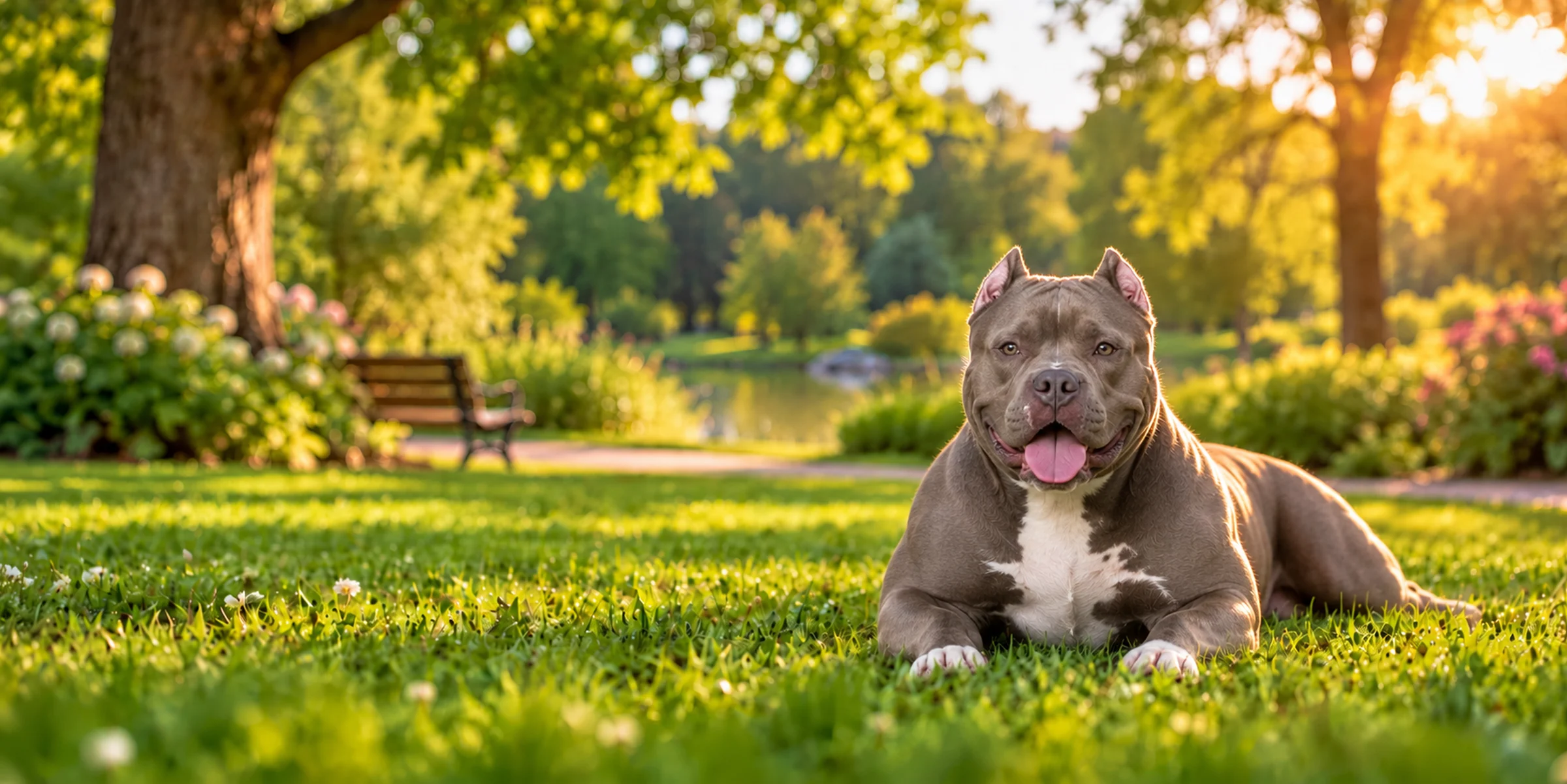
American Bully
Built from the Pit Bull and the AmStaff in the 1980s and 90s and taken deliberately the other way - shorter, wider, heavier, and bred for a gentler temperament rather than a working one. A Bully is a companion breed with a Pit Bull's silhouette and a fraction of the drive, and pays for the build in joints, skin and breathing.