

small-to-medium breed
Petit Basset Griffon Vendeen
A rough-coated French rabbit hound with a beard, long eyebrows and a coat built to go through brambles - which is also a coat that brings half the yard back inside. PBGVs are small enough to live almost anywhere and loud enough that it matters: the voice is a hound's bay, not a bark, and it gets used. Recall is the other honest cost, and no amount of class time fixes it.

Pup Height
13-15 in
One height range for both sexes: 13-15 in at the withers, with half an inch over 15 in tolerated. Petit means small and basset means low-set, and the PBGV is a separate breed from the Grand Basset Griffon Vendeen rather than a smaller variety of that breed - shorter in the leg and more compact. A rough, harsh outer coat that is long without exaggeration over a thick, shorter undercoat, with a beard, moustache and long eyebrows. White with any combination of lemon, orange, black, sable, tricolor or grizzle markings. Source: AKC breed standard.

Pup Weight
25-40 lb

Pup Lifespan
14-16 years
Your pup, at a glance
What’s Life With This Pup Really Like?

High. Affectionate and people-oriented, and happy to curl up close once they have had their outing.

Excellent. Sturdy, cheerful and playful, and a good match for sensible children who can hold a leash and shut a gate.

Very good with dogs, having been bred to hunt in a pack. Cats raised alongside them can work; rabbits and small pets are at real risk.

High. PBGVs bark, bay and vocalize readily - trainable down to tolerable, but never a quiet dog.

High. An hour of active, nose-led exercise a day, after which they settle well indoors.

Low. The harsh coat sheds lightly, with most loose hair caught by regular brushing.

Exuberant. Merry, clownish and curious, and they keep that playful streak well into old age.

Low. Not a drooler, though a wet beard leaves a trail from the water bowl.

Low to moderate. Intelligent and quick to learn, but independent, and nothing competes with a good scent.

Moderate. They announce every arrival loudly, then greet the visitor like an old friend.

Moderate. Weekly brushing and combing, regular tidying, daily beard care and weekly ear checks.

Moderate. Their size suits most homes, but the voice, the digging and the need for secure fencing limit apartment life.
Lifestyle fit
Could This Be Your Best Breed?
A PBGV is a genuinely good family dog - merry with children, easy with other dogs, cheap at $1,200 to $2,000 a year, and often still going at fourteen to sixteen. They need an hour a day with sniffing in it and a fence with no gaps at the bottom. A townhouse with a shared wall and a noise-sensitive neighbor is where this one falls apart.

Living Space
A house with a securely fenced yard and neighbors who can live with a hound's voice. PBGVs are a manageable size indoors, but they bark and bay freely, dig, and slip through any gap in a fence the moment a scent calls.

Pup Experience
Workable for a first-time owner who wants a hound and has a sense of humor about it. The temperament is friendly and easy; the challenge is a clever, independent dog whose nose outranks every cue you teach.

Daily Pup Time
About an hour of exercise daily, ideally with scent work in it, plus brushing once or twice a week, weekly ear care and a daily beard wipe.

Allergies & Coat
The Petit Basset Griffon Vendeen scores 3/10 for shedding and 2/10 for drooling. No dog is truly hypoallergenic. The allergens come from dander and saliva, and a coat that sheds this little leaves far less of them on your furniture, floors, and clothes.
Quirks & challenges
The Not-So-Easy Stuff

Recall Fails on a Scent
Once the nose is working, the ears stop. Keep PBGVs on a leash or long line anywhere unfenced.
A Big Voice
They bark, bay and 'talk' readily, and a small dog's voice carries surprisingly far. Neighbors notice.
Escape Artists
Diggers and climbers with a strong reason to leave. Fences need checking along the bottom as well as the top.
Counter-Surfing
Food-driven and inventive. Bins, counters and unattended plates are all fair game.
Stubborn Streak
Bright and quick to learn, but they weigh every request against what else is on offer. Repetitive drills lose them.
Beard and Coat Mess
The beard drips water and collects food, and the rough coat brings in leaves, burrs and mud.
The good, the bad & the hairy
Health, Care & Costs
Understanding the health risks and ongoing costs of a Petit Basset Griffon Vendeen helps you plan for a happy, healthy life together.

14-16 years
$55-$85
per groom (bath, tidy, beard, ears, nails), every 8-12 weeks or done at home ($0-$450/year)
$1,200-$2,000/year
all-in (food, routine vet, grooming, insurance, incidentals)

Health Risks
Conditions this breed is prone to.

Pressure slowly builds inside the eye as fluid drainage fails, damaging the optic nerve and eventually causing painful blindness. In PBGVs it is linked to a variant in the ADAMTS17 gene, and a DNA test identifies clear, carrier and affected dogs - both parents should be tested, and regular eye-pressure checks catch it early.
Strands of fetal tissue that should disappear after birth remain across the pupil. Most cause no trouble, but strands attached to the lens or cornea can cause cloudy spots. There is no DNA test; annual eye exams by a veterinary ophthalmologist screen breeding dogs.
Steroid-responsive meningitis-arteritis - inflammation of the membranes around the brain and spinal cord - usually appears in young dogs as fever, a stiff painful neck and reluctance to move. It responds well to steroids caught early, though treatment runs for months and relapses happen.
A long back on short legs puts extra strain on the spinal discs, which can bulge or rupture and cause pain or hind-leg weakness. Keeping PBGVs lean and limiting jumps off furniture reduces the risk.
Hips that form loosely wear into arthritis, and are screened by hip scoring both parents. An underactive thyroid causes weight gain, coat changes and low energy, is found with a blood test and managed with a daily tablet.
Long, hairy drop ears hold warmth and moisture against the canal, and a dog pushing through wet cover makes it worse. Weekly checks, cleaning and drying prevent most of them; left alone they turn chronic.

Insurance & Health Coverage
A small, long-lived hound with modest routine costs, which makes the case for cover about a few specific risks rather than general expense.

The eyes are the first. Glaucoma treatment means lifelong drops, specialist visits and sometimes surgery or removal of the eye - costly and ongoing. A DNA-clear pair of parents lowers the risk sharply, so ask to see the ADAMTS17 results before you commit to a puppy.

The back and the brain are the others. Disc surgery runs into several thousand dollars, and aseptic meningitis often means months of medication and repeat bloodwork in a young dog - both are the kind of claim that gets excluded once it is on the record, so insure while the history is clean.
Ear infections are the likely repeat visit, and a hound who follows a scent through a gap in the fence makes accident cover worth having too.
 Get a Pet Insurance Quote
Care needs
The Daily Routine

Grooming
A rough, harsh double coat meant to look tousled, not styled. Brush and comb through once or twice a week to stop mats forming in the furnishings, tidy the feet and around the eyes, and bathe only when needed - frequent baths soften the texture. Wipe the beard after meals and water, check and dry the ears weekly, and pick burrs and seeds out after walks in long grass.

Exercise
About an hour a day of real activity. Walks on a leash or long line, sniff-heavy outings, and tracking or scent games suit them far better than repetitive fetch. They have more stamina than their size suggests and get noisy and destructive when bored.

Food & Weight
Two measured meals a day, with treats counted against the ration and the bin secured. PBGVs are persuasive, food-motivated opportunists, and extra weight puts direct strain on a long back and short legs.
Similar breeds
If This Isn’t Quite the One
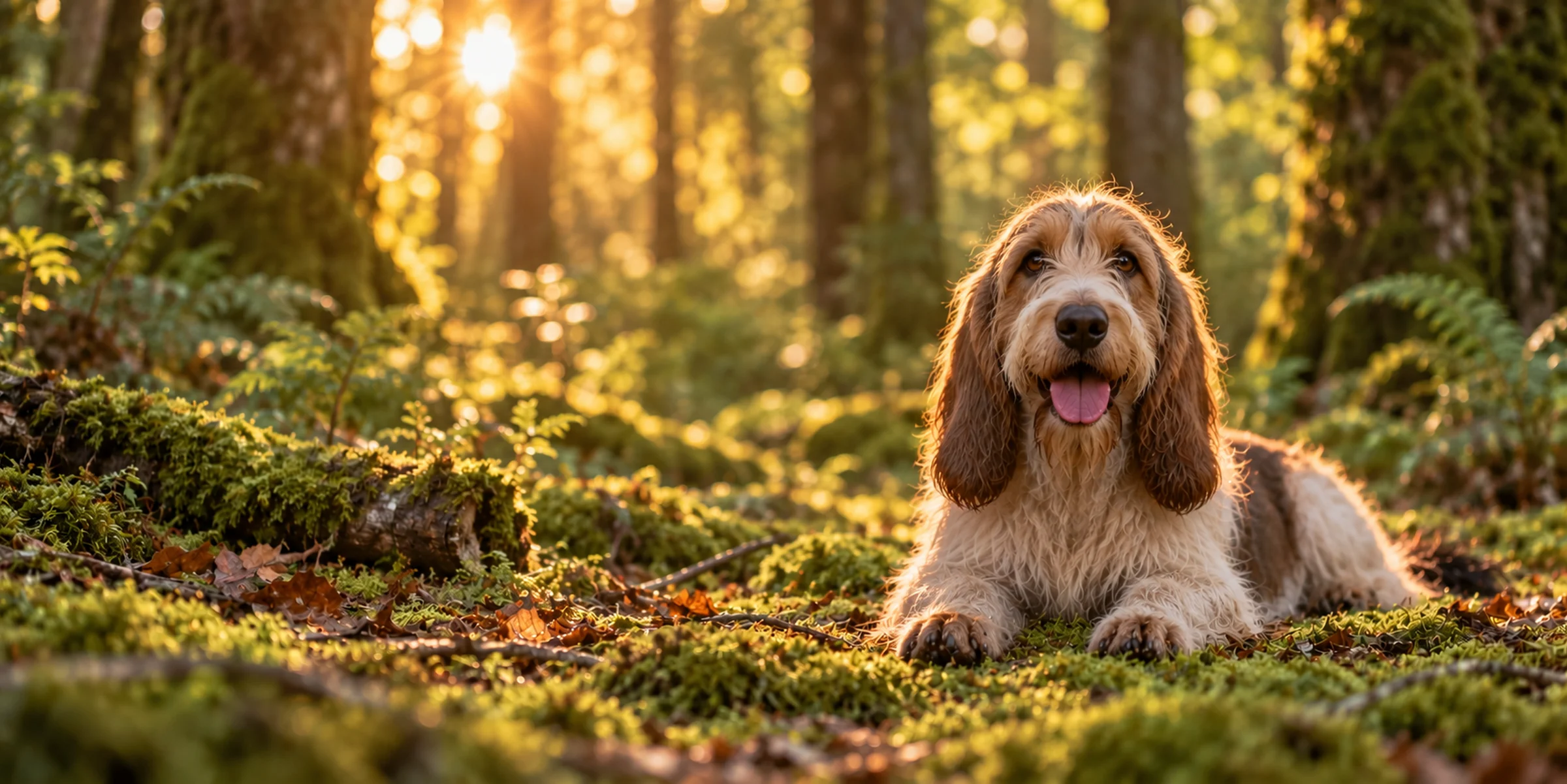
Grand Basset Griffon Vendeen
The larger Vendeen cousin and a separate breed, not a size variety. The GBGV is taller, longer and racier with more stamina to burn; the PBGV is shorter-legged, more compact and easier to fit into an ordinary household.
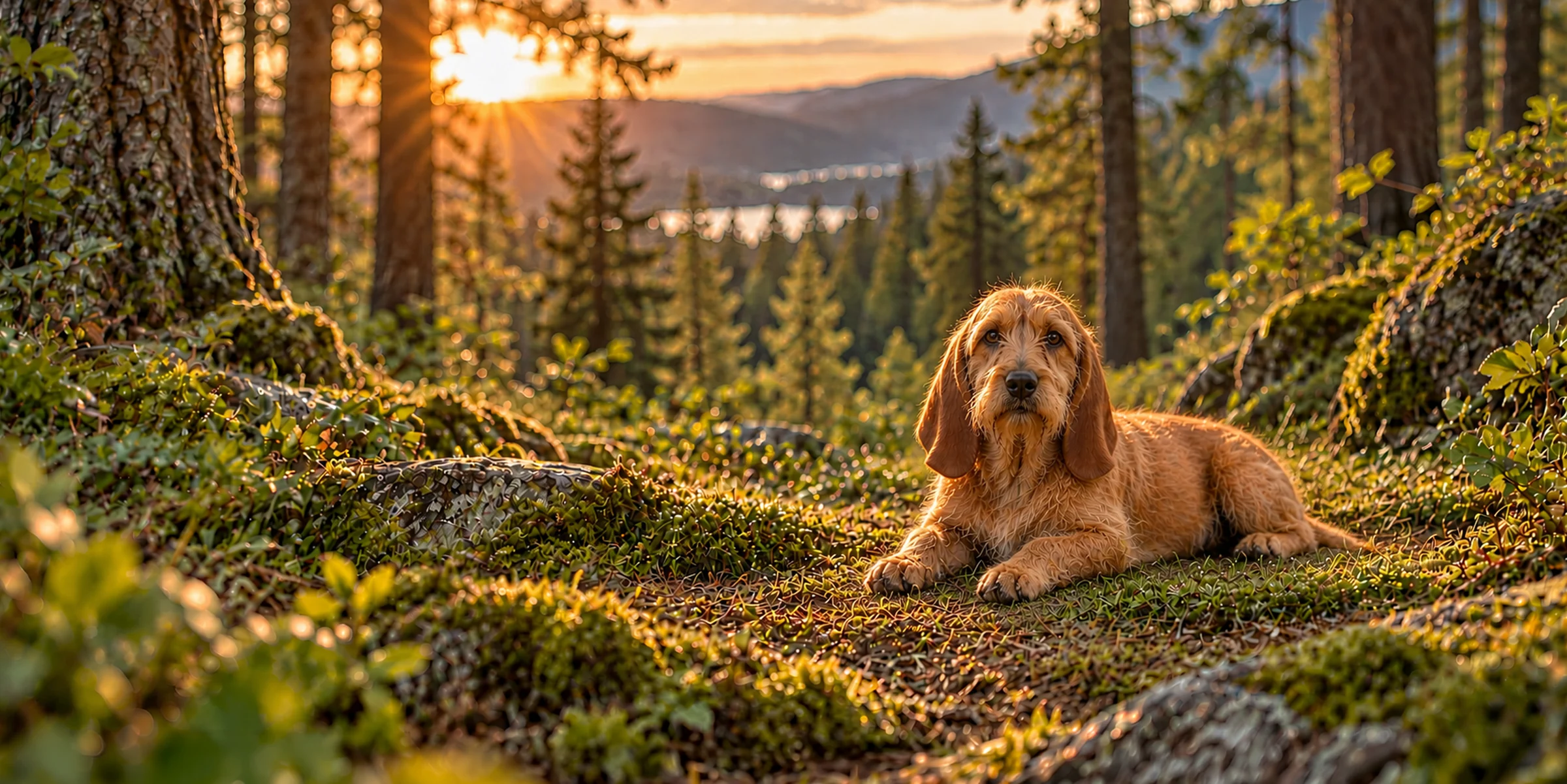
Basset Fauve de Bretagne
Another rough-coated French basset of almost identical size, nose and voice. The Fauve comes in solid fawn to red and is slightly more biddable; the PBGV is more exuberant and far easier to find in the United States.
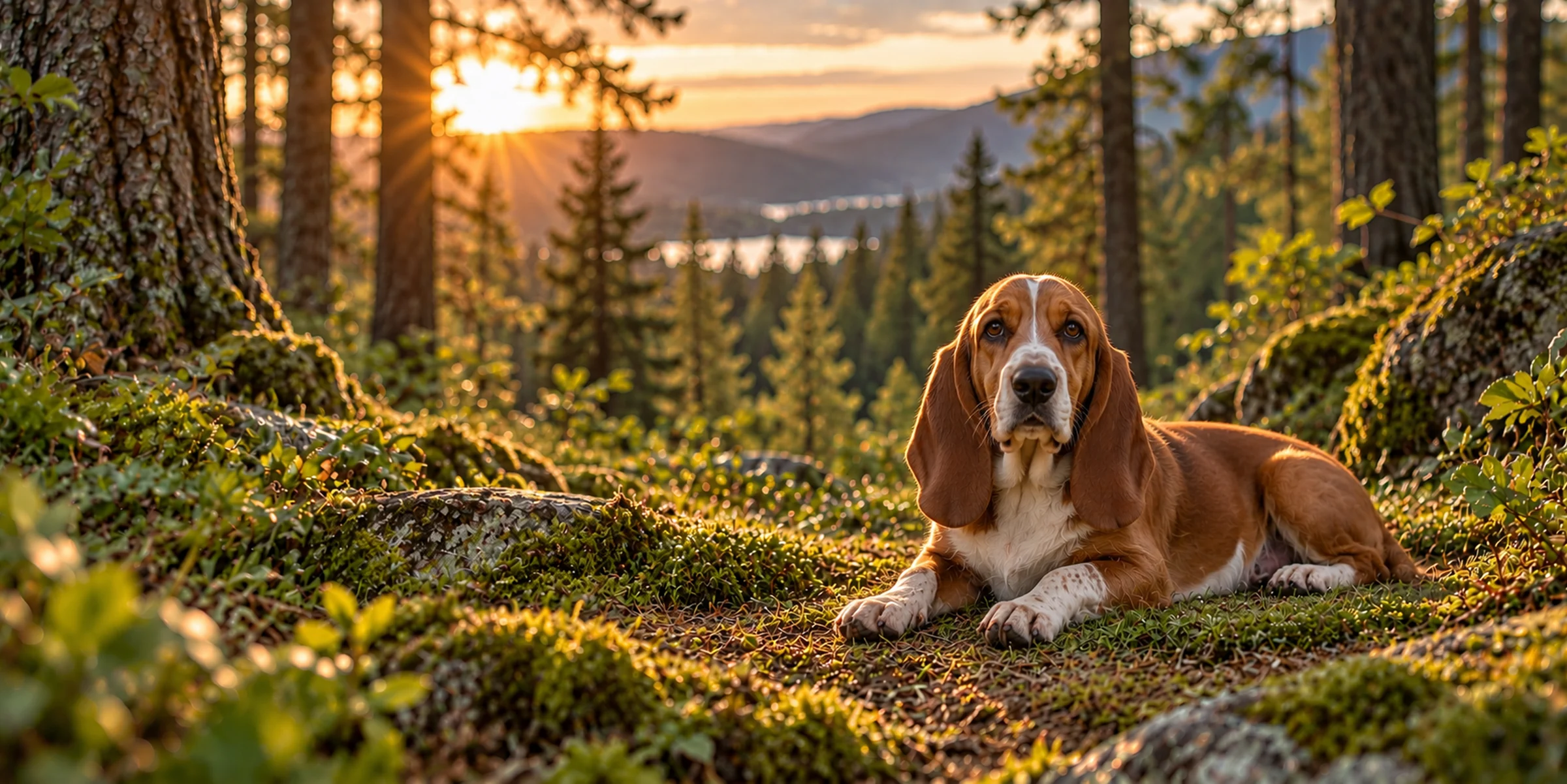
Basset Hound
The same low-set scent-hound build and the same selective hearing on a trail. The Basset is heavier, slower and more laid-back, with a smooth coat and more drool; the PBGV is lighter, busier and much more active.
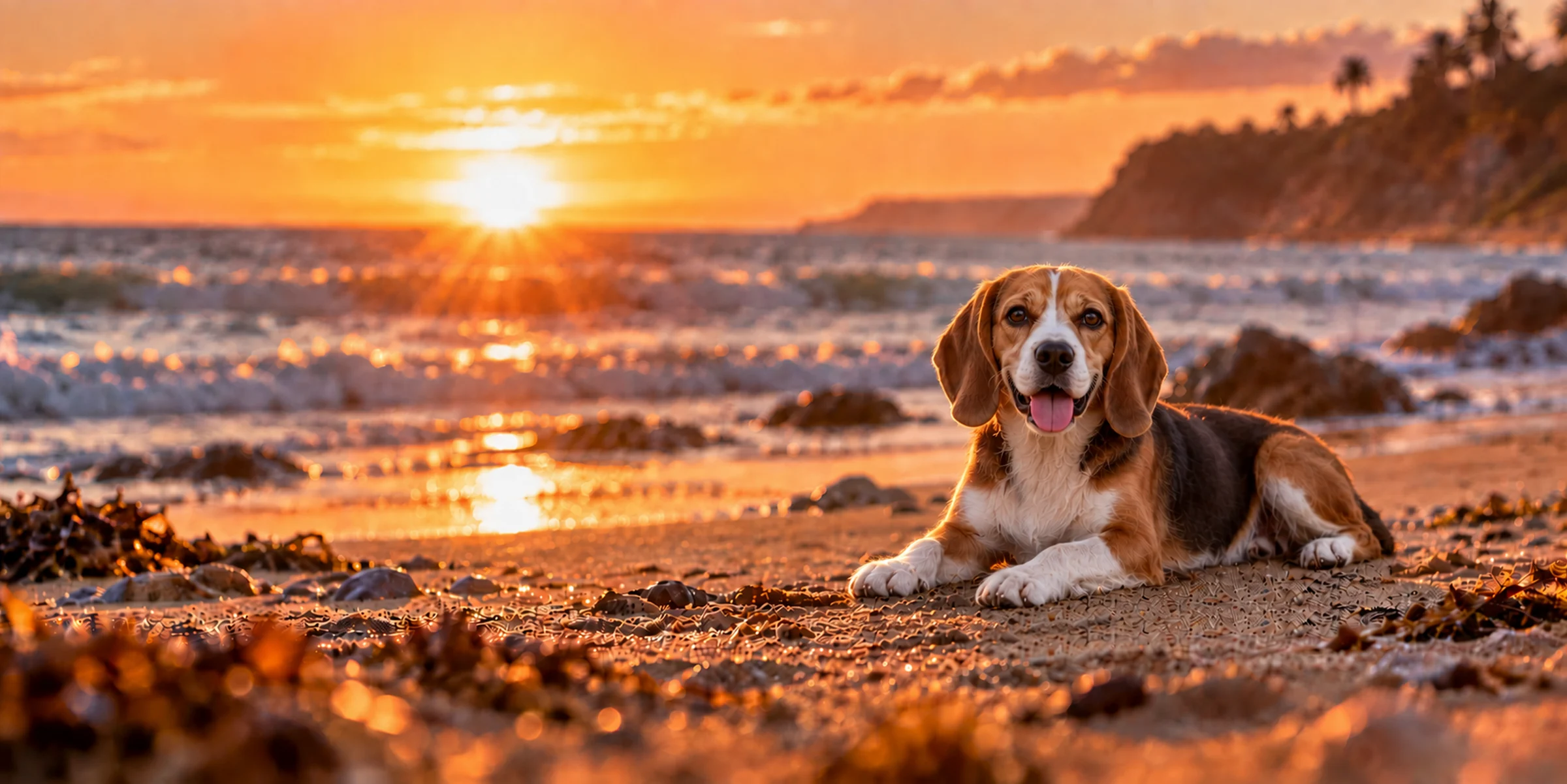
Beagle
A pack hound of the same height with the same food drive, voice and recall problem. The Beagle is smooth-coated and simpler to groom; the PBGV adds a beard, a rough coat and a bit more clowning.