

medium-to-large breed
Portuguese Water Dog
Portuguese fishing crews used these dogs to dive for lost gear, drive fish toward the nets and carry messages between boats - and the breed nearly went out with the boats when the fleet motorized. What the low-shedding coat hides is a 35-to-60-pound athlete with a sporting dog's engine and a groomer's appointment every six to eight weeks. The coat is not allergy-proof, whatever the marketing says.

Pup Height
17-23 in

Pup Weight
35-60 lb
Males 20-23 in and 42-60 lb, females 17-21 in and 35-50 lb. A single coat with no undercoat, in two types: tight, compact curls, or looser waves with a slight sheen. Black, white, or shades of brown, alone or in combination with white. Two clips are correct in the show ring - the lion clip, with the hindquarters, muzzle and base of the tail clipped short and the rest left long, and the retriever clip, scissored to about an inch all over - and both leave the end of the tail at full length. Source: AKC breed standard.

Pup Lifespan
11-13 years
Your pup, at a glance
What’s Life With This Pup Really Like?

High. Porties want to be with their people and happily settle against them after a hard day of play.

Very good. Affectionate and playful with children, though a bouncy, mouthy young Portie can overwhelm toddlers.

Good. Usually sociable with other dogs and fine with cats raised alongside them; some will chase small animals.

Moderate. They bark to alert and when bored, and the voice covers a surprising range.

Very high. A working water dog that needs real daily exercise and something to think about.

Very low. The single coat drops little hair, but that does not make the breed allergy-free.

Exuberant and clownish. Retrieving, swimming and any game with a person top the list.

Low. Little drool, though a wet beard after drinking or swimming drips across the floor.

High. Quick, eager and people-focused, with enough independence to test the rules.

Moderate. Alert and quick to announce visitors, then usually friendly once they come in.

High. Frequent brushing to prevent mats plus a professional clip every six to eight weeks.

Moderate. Handles most homes and climates with enough exercise, but struggles with long hours alone.
Lifestyle fit
Could This Be Your Best Breed?
Portuguese Water Dogs belong with active families who will actually use them - swimming, hiking, dock diving, agility - in a house with a yard and someone around during the day. Eleven to thirteen years is the usual span, and a Portie left without work turns mouthy and destructive. If $2,000 to $3,500 a year does not fit the budget, stop here: the grooming inside that number is not optional.

Living Space
A house with a fenced yard suits them best, ideally within reach of water. A Portuguese Water Dog can live in an apartment with an owner who gets them out for real exercise every day, but a bored one indoors chews, counter-surfs and invents games nobody asked for.

Pup Experience
Workable for a first-time owner who is active and willing to train consistently. Porties are clever and eager, but they are also mouthy, bouncy and quick to learn what they can get away with, so a hands-off owner ends up with a very smart, very pushy dog.

Daily Pup Time
At least an hour of vigorous exercise daily, plus training or a job for the brain, a thorough brush several times a week and a professional clip every six to eight weeks.

Allergies & Coat
The Portuguese Water Dog scores 2/10 for shedding and 2/10 for drooling. No dog is truly hypoallergenic. The allergens come from dander and saliva, and a coat like this one holds on to them rather than spreading them around your home - which is what a groomer is clearing out every six to eight weeks.
Quirks & challenges
The Not-So-Easy Stuff

Very High Energy
A true working dog. A walk around the block does not touch the sides; swimming, running and retrieving do.
Mouthy Puppies
Porties carry things in their mouths by instinct and puppies grab hands, sleeves and anything else in reach. Redirect early and consistently.
Professional Grooming
Low shedding means the hair keeps growing. Expect a clip every six to eight weeks and brushing between visits to prevent mats.
Not Allergy-Proof
Less hair on the floor, but allergens come from dander and saliva too. Allergy sufferers should spend time with the breed first.
Counter Surfing
Tall enough, athletic enough and clever enough to steal food off counters and tables. Keep surfaces clear.
Needs a Job
Bred to work alongside people all day. Left alone and underused for long hours, Porties find their own projects.
The good, the bad & the hairy
Health, Care & Costs
Understanding the health risks and ongoing costs of a Portuguese Water Dog helps you plan for a happy, healthy life together.

11-13 years
$80-$130
per professional groom (bath, clip, nails, ears), every 6-8 weeks ($500-$1,100/year)
$2,000-$3,500/year
all-in (food, routine vet, grooming, insurance, incidentals)

Health Risks
Conditions this breed is prone to.

An inherited disorder in which a missing enzyme lets fatty substances build up in the nerve cells, causing progressive neurological decline and death in young dogs. A DNA test exists and widespread testing has made affected puppies rare, but both parents should still have results.
Gradual degeneration of the retina that begins with night blindness and progresses to vision loss, usually in middle age. The prcd form is identified by a DNA test, and responsible breeders test for it.
A recessive heart disease that causes sudden death in puppies, typically between about six weeks and seven months old. A linked-marker DNA test from PennGen identifies carriers with good but not perfect accuracy, since the marker sits near the gene rather than being the mutation itself.
The adrenal glands stop producing enough hormones, causing vague signs such as lethargy, vomiting and weakness that can escalate into a life-threatening crisis. The breed is predisposed and there is no DNA test; once diagnosed, lifelong medication manages it well.
The hip joint forms loosely and wears into arthritis over time. Both parents should have OFA or PennHIP hip evaluations, and keeping a Portie lean protects the joints.
Follicular dysplasia causes patchy hair loss, often on the flanks, and is mainly cosmetic with no DNA test. Improper coat is a separate, harmless trait - a short, flat coat without the usual furnishings - and a DNA test lets breeders avoid producing it.

Insurance & Health Coverage
Insure early. Addison's disease tends to appear in young to middle-aged dogs, and once it is on the record it becomes a permanent exclusion. Treated, it means lifelong medication and regular blood tests, which adds up over a dog that may live another eight or ten years.

The inherited diseases with DNA tests - GM1 storage disease, prcd-PRA and JDCM - are congenital, so no policy will cover them. Parent test results are the real protection there; ask the breeder for the paperwork before you commit.

For the rest, look for a policy that covers chronic conditions without a low per-condition cap, and read the waiting periods for hip dysplasia, which some insurers set longer than for other claims.
 Get a Pet Insurance Quote
Care needs
The Daily Routine

Grooming
A single coat that barely sheds but grows continuously. Brush and comb down to the skin several times a week, more after swimming, to keep mats out. Most owners keep a retriever clip for easier care and book a groomer every six to eight weeks. Rinse off salt or chlorine after swims and dry the ears well.

Exercise
At least an hour of vigorous exercise every day - swimming is ideal, and running, hiking, retrieving and dog sports all suit the breed. Mental work matters as much as mileage. Puppies should build up gradually rather than doing long runs before their joints mature.

Food & Weight
A quality diet for an active medium-sized dog, measured rather than free-fed. Porties are food-motivated and will gain weight if exercise drops off, so adjust portions to the workload and count training treats in the daily total.
Similar breeds
If This Isn’t Quite the One
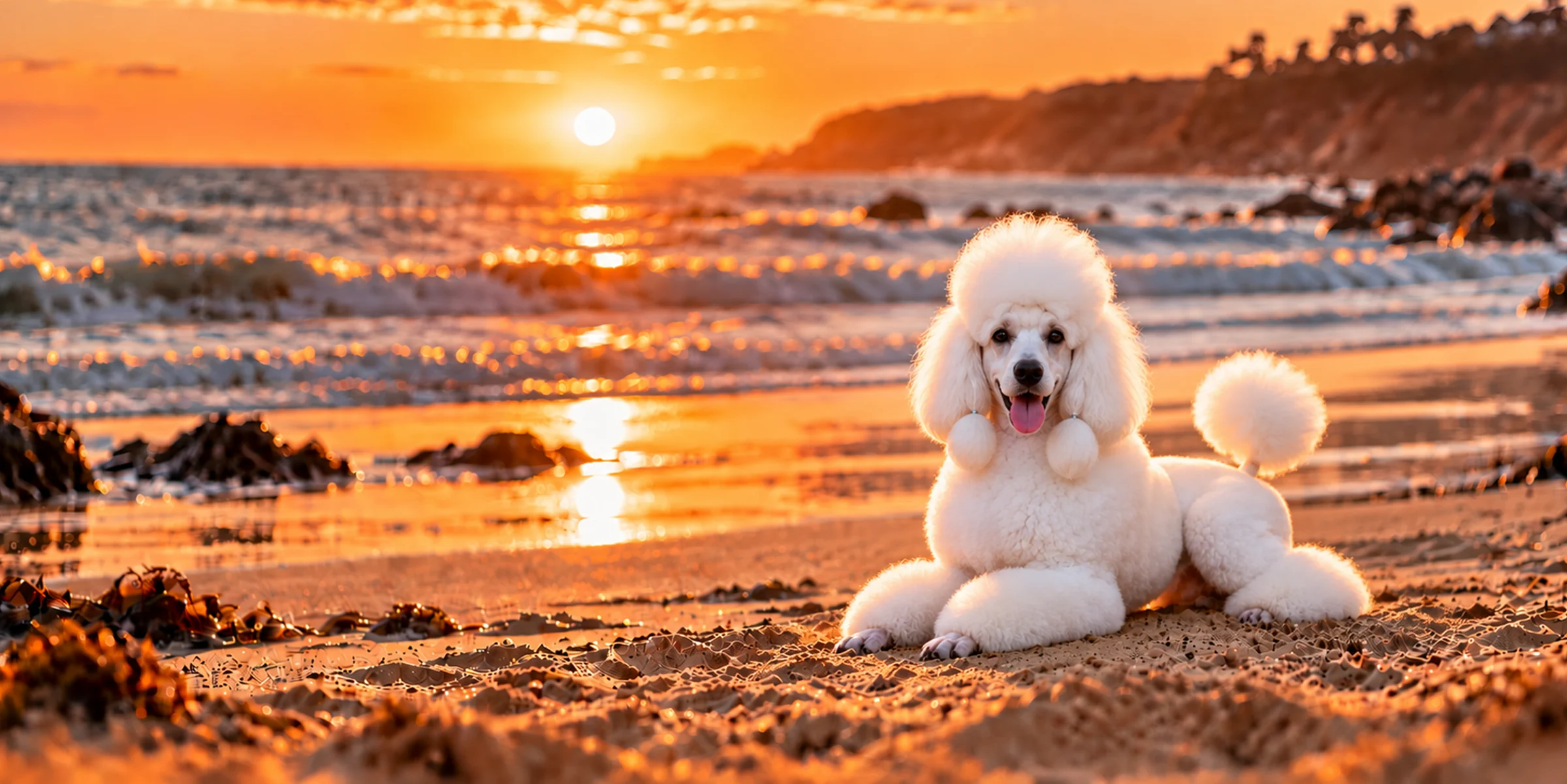
Standard Poodle
Another clever, athletic water retriever with a low-shedding coat and a traditional show clip. The Standard Poodle is taller, a little more refined and often more sensitive; the Portuguese Water Dog is sturdier, rowdier and more of a working dog.
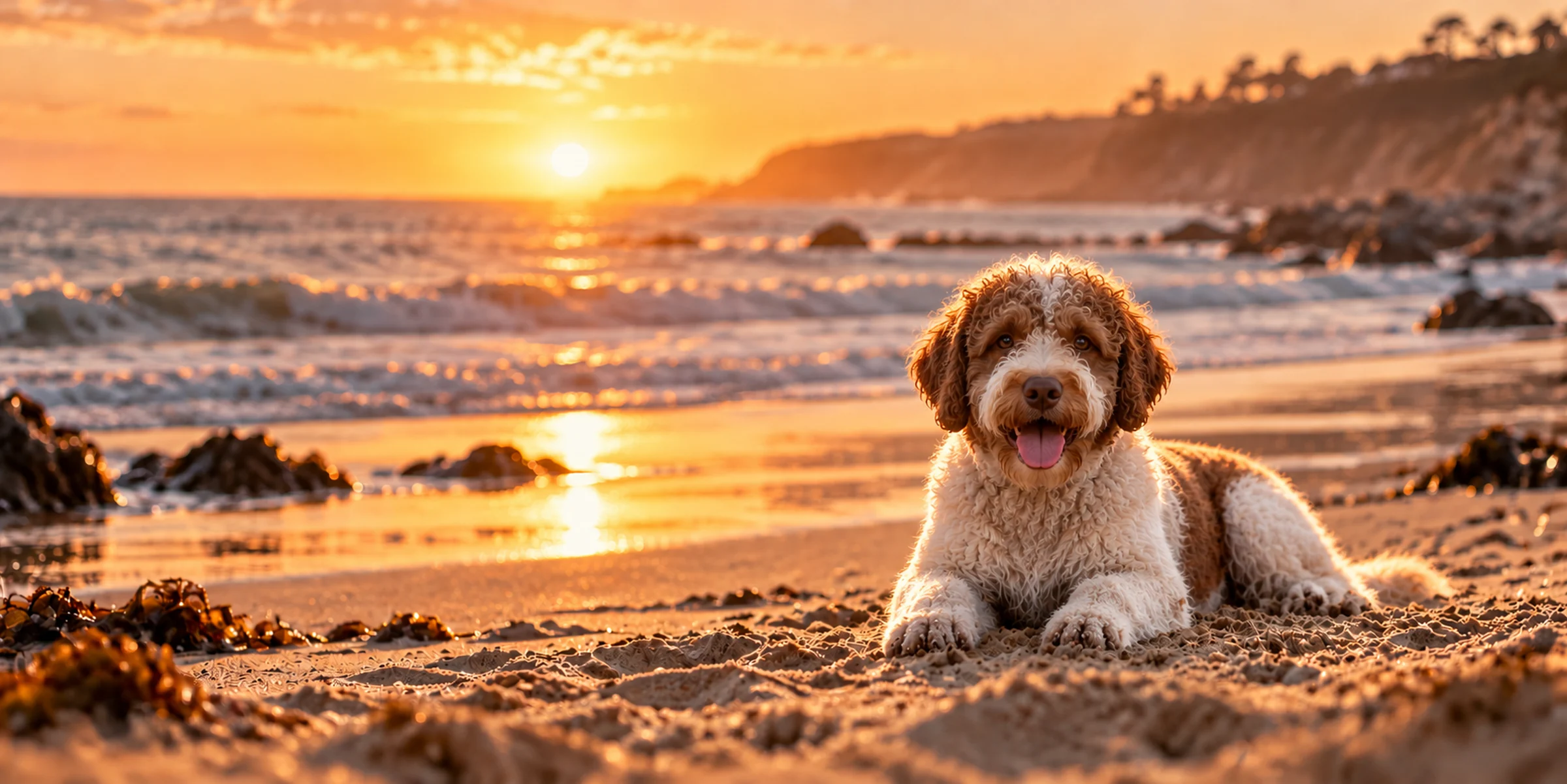
Lagotto Romagnolo
A curly-coated Italian water dog of similar size and grooming needs. The Lagotto is now a truffle hunter with a busy nose and a slightly softer energy level; the Portie is more of a swimmer and needs more exercise.

Barbet
A French water dog with a similar woolly coat and love of water. The Barbet tends to be calmer and more easygoing at home; the Portuguese Water Dog is more intense and needs more structured work.
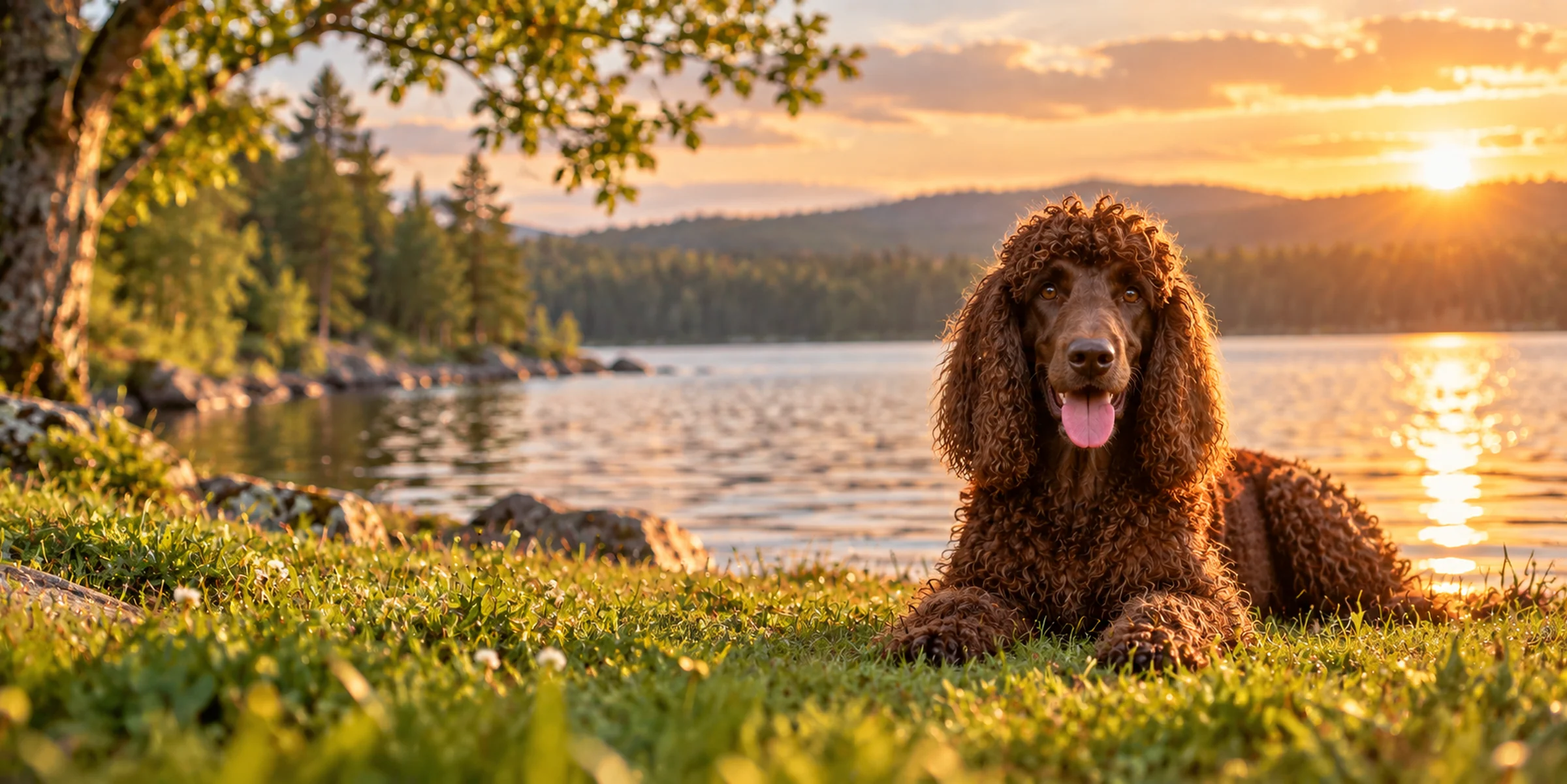
Irish Water Spaniel
A curly-coated water specialist with the same clownish streak and grooming demands. The Irish Water Spaniel is larger, rarer and more reserved with strangers; the Portie is more outgoing.
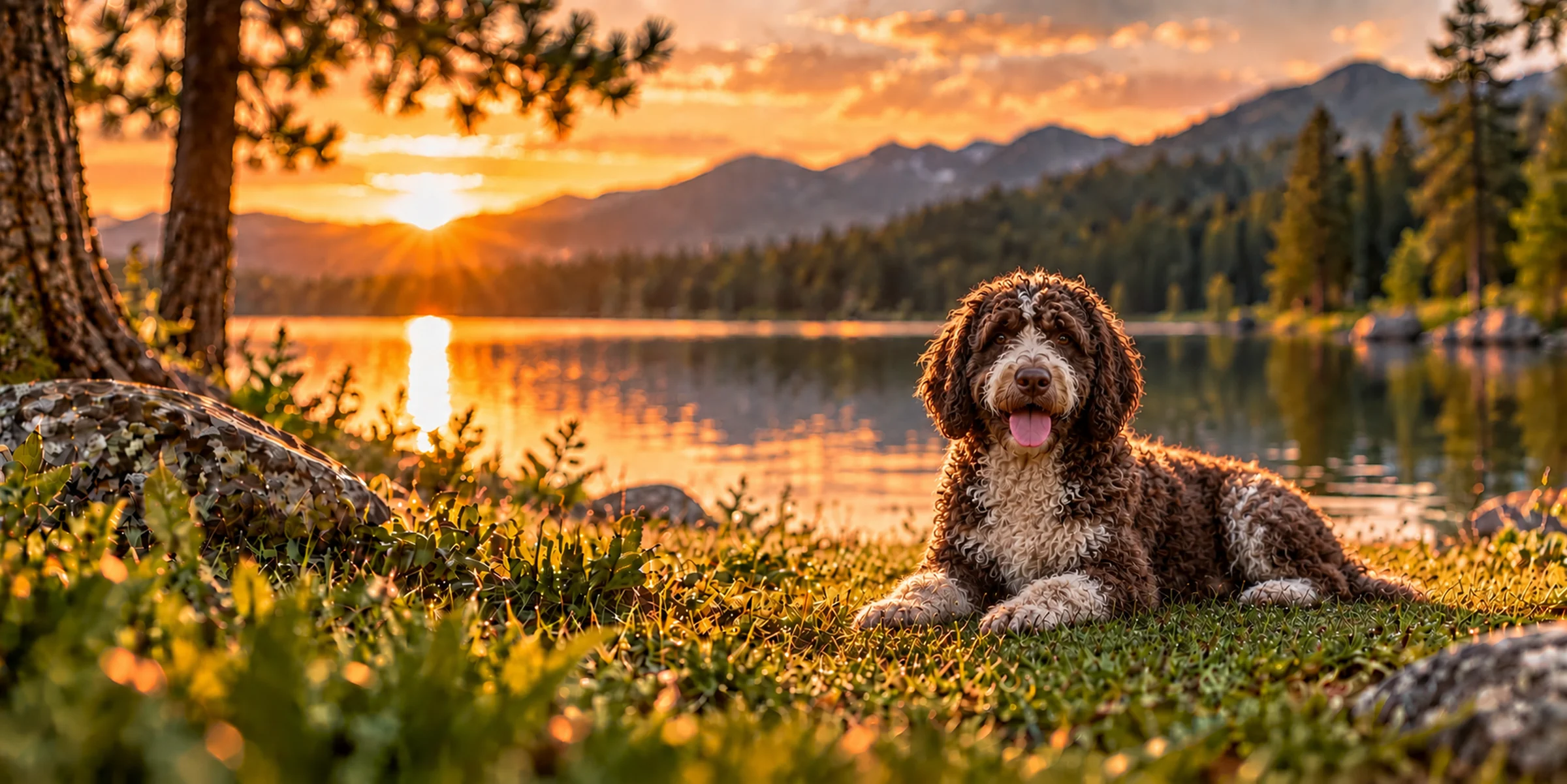
Spanish Water Dog
The herding version from across the border, and a very different grooming bill. Spanish Water Dogs cord and are shorn once or twice a year rather than clipped every six weeks, and they are markedly warier with strangers.