

medium breed
Spanish Water Dog
A Spanish farm dog with three jobs at once - moving sheep and goats through Andalusia, working alongside the fishermen, and swimming out for whatever needed fetching back. Spanish Water Dogs are busy, funny, athletic and stuck to their person, and the corded coat is the cheap part, sheared off once or twice a year and never brushed. What costs is the rest: two hours of thinking work a day, and real suspicion of every stranger in a hallway.

Pup Height
15.75-19.75 in

Pup Weight
31-49 lb
Males 17.5-19.75 in and 40-49 lb, females 15.75-18 in and 31-40 lb. A single curly coat with no undercoat, which mats into cords as the length grows. Solid white, black or brown in any shade, or those colors broken with white; black and tan and tricolor are not accepted. The coat is shown in a natural state at an even length all over, roughly 1-5 in, and sculpting or scissoring the outline is penalized. The tail may be docked or left natural. Recognized by the AKC in 2015. Source: AKC breed standard.

Pup Lifespan
12-14 years
Your pup, at a glance
What’s Life With This Pup Really Like?

High. Deeply attached and often a one-person shadow, happy to lie against a leg once the day's work is done.

Good with their own, with caveats. Playful and sturdy with children they live with, though the herding instinct aims at running kids and visiting children meet the reserved side first.

Good. Usually sociable with dogs and fine with cats raised alongside them, with a herding urge that can make them bossy.

High. A ready alarm bark at anything new, and it grows worse in a dog who is under-exercised.

Very high. Ninety minutes to two hours of real work daily, and the thinking half matters as much as the mileage.

Very low. The single coat holds loose hair in the cords rather than dropping it, though that does not make the breed allergy-proof.

Exuberant and tireless, especially anything involving water. They play the way they work, at full commitment.

Very low, though a wet corded beard drips across the floor after a drink.

High. Quick, eager and genuinely cooperative, and sensitive enough that rewards get far more than pressure.

Very high. Alert, reserved with strangers and quick to announce them, with a protective streak behind the voice.

Low, and unusually so for a curly breed. No brushing at all and a clipper shear-down once or twice a year - the real work is drying the cords and checking the skin underneath.

Low to moderate. The size and the low shedding travel well, but the exercise needs, the barking and the wariness of strangers make small shared buildings hard.
Lifestyle fit
Could This Be Your Best Breed?
A Spanish Water Dog wants a semi-rural home with a securely fenced yard, and an owner who has lived with a herding breed and will socialize hard before six months. Grooming barely registers in the $1,400 to $2,300 a year the breed costs, and they give twelve to fourteen years. Two households should pass: anybody behind a shared wall, and anybody whose plan for a working dog is a long walk.

Living Space
A house with a securely fenced yard, and honestly a rural or semi-rural life. Spanish Water Dogs are only medium-sized and they shed almost nothing, so an apartment looks workable on paper - the obstacles are the alert barking through shared walls, the wariness of every stranger in a hallway, and an exercise requirement a city block cannot meet.

Pup Experience
Better for an owner who has lived with a working herding breed. The Spanish Water Dog is quick, cooperative and easy to teach; the difficulty is a serious drive to work, real suspicion of strangers that has to be socialized early, and a sensitivity that punishes heavy-handed training.

Daily Pup Time
Ninety minutes to two hours of real activity daily, with thinking work in it. Coat care is almost nothing day to day - no brushing at all - plus a shear-down once or twice a year, weekly ear checks and a long drying session after every swim or bath.

Allergies & Coat
The Spanish Water Dog scores 2/10 for shedding and 2/10 for drooling. No dog is truly hypoallergenic. The allergens come from dander and saliva, and a coat that sheds this little leaves far less of them on your furniture, floors, and clothes.
Quirks & challenges
The Not-So-Easy Stuff

The Coat Is Never Brushed
The curls are meant to mat into cords, so brushing is wrong for the breed. The whole coat comes off with clippers once or twice a year instead.
Slow to Dry After Water
A corded coat holds water for hours, and damp cords sour the skin underneath. Towels and a dryer are the routine, not a nice-to-have.
Wary of Strangers
Reserved and watchful by default. Without wide early socialization that hardens into suspicion of visitors.
Very High Exercise Needs
Two hours of real work, not a stroll. An under-worked Spanish Water Dog gets loud, busy and destructive.
Herding the Family
Circling, bumping and heel-nipping at running children and bikes. Redirect it early into something legal.
Alarm Barking
A sharp, ready voice aimed at anything new on the street. A quiet cue belongs in the first weeks.
The good, the bad & the hairy
Health, Care & Costs
Understanding the health risks and ongoing costs of a Spanish Water Dog helps you plan for a happy, healthy life together.

12-14 years
$50-$90
for a full shear-down (clipper all over, nails, ears), once or twice a year, and easily done at home with a clipper ($0-$180/year)
$1,400-$2,300/year
all-in (food, routine vet, grooming, insurance, incidentals)

Health Risks
Conditions this breed is prone to.

The hip joint develops loosely and the ball wears in the socket instead of gliding, ending in arthritis and sometimes surgery. Both parents should have OFA or PennHIP results, and keeping a Spanish Water Dog lean protects the joints for life.
The retina degenerates gradually, starting with night blindness and ending in total vision loss, usually in middle age. The prcd form has a DNA test and tested parents remove the risk, so ask for both certificates alongside current eye examinations.
An inherited thyroid defect found in the breed, in which affected puppies fail to grow normally and develop a goiter. A DNA test for the TPO gene mutation identifies carriers, and two tested parents rule it out entirely.
A rare inherited neurological disease of young Spanish Water Dogs that causes progressively worsening loss of coordination. There is a DNA test, it is recessive, and clear or carrier parents cannot produce an affected puppy.
One of the likelier reasons this breed sees a vet. Environmental allergies show as itching, chewed feet and recurring ear trouble, and the management is lifelong rather than a one-time fix.
Drop ears under a dense coat, on a dog who swims at every opportunity, trap warmth and moisture against the canal. Drying the coat properly and parting the cords to check the skin catches hot spots and yeast before they become a vet visit.

Insurance & Health Coverage
Insure young. Allergies are the claim this breed is most likely to make, they usually declare themselves in the first two or three years, and skin disease noted before cover starts becomes a permanent exclusion on a condition that then needs managing for a decade.

Read how the policy handles ongoing conditions across renewal years rather than only the first claim. Atopic skin disease means repeat consultations, medicated washes, diet trials and sometimes long-term medication, and a low per-condition cap runs out early.

The serious inherited diseases are a different matter: progressive retinal atrophy, congenital hypothyroidism with goiter and neuroaxonal dystrophy are congenital, so no policy covers them. All three have DNA tests, which makes the breeder's paperwork on both parents the real protection - ask for it before you commit.
 Get a Pet Insurance Quote
Care needs
The Daily Routine

Grooming
Unlike almost every other curly breed, this coat is never brushed. The single curly coat is meant to felt into cords as it grows, and a brush or comb pulls that structure apart, so the correct routine is to leave it alone and shear the whole dog down to an even length with clippers once or twice a year - many owners do it at home, and there is no professional trim, no scissoring and no shaping. What the coat does need is drying. A corded coat soaks up water and holds it for hours, so bathe rarely, rinse salt or chlorine out after swims, towel hard and use a dryer, and part the cords now and then to check the skin underneath. Ears get checked weekly, and hair between the pads is trimmed as it grows.

Exercise
Ninety minutes to two hours daily, and the mental half is not optional. Herding lessons, agility, dock diving, swimming, long hikes and nose work all suit a breed built to work a full day; a walk around the block does not touch a Spanish Water Dog. Build a puppy up gradually rather than running distance before the joints mature.

Food & Weight
Two measured meals scaled to the workload, which varies a lot between a working weekend and a quiet week. The coat hides condition completely, so judge weight by feeling for the ribs rather than by eye, and count training treats in the daily total.
Similar breeds
If This Isn’t Quite the One

Portuguese Water Dog
The other Iberian water dog and the usual comparison, at a similar size. The Portie is a water worker rather than a herder, is far more outgoing with strangers, and carries a clipped coat that means a groomer every six to eight weeks; the Spanish Water Dog herds as well as swims, is markedly more reserved, and wears a corded coat that is shorn once or twice a year and never brushed.
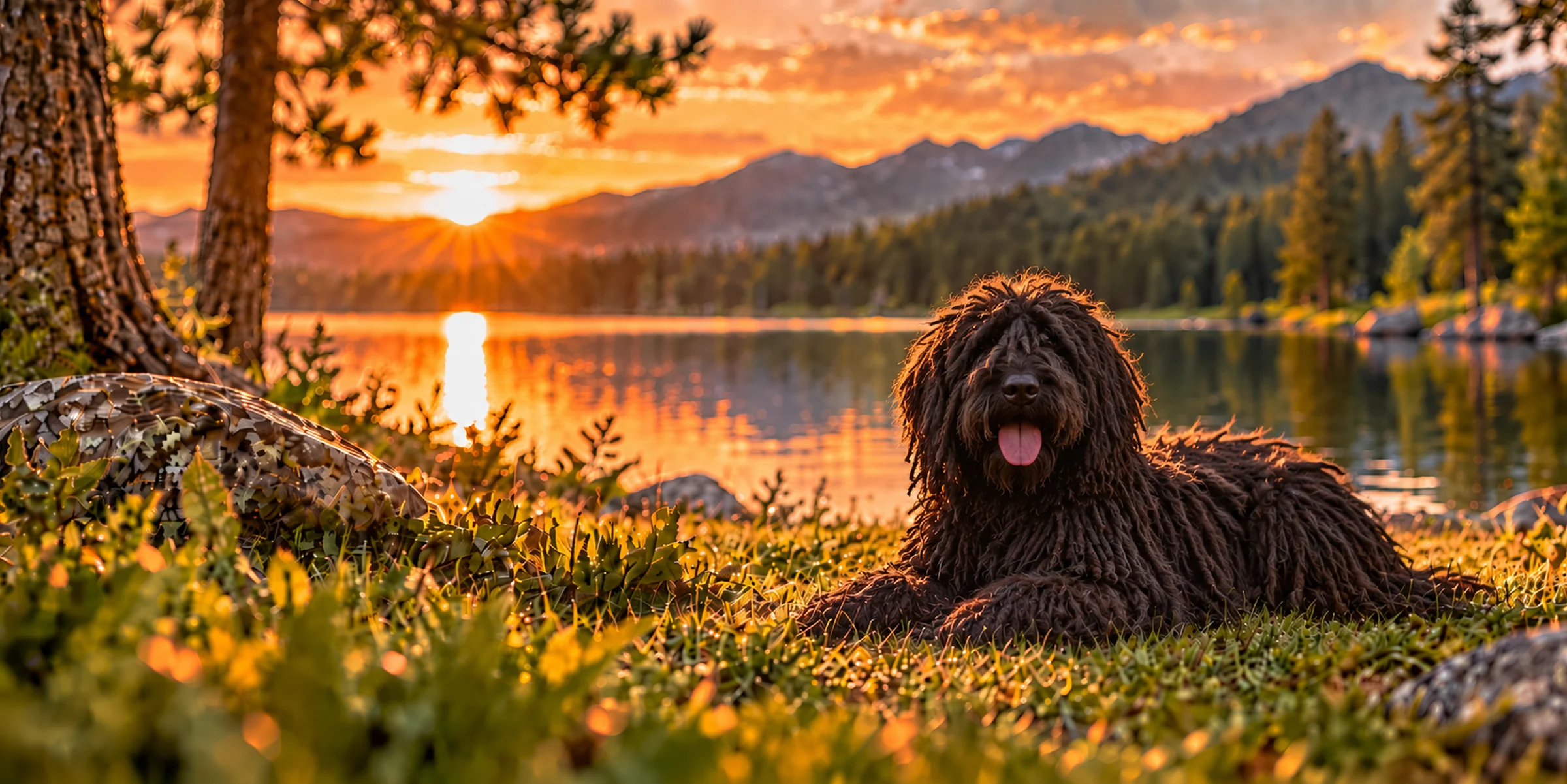
Puli
The other corded herding breed here, and the honest contrast on coat work. Puli cords are separated by hand as they form and grown for years; Spanish Water Dog cords are left to felt on their own and clipped off. The Puli is smaller and springier, the Spanish Water Dog bigger, calmer indoors and far more driven toward water.
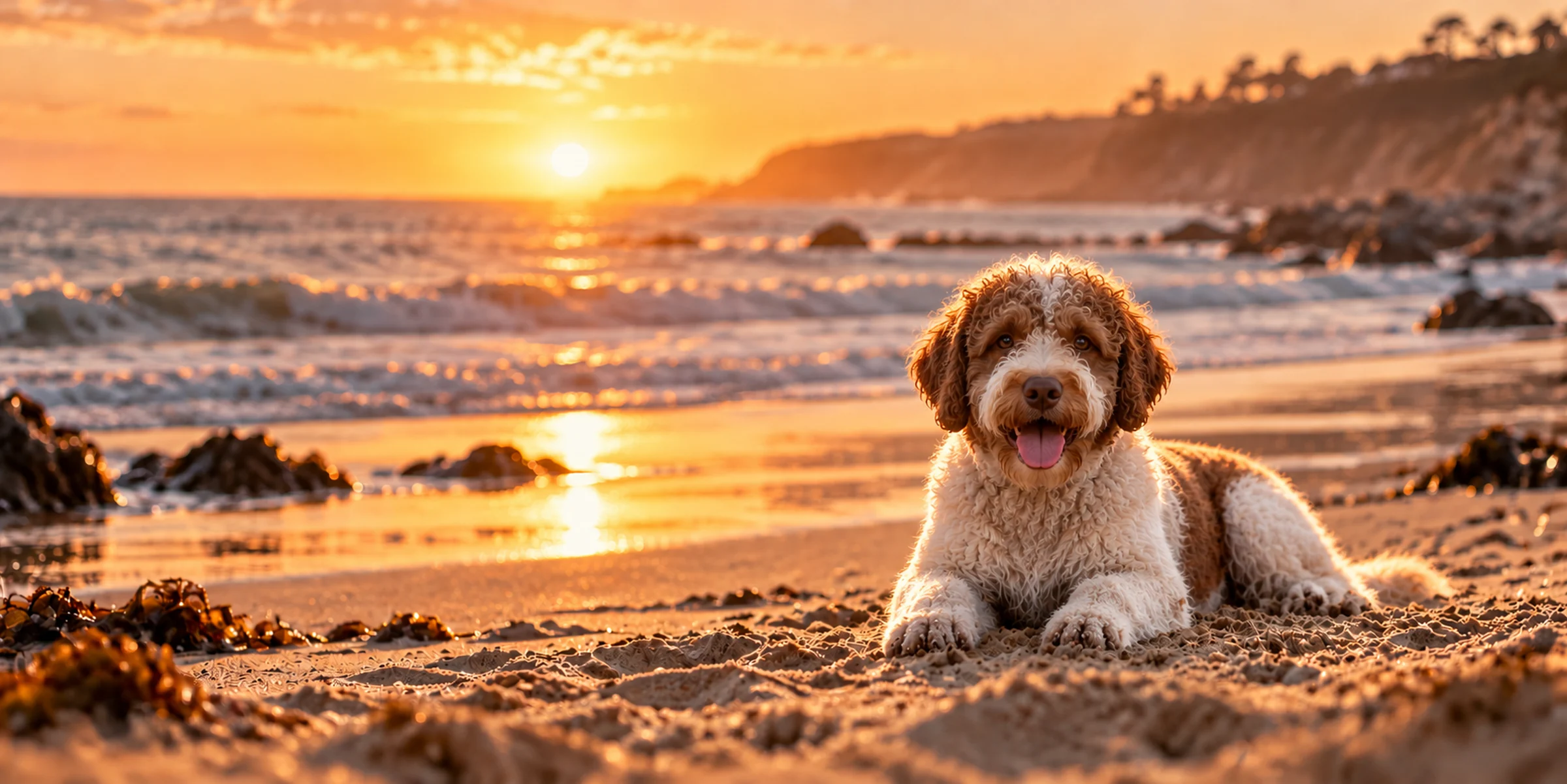
Lagotto Romagnolo
A curly Italian water dog of similar size turned to truffle hunting. The Lagotto is friendlier with strangers, needs noticeably less exercise, and lives in a combed and clipped coat every couple of months; the Spanish Water Dog needs more work and far less coat maintenance.
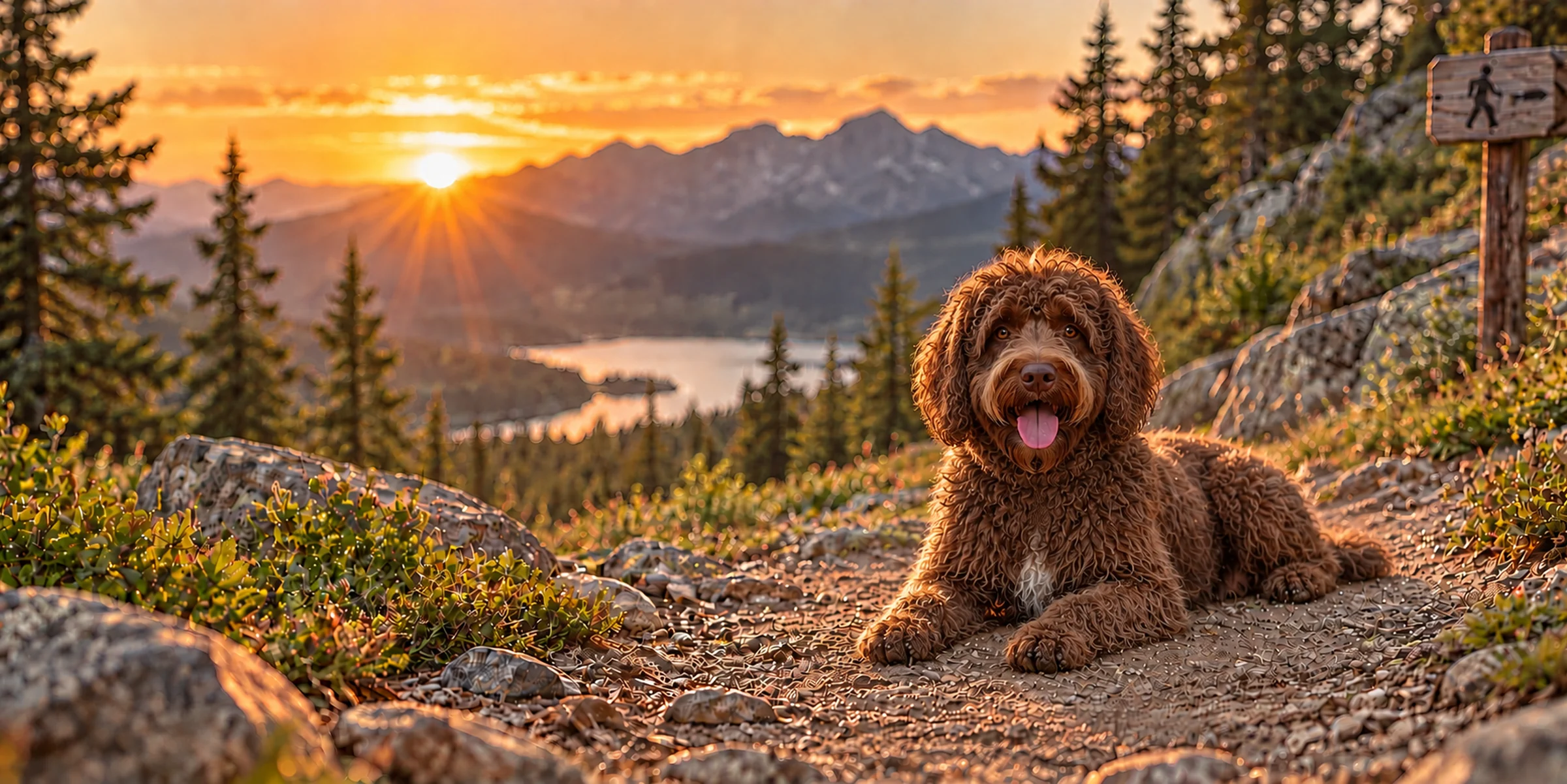
Barbet
A French water dog with the same love of swimming and a much easier social temperament - the Barbet likes everybody, where the Spanish Water Dog reserves judgment. The trade is grooming: the Barbet's woolly coat is a serious ongoing commitment, and the Spanish Water Dog's is a shear-down twice a year.