

large-to-giant breed
Romanian Mioritic Shepherd Dog
The shaggy pale one of Romania's two mountain guardians, named for a folk ballad in which a lamb warns a shepherd of danger. Mioritics carry 100 to 130 pounds under a long, dense coat that mats down to the skin if a week gets away from you and traps heat in summer. The look invites exactly the wrong expectation: this is a courageous, self-directed guard dog, not a large soft toy.

Pup Height
25.5-29.5 in

Pup Weight
100-130 lb
Males at least 27.5 in and ideally 29.5 in, females at least 25.5 in and ideally 27.5 in. The standard asks only for weight in proportion to size; the AKC lists 100-130 lb. A long, rough, straight coat at least 4 in long on the head and body, shorter on the legs, over a denser, paler undercoat, with a well-feathered tail. White with well-defined gray or black patches, or solid white or solid gray, with the ear tips pigmented dark gray or black. FCI standard 349, revised in 2022; in the AKC's Foundation Stock Service since May 2018, which follows the FCI standard. Source: AKC Foundation Stock Service breed standard.

Pup Lifespan
12-14 years
Your pup, at a glance
What’s Life With This Pup Really Like?

Moderate. Affectionate and steady with their family, but more likely to lie where they can watch the door than to lean in for a cuddle.

Fair. Calm and protective with the family's own children, but a guardian may misread rough play or visiting friends, and the size alone calls for supervision.

Mixed. Reliable with livestock and household animals they are raised with; unfamiliar dogs on their ground are usually unwelcome.

High. Barking is the first line of defense, especially at night, and training reduces rather than removes it.

Low to moderate. Calm and watchful most of the day, with sudden speed when something needs dealing with.

Heavy. A long coat over a dense undercoat that sheds steadily and blows out in spring and fall.

Serious. Mioritics show little interest in fetch or games; guarding their territory is the job they care about.

Low. Some drool after drinking or in the heat, but not a dripping mastiff-type mouth.

Low. Intelligent but bred to decide for themselves, so they weigh a request rather than simply following it.

Top of the scale. A guardian bred to face bears and wolves, not just to raise the alarm.

High. Long hair that mats if neglected, several thorough brushings a week, and daily undercoat work during the blowouts.

Very low. They need land, secure fencing, distance from neighbors and a cool climate.
Lifestyle fit
Could This Be Your Best Breed?
A Romanian Mioritic Shepherd Dog belongs on rural land with livestock to watch and an owner who has kept a guardian breed and will commit to several thorough brushings a week. Grooming alone can reach $900 a year, inside a total of $2,500 to $4,000. Choose another breed if that coat is going to be somebody's weekend problem rather than a routine.

Living Space
Rural land with a tall, sound perimeter fence and a territory to watch, ideally with livestock. Romanian Mioritic Shepherd Dogs patrol and bark at what they notice, especially at night, so close neighbors and a suburban lot are a poor match, and an apartment is not realistic for a dog this size.

Pup Experience
Experienced owners only, preferably people who have lived with a livestock guardian before. A Mioritic is calm and steady but bred to make decisions alone with a flock, and a first-time owner expecting a big, fluffy companion who follows instructions will be caught out.

Daily Pup Time
About an hour of walking or patrolling a large property, plus several thorough brushing sessions a week and heavier work through the coat blow. The larger commitment is lifelong: socialization, secure containment and managing visitors.

Allergies & Coat
The Romanian Mioritic Shepherd Dog scores 8/10 for shedding and 3/10 for drooling. No dog is truly hypoallergenic. The allergens come from dander and saliva, and a dog that sheds this much will leave plenty of hair behind - especially on your furniture, floors, and clothes.
Quirks & challenges
The Not-So-Easy Stuff

Wary of Strangers
Visitors, delivery drivers and unfamiliar dogs are treated as possible threats. Every arrival needs managing.
Night Barking
Barking is how a guardian keeps predators away, and it peaks after dark. Neighbors will hear it.
Independent Thinker
Bred to act without instruction. Recall is never fully reliable once something has their attention.
Coat Care and Matting
A long, rough coat that tangles behind the ears, in the armpits and on the hindquarters. Skipped brushing turns into mats quickly.
Fence Testing
A guardian claims territory broadly. Low or weak fencing will be tested, and a loose Mioritic may keep going.
Rare and Hard to Find
Very few breeders outside Romania and little health data. Finding screened, well-bred lines takes real patience.
The good, the bad & the hairy
Health, Care & Costs
Understanding the health risks and ongoing costs of a Romanian Mioritic Shepherd Dog helps you plan for a happy, healthy life together.

12-14 years
$100-$160
per groom (bath, blow-out and dematting on a long-coated giant), every 8-10 weeks, or done at home ($0-$900/year)
$2,500-$4,000/year
all-in (food, routine vet, grooming, insurance, incidentals)

Health Risks
Conditions this breed is prone to.

The hip joint develops loosely and wears into arthritis, sometimes needing costly surgery on a dog this heavy. Ask for hip scores on both parents, and keep puppies lean and on controlled exercise while they grow.
A developmental fault in the elbow joint that causes front-leg lameness and early arthritis. It is common in giant, fast-growing breeds generally, so elbow scores on the parents are worth asking for.
The stomach fills with gas and twists, cutting off circulation, and it kills within hours without emergency surgery. Deep-chested giant breeds are at real risk - split food into two meals and keep hard exercise away from feeding.
A heavy-coated mountain dog built for cold winters. In hot climates they need shade, water and exercise moved to the cool ends of the day.
Mats trap moisture and dirt against the skin, which leads to hot spots and infections that stay hidden under long hair. Regular brushing down to the skin prevents most of it.
The breed is rare outside Romania, with no large health surveys and no breed-specific DNA tests. Choose a breeder who screens hips and elbows and is open about the health of related dogs.

Insurance & Health Coverage
Insure young. The conditions most likely to matter - joint problems and bloat - are expensive on a dog of 100-130 pounds, and anything noted on the record before a policy starts becomes a permanent exclusion.

Bloat is an emergency surgery with a bill in the thousands, and hip or elbow surgery sits in the same range. Anesthesia and medication are dosed by weight, so every treatment costs more on a giant. Check that a policy covers hereditary and developmental conditions, since some exclude dysplasia or cap it tightly.

There is also a liability question that health insurance does not touch. A giant, protective guardian breed can affect homeowner's or renter's cover, so check that policy too before bringing a Mioritic home.
 Get a Pet Insurance Quote
Care needs
The Daily Routine

Grooming
A long, rough coat over a dense undercoat that needs a thorough brushing down to the skin two or three times a week, with extra attention behind the ears, under the legs and on the hindquarters where mats form. During the spring and fall blowouts, work through the undercoat daily with a rake. The rough outer hair sheds dirt fairly well, so baths are occasional - and a full bath and dry on a dog this size is a project. Trim nails, check ears, and never shave the coat.

Exercise
Moderate. About an hour a day of walking or time patrolling a securely fenced property suits them; a Mioritic saves energy for guarding rather than burning it off in games. Keep exercise on leash or behind fencing, and hold back on long hikes and jumping until the growth plates close at around 18-24 months.

Food & Weight
Large-breed puppy food and slow, controlled growth protect the joints of a dog heading past 100 pounds. Adults do best lean, on two measured meals a day with vigorous activity kept away from feeding because of the bloat risk. The coat hides weight gain, so check by feel over the ribs rather than by eye.
Similar breeds
If This Isn’t Quite the One
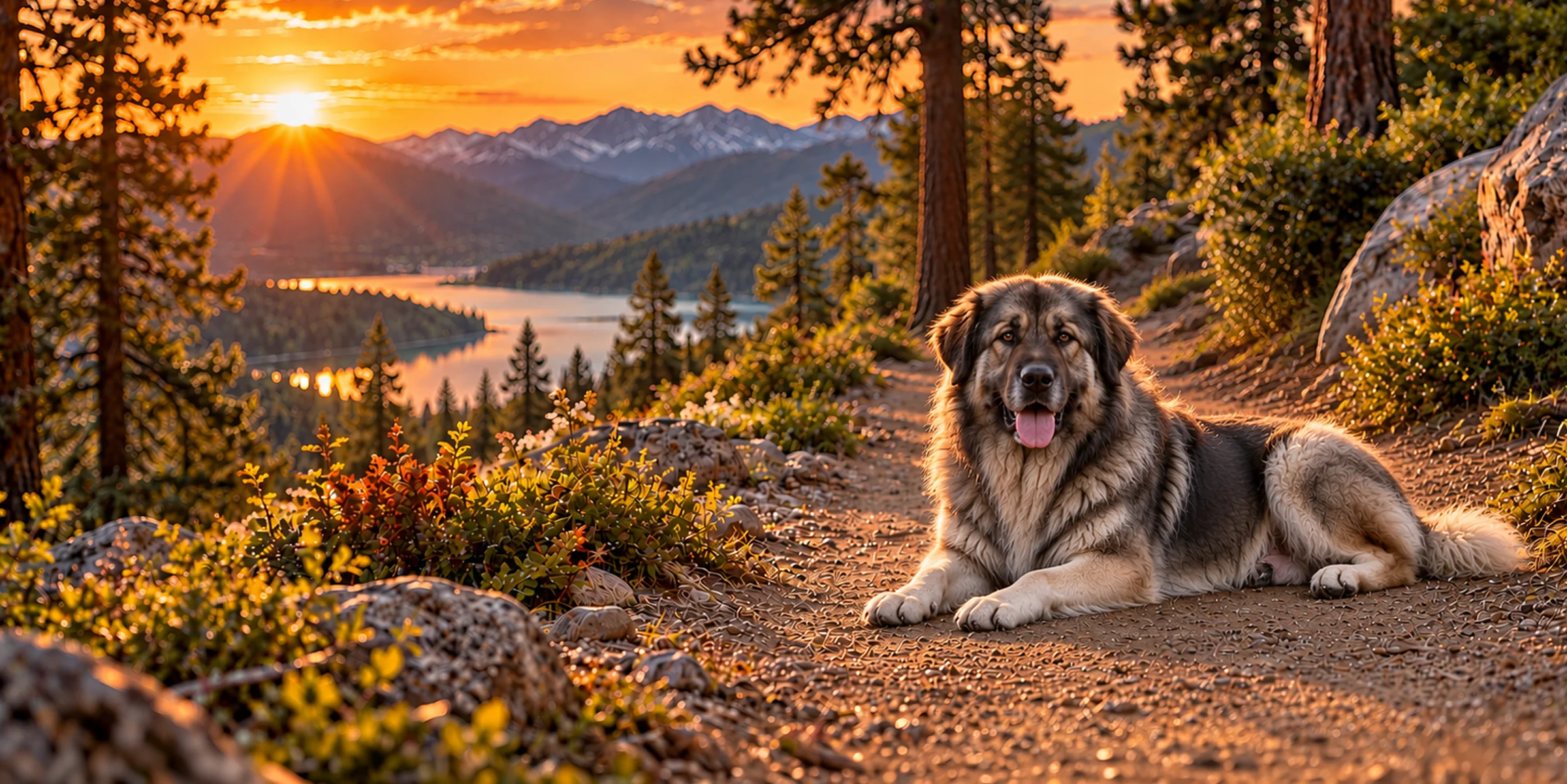
Romanian Carpathian Shepherd
The other Romanian flock guardian from the same mountains, and the one most often confused with this breed. The Carpathian is the wolf-gray one, lighter, with a shorter rough coat; the Mioritic is bigger, long-coated and shaggy, usually white or pale with gray patches, and needs far more brushing.
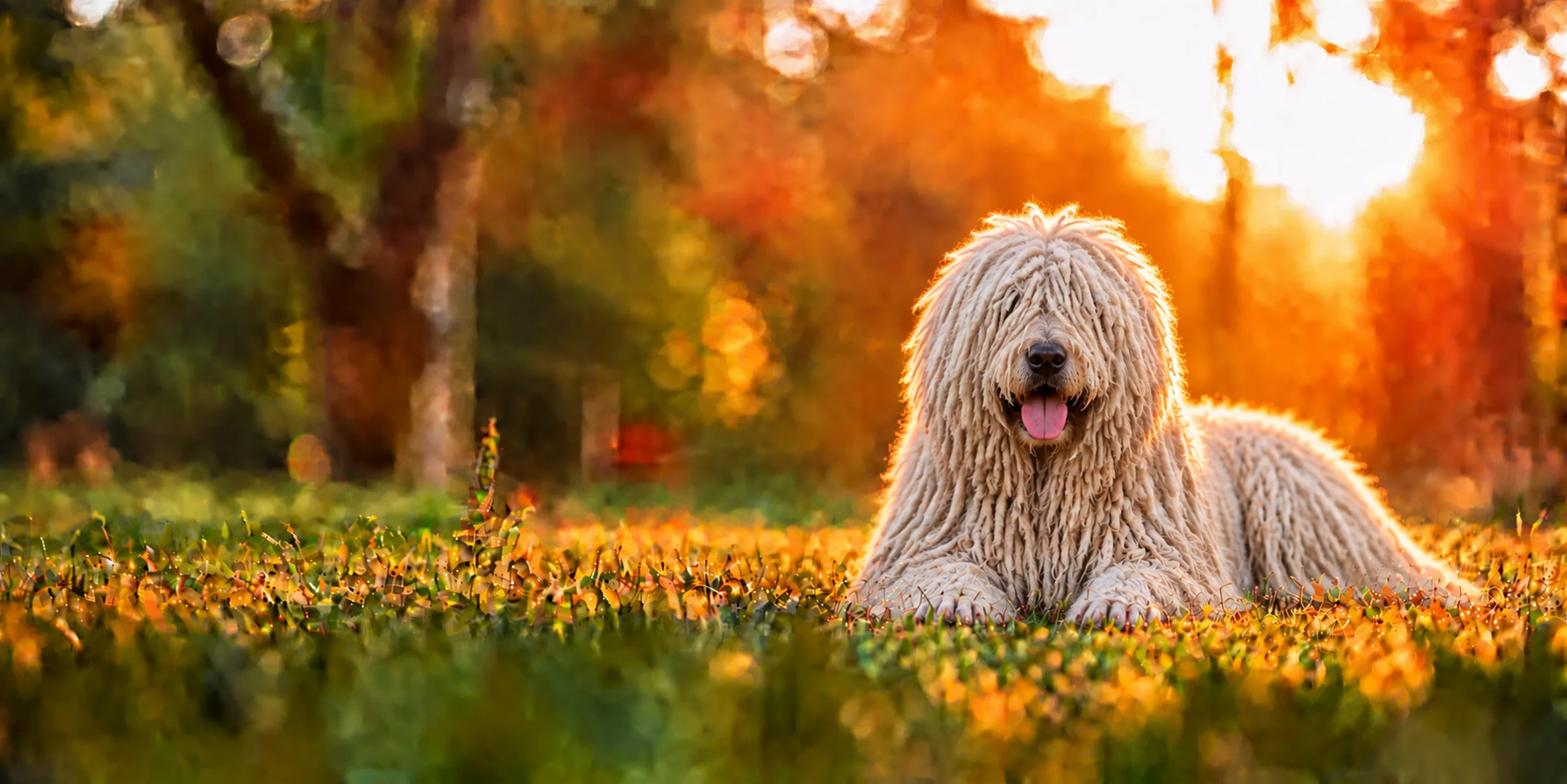
Komondor
Another white, heavy-coated flock guardian with the same serious approach to strangers. The Komondor wears a corded coat that is a grooming commitment of its own; the Mioritic has a long, rough coat that is brushed, not corded.
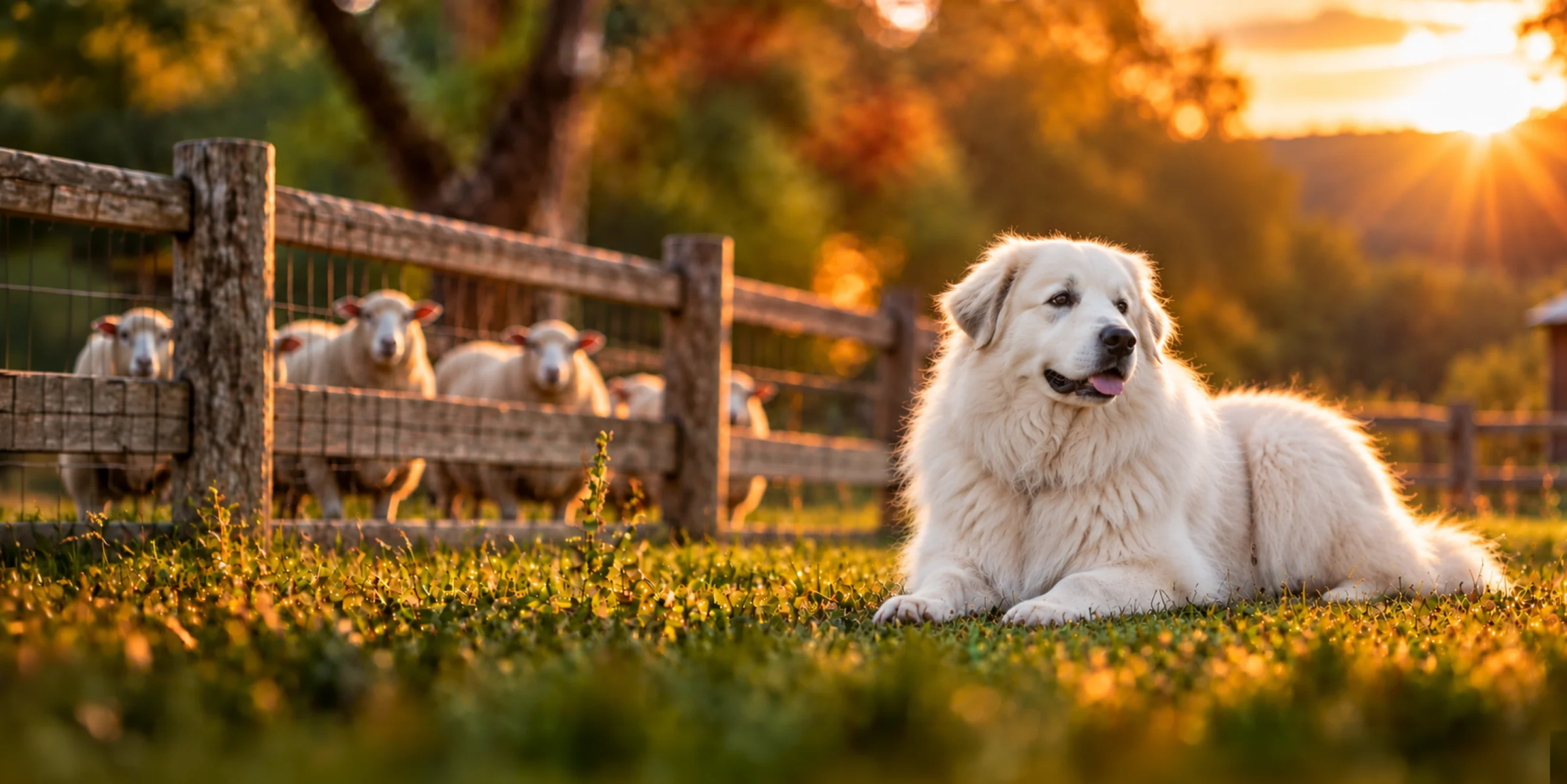
Great Pyrenees
A comparable giant white mountain guardian with a big bark and a need for land. The Pyrenees is far easier to find through AKC breeders and usually more tolerant of visitors; the Mioritic is shaggier, rarer and generally more wary.
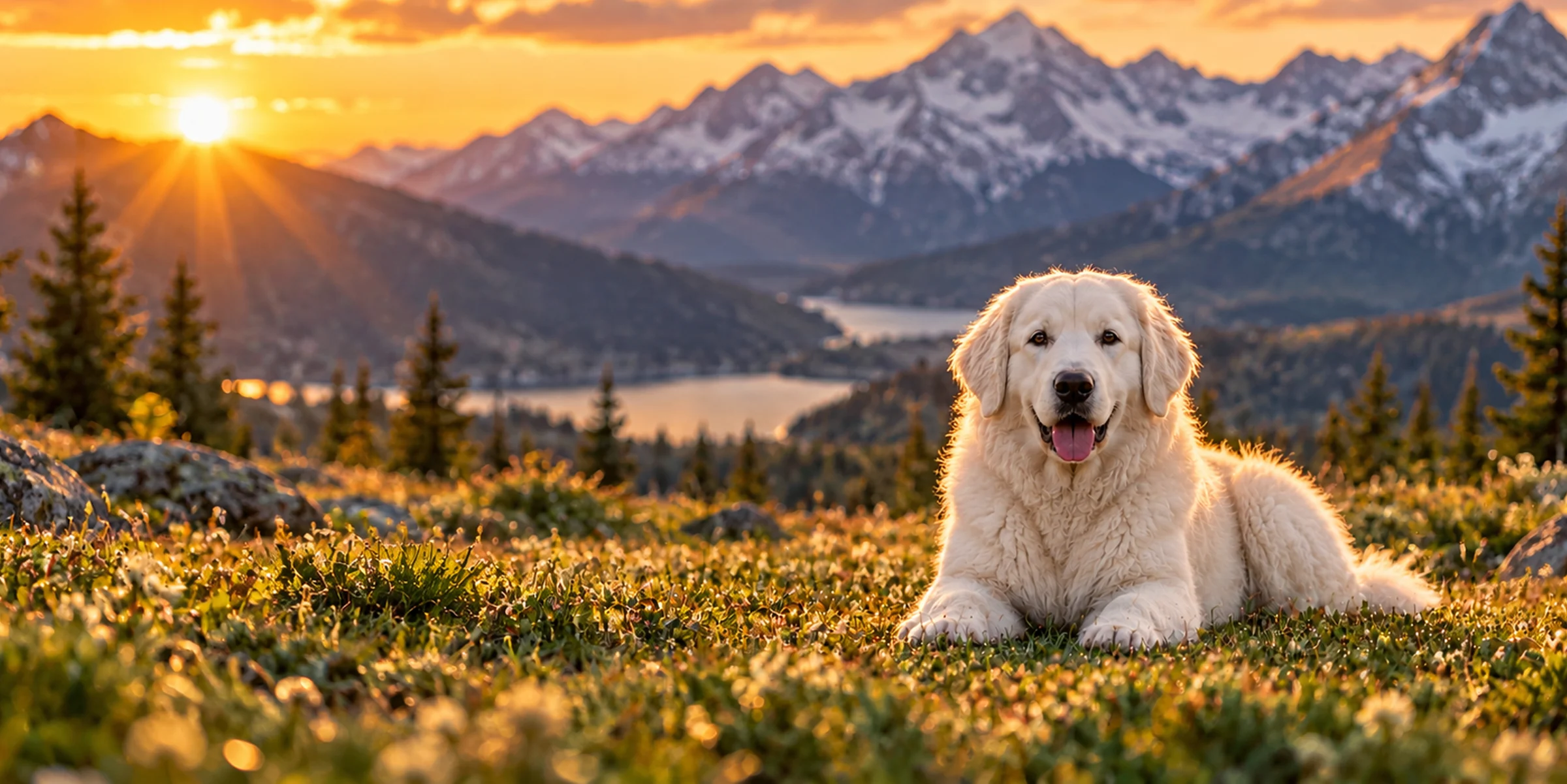
Kuvasz
A large pale guardian with the same independence and suspicion of outsiders. The Kuvasz is more athletic, with a shorter wavy white coat; the Mioritic is heavier, calmer at rest and much longer-coated.