

medium-to-large breed
Wetterhoun
The otter dog of Friesland - kept for centuries to hunt otter and polecat through the canals, clear vermin off the land and guard the yard while doing so. Wetterhouns are hard, self-reliant and devoted to their own household while being openly reserved with everyone else, and tougher and less biddable than the Stabyhoun or the Drent. The curly coat is never brushed, asks almost nothing, and smells frankly of wet dog.

Pup Height
21.5-23 in

Pup Weight
50-75 lb
Males stand about 23 in and females about 21.5 in, with both sexes 50-75 lb on a square, powerfully built frame. The coat is the breed marker: tight, coarse curls over the whole body except the head, ears and lower legs, where the hair is short and smooth, and the curls feel greasy to the touch because the coat is naturally oily and water-repellent. Low-set drop ears hang flat against the head in a distinctive trowel shape, and the tail is carried curled over the back or against the croup. Solid black or brown, or black and white and brown and white, with or without roan and ticking through the white. Accepted into the AKC's Foundation Stock Service in November 2019. Source: AKC Foundation Stock Service breed standard.

Pup Lifespan
13 years
Your pup, at a glance
What’s Life With This Pup Really Like?

High, and narrow. Wetterhouns are affectionate and physically close with their own household, often fixed on one person, and reserve none of that for anyone else.

Good with their own children, with real caveats. Wetterhouns raised with a family are patient and steady with those kids, but this is a tough dog with limited tolerance for rough handling, and visiting children meet the reserved side first.

Mixed. Fine with dogs they grew up alongside, though same-sex tension is common and a Wetterhoun stands ground rather than backing off. Cats and small pets are a real prey-drive problem given what the breed was kept to kill.

Moderate to high. Not a nuisance barker, but a farm watchdog with a deep voice who announces anything approaching and means it.

High but manageable. An hour to ninety minutes of real work daily, and then a dog who genuinely switches off indoors.

Moderate to heavy. The curls plus a dense undercoat drop hair year-round with heavier seasonal turns, and no brushing routine is available to catch it.

Playful with their people and serious about water, though the play is robust rather than silly and adults are markedly less bouncy than most sporting breeds.

Very low.

Moderate. Intelligent and quick to understand, but independent enough to weigh up whether to comply - strong willed rather than dim, and harsh handling makes it worse.

Very high. Alert, openly reserved with strangers and prepared to back the barking up, which is a genuine guarding instinct rather than an alarm system.

Low. The tight oily coat is never brushed out and rarely bathed, so the work is drying, checking the skin under the curls, and weekly ears.

Low. The guarding temperament, the prey drive and the need for real outdoor work make small shared buildings and busy urban life a poor fit.
Lifestyle fit
Could This Be Your Best Breed?
A Wetterhoun needs a house with a fenced yard, rural ground within reach, and an owner who has already lived with an independent working breed and will spend the first two years on socialization. The Netherlands holds almost all of them, so expect a wait and probably an import, at $1,400 to $2,400 a year for about thirteen years. Do not take one on for the rarity alone.

Living Space
A house with a securely fenced yard, and rural or semi-rural ground within reach. Wetterhouns settle well indoors once the day's work has happened, but a farm watchdog who reacts to every voice on the other side of a wall is a hard fit for an apartment, and the guarding instinct does not switch off because the building is shared.

Pup Experience
Not a first dog, and not a second one unless the first was an independent working breed. Wetterhouns are tough, self-reliant and perfectly willing to decide a request is optional, and the trap is that they are stubborn and sensitive at the same time - pressure produces refusal rather than compliance, and giving up produces a dog who simply handles things alone.

Daily Pup Time
An hour to ninety minutes of real activity daily, with water or scent work in it, plus deliberate socialization time for the first year or two. Coat care is close to nothing: no brushing, weekly ears, and a towel by the door.

Allergies & Coat
The Wetterhoun scores 6/10 for shedding and 2/10 for drooling. No dog is truly hypoallergenic. The allergens come from dander and saliva, and a dog that sheds this much will leave plenty of hair behind - especially on your furniture, floors, and clothes.
Quirks & challenges
The Not-So-Easy Stuff

Stubborn and Self-Reliant
Bred to work out of sight of a handler and still built that way. A Wetterhoun weighs up a cue rather than obeying it, and repetition drills get less cooperation, not more.
A Real Guarding Streak
Wary of strangers by default and prepared to act on it. Without wide socialization from puppyhood that hardens into a dog who is genuinely difficult to have visitors around.
The Coat Is Never Brushed
The tight oily curls are the whole point of the coat, and brushing pulls the curl structure apart and strips the water resistance. Hands and an occasional comb on an actual mat, nothing more.
Smells Doggy When Wet
That naturally greasy coat is what keeps a Frisian ditch dog warm, and it has a strong smell when damp. Washing the smell away also strips the protection, so a towel and airflow are the answer.
Very Rare, Small Gene Pool
A few thousand exist, most of them in the Netherlands. Expect a long wait, an application, very likely an import, and a breeding program actively managing inbreeding.
Hunts Whatever Moves
Centuries on otter, polecat and rats leave a prey drive that outranks a recall. Secure fencing and a long line until the recall has been proven against something live.
The good, the bad & the hairy
Health, Care & Costs
Understanding the health risks and ongoing costs of a Wetterhoun helps you plan for a happy, healthy life together.

13 years
$40-$70
for a bath, ears and nails if you use a groomer at all, needed a few times a year at most - almost every owner does the whole job at home ($0-$150/year)
$1,400-$2,400/year
all-in (food, routine vet, grooming, insurance, incidentals)

Health Risks
Conditions this breed is prone to.

The real health issue behind all the others. The breed came through the twentieth century on a handful of dogs and remains tiny, so inbreeding coefficients matter more than any single condition - the Dutch breed association, the NVSW, runs an outcross program specifically to get more genetic variety back into the population. Ask any breeder what the coefficient on the pairing is.
The hip joint develops loosely so the ball wears in the socket instead of gliding, ending in arthritis and sometimes surgery. Screening is required before breeding under the Dutch club rules, which keeps rates down, and both parents should still have scored hips.
The elbow's three bones fail to fit together cleanly, causing front-leg lameness in a young dog and arthritis later. Also screened by the breed association, and worth seeing the grades for both parents rather than a general assurance that the line is clear.
Seizures usually beginning between one and three years old. Uncommon but present in the breed, not screenable by any test, and most affected dogs are managed well on daily medication. Ask the breeder directly what has shown up in the line.
Low drop ears held flat against the head, on a dog who goes into every body of water available, trap warmth and moisture against the canal. Weekly checking, cleaning and drying is the entire prevention; left alone it turns chronic and expensive.
Not inherited, just a consequence of the coat. Dense oily curls hold water against the skin for hours, and a coat that is never brushed hides what is going on underneath, so hot spots and yeast get found late. Part the curls and look after every swim.

Insurance & Health Coverage
Insure young. This is a healthy breed with club-enforced screening behind it, so premiums should sit at the reasonable end for a large sporting dog, and the point of starting early is to be ahead of the conditions that declare themselves later.

Epilepsy is the one that catches people. It starts in young adulthood, medication is lifelong, and a single seizure recorded before cover begins turns the whole condition into a permanent exclusion. Joints are the other steady claim - hip and elbow trouble on a 65-pound dog runs into the thousands once surgery is involved - and ear infections are the small recurring bill underneath everything.

One extra line worth reading on a guarding breed: third-party liability. Wetterhouns are reserved with strangers and will act, and a policy that covers damage or injury your dog causes is worth more here than the marginal difference in premium between two providers. If you intend to hunt them, check the working-injury exclusion too, because several policies remove exactly the cover a working dog needs.
 Get a Pet Insurance Quote
Care needs
The Daily Routine

Grooming
Genuinely close to wash-and-go, and the important rule is what not to do: the tight curls are never brushed out. A brush pulls the curl apart and takes the oil and water resistance with it, so the routine is fingers through the coat, a comb only on an actual mat behind the ears or in the armpits, and nothing else. Bathe rarely, for the same reason - stripping the grease removes the protection the coat exists to provide. What does need doing is drying and checking: towel hard after a swim, get air to the skin, part the curls to look for hot spots, clean and dry the ears weekly, and trim the hair between the pads. Be ready for the smell, because a damp oily coat has a strong doggy odor that no amount of shampoo fixes permanently.

Exercise
An hour to ninety minutes daily, and the thinking half does more settling than the mileage. Swimming, retrieving from water, tracking and long walks over varied ground all suit a breed built for canals and ditches. Secure ground or a long line until the recall is proven, because a dog bred on otter and polecat will follow a live scent a long way.

Food & Weight
Two measured meals scaled to the work. Wetterhouns are efficient keepers and put weight on quietly, and the curly coat hides condition almost completely, so judge by feeling for the ribs rather than by eye. Keep a young dog lean while the hips and elbows are still forming, and count training treats in the daily total.
Similar breeds
If This Isn’t Quite the One
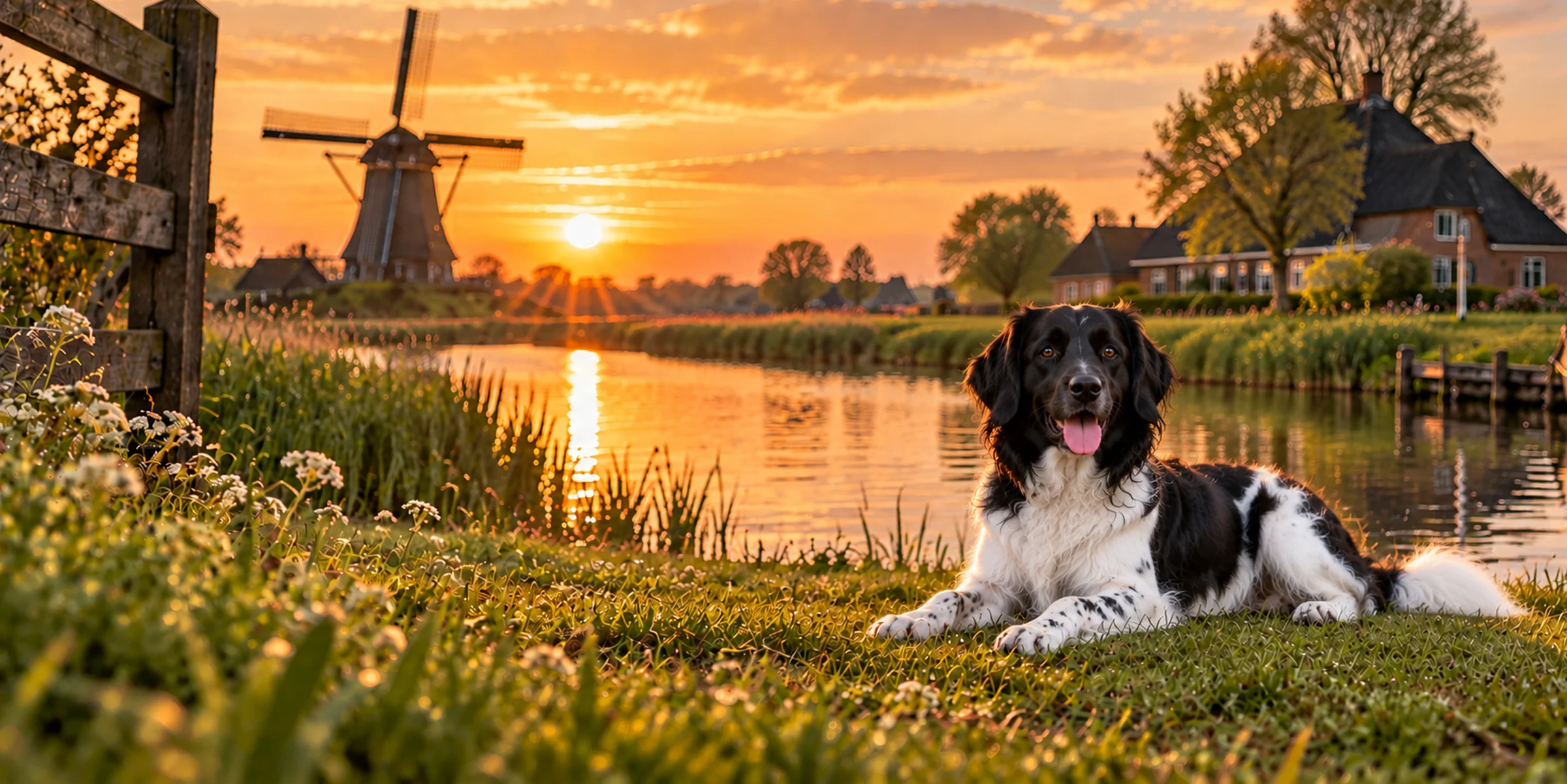
Stabyhoun
The other Frisian breed, from the same province and the same breed club, and the comparison people most often get wrong - these are not two versions of one dog. The Stabyhoun is a soft-natured pointing and retrieving farm gundog, smaller, gentler, easy with visitors and famously good with children. The Wetterhoun is the otter and vermin dog: harder, more independent, considerably more reserved with strangers, and carrying a guarding instinct the Stabyhoun does not have.
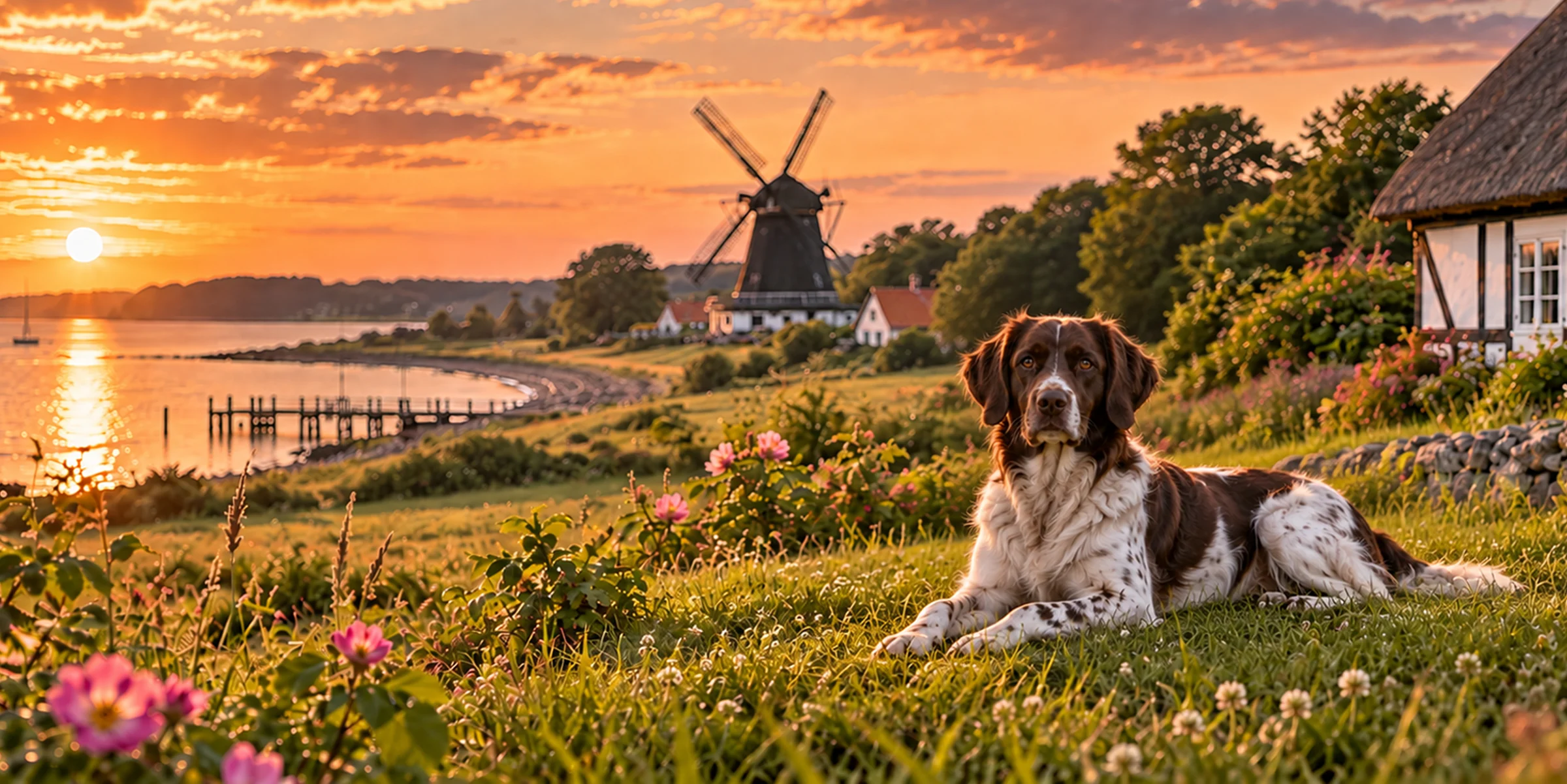
Drentsche Patrijshond
Another rare Dutch farm dog at a similar weight, and the honest contrast is temperament rather than job. The Drent is affectionate, soft and unusually attached to the family for a hunting breed; the Wetterhoun does a share of the same work with far more self-reliance and far less interest in pleasing anyone.
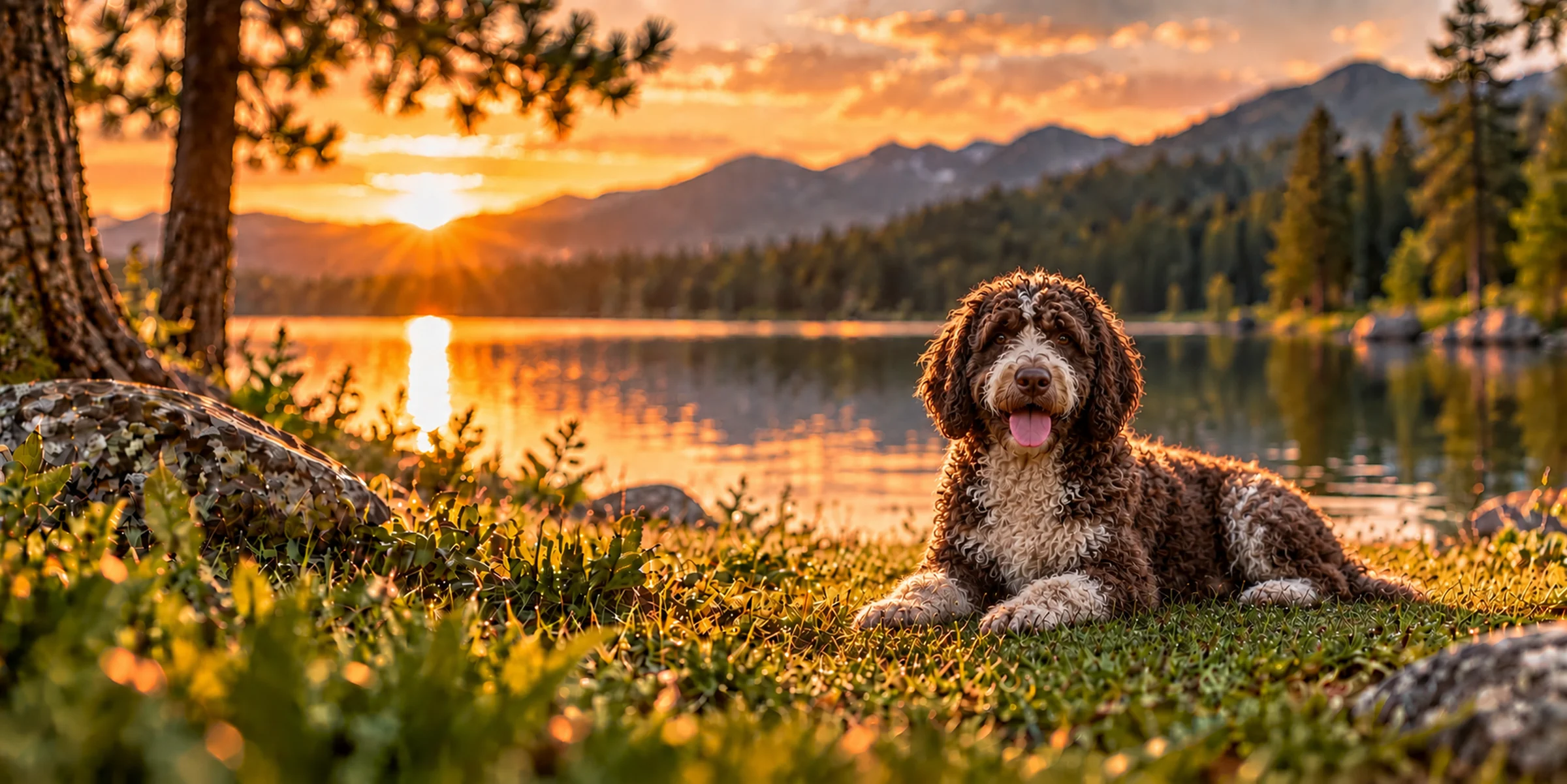
Spanish Water Dog
The closest match on both coat and character. Both are curly working water dogs who are reserved with strangers, watchful, and wrong for a household that wants an instantly friendly dog. The Spanish Water Dog herds, is more biddable and needs considerably more daily work; the Wetterhoun is heavier, more stubborn, and guards rather than gathers.
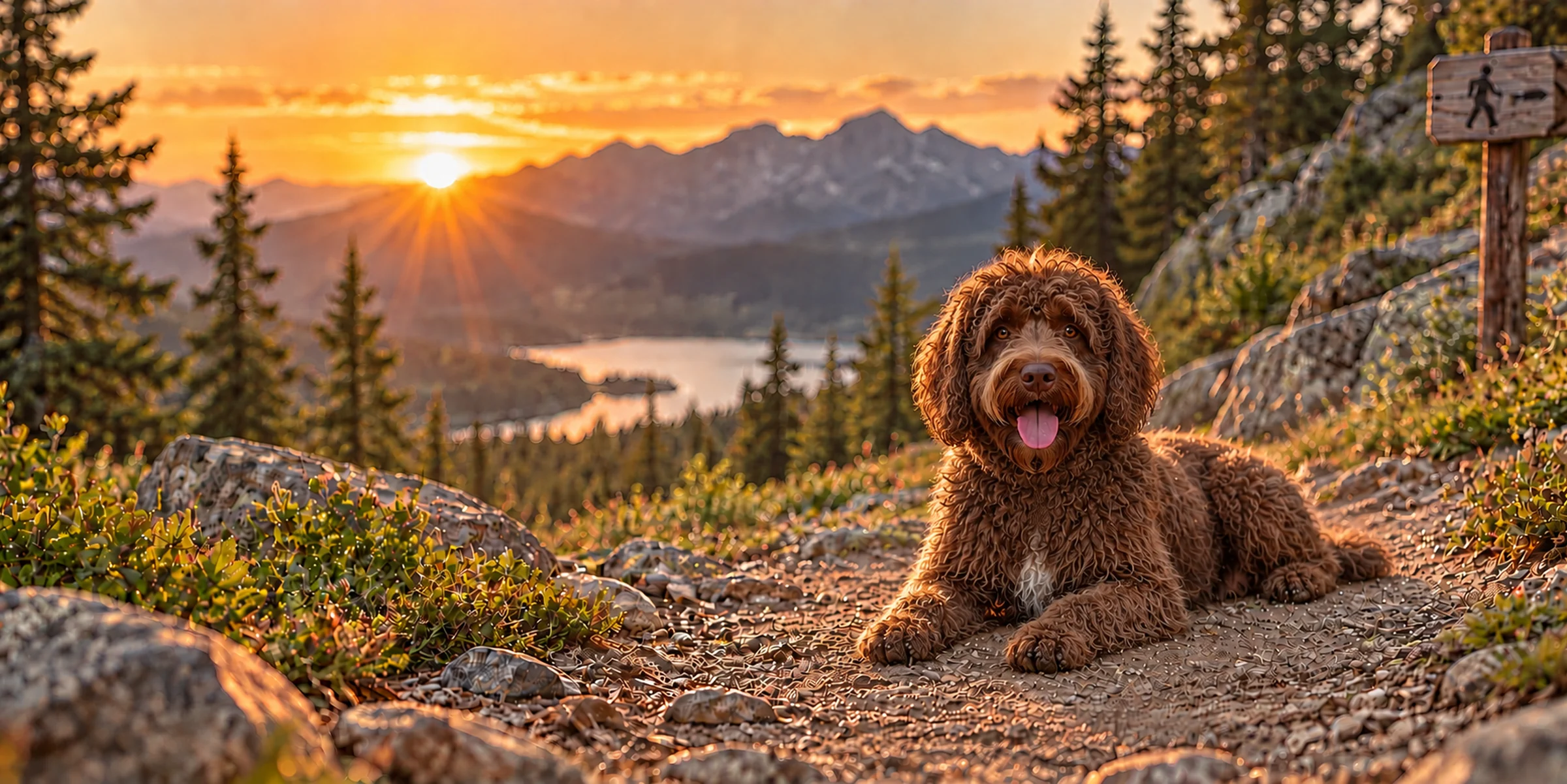
Barbet
A French water dog of similar build and the opposite temperament - the Barbet likes everybody and is one of the sweetest-natured coated breeds going, where the Wetterhoun reserves judgment on every stranger. The trade runs the other way on coat: the Barbet's wool is a serious ongoing grooming commitment, and the Wetterhoun's curls are left alone.