

small breed
Tibetan Spaniel
A monastery sentinel rather than any kind of spaniel - the name is a European label pinned on a small Asian companion. Tibetan Spaniels sat on the walls watching the approach and barking at anything unfamiliar, leaving the rest to the mastiffs below, and that job still explains the dog: warm and playful at home, reserved with visitors, quick to sound off. The shortened muzzle is mild but real, and summer heat needs respecting.

Pup Height
10 in

Pup Weight
9-15 lb
Ideally about 10 in at the shoulder, with the standard giving 9-15 lb and a body slightly longer than tall. A silky double coat, smooth on the face and the front of the legs, moderate in length on the body and lying rather flat, with a mane over the neck and shoulders that is more pronounced on males, feathering on the ears, the backs of the forelegs and the buttocks, and a high-set plumed tail carried in a curl over the back. The muzzle is blunt, of medium length and free of wrinkle, and the mouth is ideally slightly undershot. All colors and mixtures of colors are allowed. Recognized by the AKC in 1984, in the Non-Sporting Group. Source: AKC breed standard.

Pup Lifespan
12-15 years
Your pup, at a glance
What’s Life With This Pup Really Like?

High. Genuinely affectionate with their own people and usually devoted to one lap in particular, though a windowsill with a view can win out over the lap.

Good with considerate children. Sturdier than most toy breeds but still a 12-pound dog, and grabbing or being hauled around earns a grumble.

Good. Usually easy with other dogs and with cats raised alongside them, with the occasional bossy streak toward pushy strangers at the park.

High. The alarm bark is the breed doing the job they were kept for, and a quiet cue has to be taught rather than hoped for.

Moderate. Two walks and some play, then long spells supervising the household from somewhere high.

Moderate. A double coat that drops steadily year-round and blows out heavily once or twice a year.

Playful and a little clownish with trusted people, in bursts rather than by the hour.

Very low.

Average. Clever and quick to learn, but Tibetan Spaniels weigh up whether a request is worth doing - short, rewarding sessions get far more than drilling.

Very high. Bred to sit above the gate and announce everything that moves, and the instinct is fully intact.

Moderate. A twice-weekly brush and no clipping at all, plus daily work through the seasonal shed.

High. Small, undemanding on space and content in an apartment, provided the barking is managed and the summer heat is respected.
Lifestyle fit
Could This Be Your Best Breed?
A Tibetan Spaniel genuinely suits an apartment - small, tidy, content with two short walks and a window over the street - and costs $1,200 to $2,200 a year across twelve to fifteen. The owner this breed wants is one who enjoys a companion rather than a pupil, because a Tibbie will hear a recall and decline it. Look past this one if thin walls, close neighbors or a need for reliable obedience apply.

Living Space
An apartment genuinely works. Tibetan Spaniels take up almost no room, settle well indoors and ask for little more than a window with a view of the street. The catch is the voice - a dog bred to announce every arrival, in a building with thin walls and close neighbors, needs work on a quiet cue from the first week rather than the first complaint.

Pup Experience
Fine for a first-time owner who wants a companion rather than a pupil. Tibetan Spaniels are clever and easy to live with, but the breed was never selected to take direction, and anyone expecting the eager obedience of a retriever will find them baffling. They are sensitive too - scolding and pressure make a Tibbie switch off rather than try harder.

Daily Pup Time
Two short walks and some play, 30-45 minutes in all, plus a thorough brush twice a week and daily brushing through the seasonal shed. Add a few minutes of training or nose games, which this breed needs more than extra mileage.

Allergies & Coat
The Tibetan Spaniel scores 5/10 for shedding and 1/10 for drooling. No dog is truly hypoallergenic. The allergens come from dander and saliva, and a dog that sheds this much will leave plenty of hair behind - especially on your furniture, floors, and clothes.
Quirks & challenges
The Not-So-Easy Stuff

Sentinel Barking
Bred to sound the alarm from a monastery wall, so alert barking is the breed working, not a training failure. A quiet cue taught early keeps the volume manageable.
Independent Streak
Quick to learn and equally quick to decide a request is optional. Short, rewarding sessions get somewhere; drilling does not.
Heat Sensitivity
The muzzle is shortened - far less than a Pekingese, but enough to matter. Summer walks belong at the cool ends of the day.
Climbs to a Vantage Point
Sofa backs, windowsills, the arm of a chair. The landing on the way down is what threatens those knees.
Reserved With Visitors
Politely aloof at best without broad early socialization, wary and noisy at worst. Introduce a wide range of calm people young.
Seasonal Coat Blow
An easy coat for most of the year, then a heavy drop once or twice a year. Two weeks of daily brushing and hair on everything.
The good, the bad & the hairy
Health, Care & Costs
Understanding the health risks and ongoing costs of a Tibetan Spaniel helps you plan for a happy, healthy life together.

12-15 years
$45-$75
per groom (bath, brush-out, feathering and foot tidy, nails, ears), every 8-12 weeks, or done at home for the cost of a brush ($0-$400/year)
$1,200-$2,200/year
all-in (food, routine vet, grooming, insurance, incidentals)

Health Risks
Conditions this breed is prone to.

An inherited degeneration of the retina that begins with night blindness and ends in full blindness, usually in middle age. A DNA test covers the PRA3 (FAM161A) form found in the breed, so tested parents remove that risk, and the parent club's CHIC panel asks for the DNA result alongside an annual eye exam by a veterinary ophthalmologist (OFA/CAER).
The kneecap slips out of the groove, showing as a skipping step or a hind leg held up for a stride or two. Mild cases need only monitoring and a lean weight; severe ones need surgery. Parents should have patella evaluations, and discouraging leaps down from furniture spares the joint.
A vessel that routes blood past the liver instead of through the organ, so toxins never get cleared - poor growth, vomiting, and dullness or disorientation after meals are the usual signs. Bile acid testing confirms the diagnosis and surgery corrects many cases; small breeds carry more of the congenital form than large ones.
The eyes sit forward in a shortened face, which leaves the surface exposed to scratches and ulcers - a squint or a watering eye is a same-day vet visit. Cherry eye, a prolapsed third-eyelid gland, usually needs surgical repositioning, and dry eye means daily drops for life.
The face is moderately brachycephalic, nothing like a Pug or a Pekingese, and most Tibetan Spaniels breathe quietly and exercise normally. A short muzzle still cools a dog less efficiently, so hot weather, closed cars and midday walks are real risks, and snoring, snorting or tiring fast in the heat deserves a vet's opinion rather than a shrug.
A small jaw crowds the teeth, so plaque and gum disease arrive early without regular brushing and professional cleanings. Allergic skin disease also turns up in the breed, showing as itching, inflamed ears and chewed paws.

Insurance & Health Coverage
Insure young. Tibetan Spaniels are a long-lived small breed with modest routine costs, which makes a policy cheap to start - and the conditions that matter most here, the eyes and the knees, tend to arrive in dogs who are already well into middle age. Anything noted on the record before cover starts becomes a permanent exclusion.

The claims to plan for are surgical and repeating. Cherry eye repair, a corneal ulcer that needs treating, and patella surgery each run from several hundred to a few thousand dollars, and dry eye means drops every day for the rest of a dog's life. Read how the policy handles ongoing conditions, and whether the second eye or the second knee counts as the same condition or a new one.

Progressive retinal atrophy is inherited, so no insurer will cover it. The protection there is paperwork rather than a policy: a PRA3 DNA result for both parents, from a breeder who offers the certificates before anyone asks for them.
 Get a Pet Insurance Quote
Care needs
The Daily Routine

Grooming
An easy coat by long-coated standards. A thorough brush twice a week through the mane, the ear feathering, the trousers and behind the elbows keeps the tangles out, and the breed is shown untrimmed, so there are no clipping appointments to budget for beyond tidying the feet. The seasonal shed is the exception - once or twice a year the undercoat lets go and daily brushing is the only way through. Check the ears weekly under the feathering, keep the nails short, and wipe the face after meals.

Exercise
Moderate. Two walks and some indoor play, 30-45 minutes in all, suits most Tibetan Spaniels, and they are sturdier and more athletic than the flat-faced companions they get grouped with - a Tibbie will happily manage a cool-weather hike. Heat is the limit, not distance. Sniffing walks, puzzle games and a bit of training do more for a sentinel's mind than extra mileage.

Food & Weight
Small measured meals of a good small-breed food. Tibetan Spaniels put weight on easily once table scraps and treats creep in, and the extra pounds land on the knees and make hot weather harder. Weigh the food rather than eyeballing the scoop, count training treats as part of the day's ration, and start tooth brushing while the dog is young enough to accept the handling.
Similar breeds
If This Isn’t Quite the One
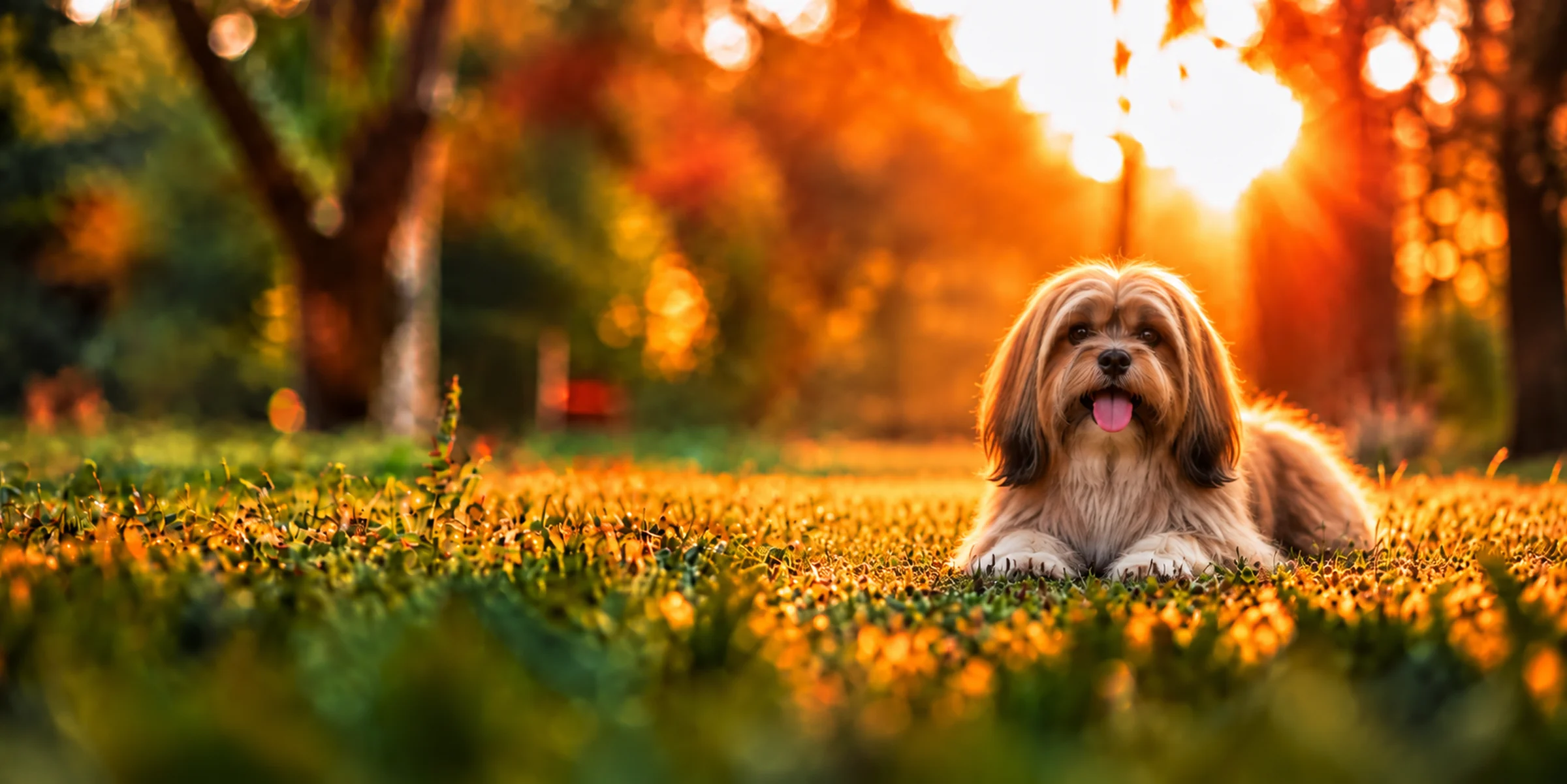
Lhasa Apso
The other Tibetan monastery sentinel, bred for the same alarm job and just as independent. The Lhasa carries a heavy floor-length coat that needs daily line-combing or a standing groomer appointment and is more aloof with strangers; the Tibetan Spaniel is close to wash-and-wear, more openly affectionate and more athletic.
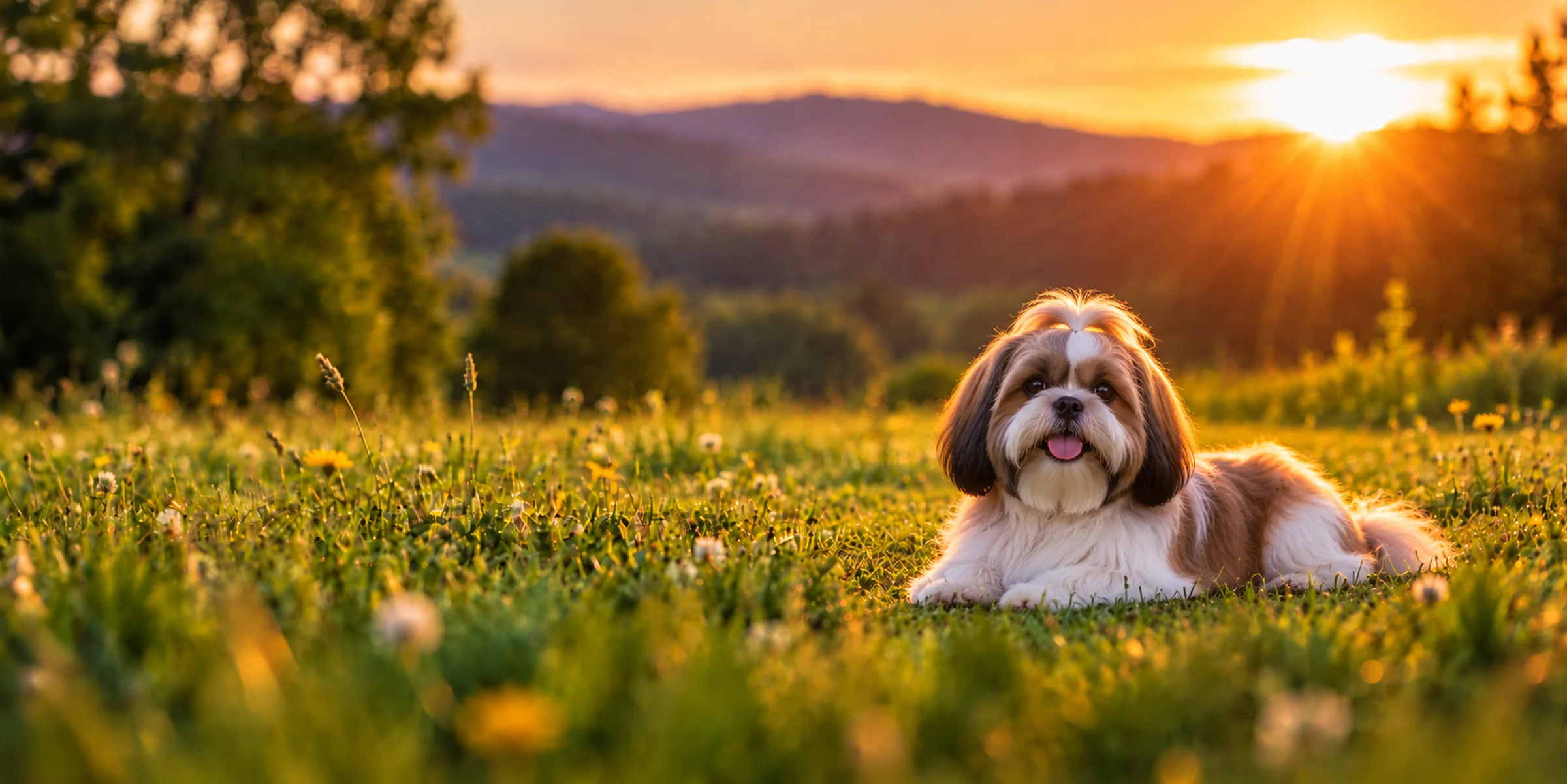
Shih Tzu
A Tibetan-rooted companion of much the same size, bred for the lap rather than the wall. The Shih Tzu is friendlier with visitors, quieter, and needs clipping every few weeks or daily brushing to hold a full coat; the Tibetan Spaniel is louder and more watchful, and takes a fraction of the grooming.
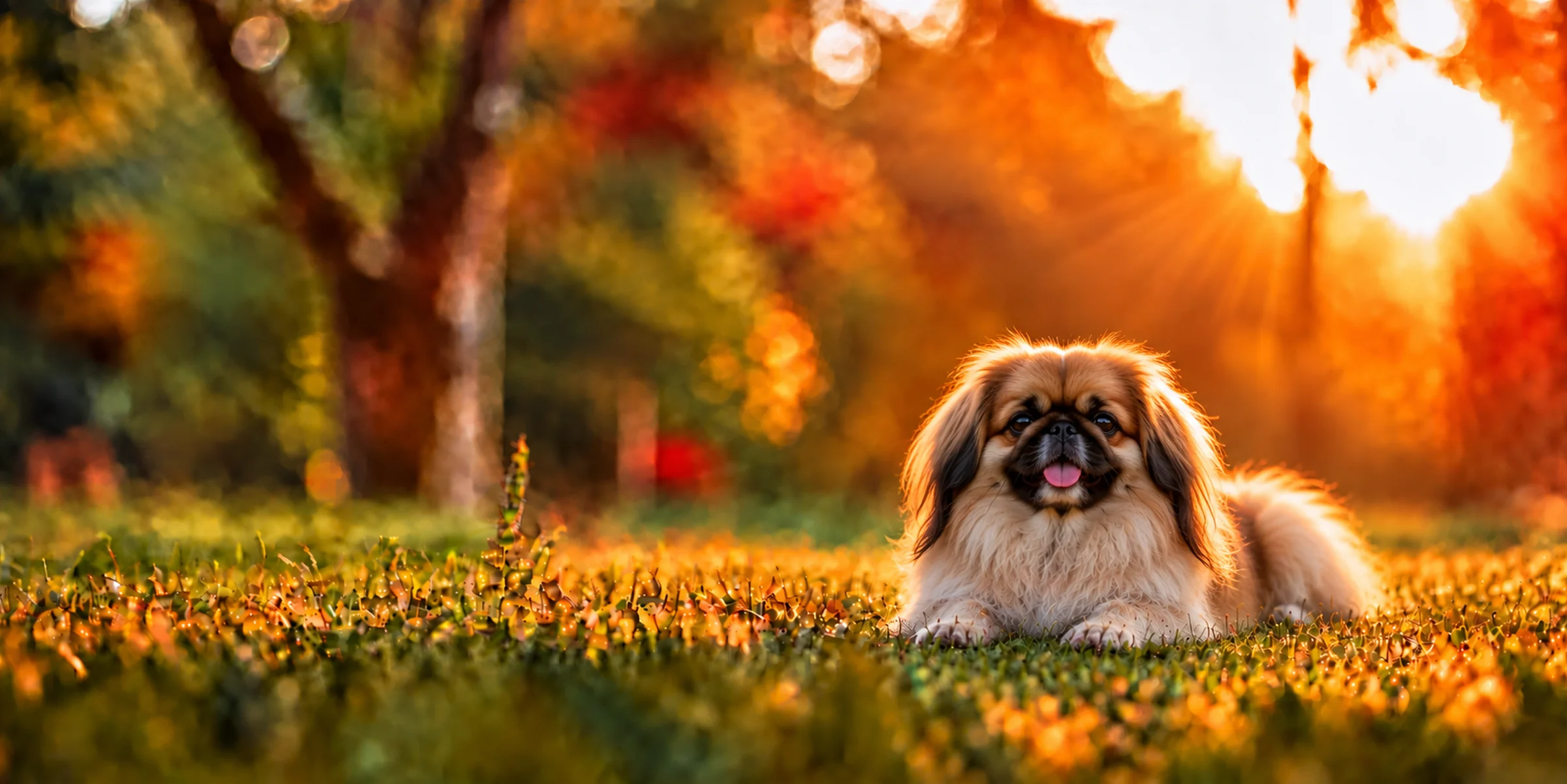
Pekingese
The comparison worth making about the face. The Pekingese is heavily brachycephalic, with the breathing, heat and eye risks that go with a muzzle that short, plus a profuse coat and very little appetite for exercise; the Tibetan Spaniel's muzzle is only moderately shortened, so most exercise and breathe normally and heat is the main thing to manage.

Japanese Chin
Another small Asian companion with a shortened face and a habit of perching somewhere high. The Chin is quieter, daintier and more cat-like, happy as a lap dog; the Tibetan Spaniel is sturdier, far more vocal and still has a job in mind.
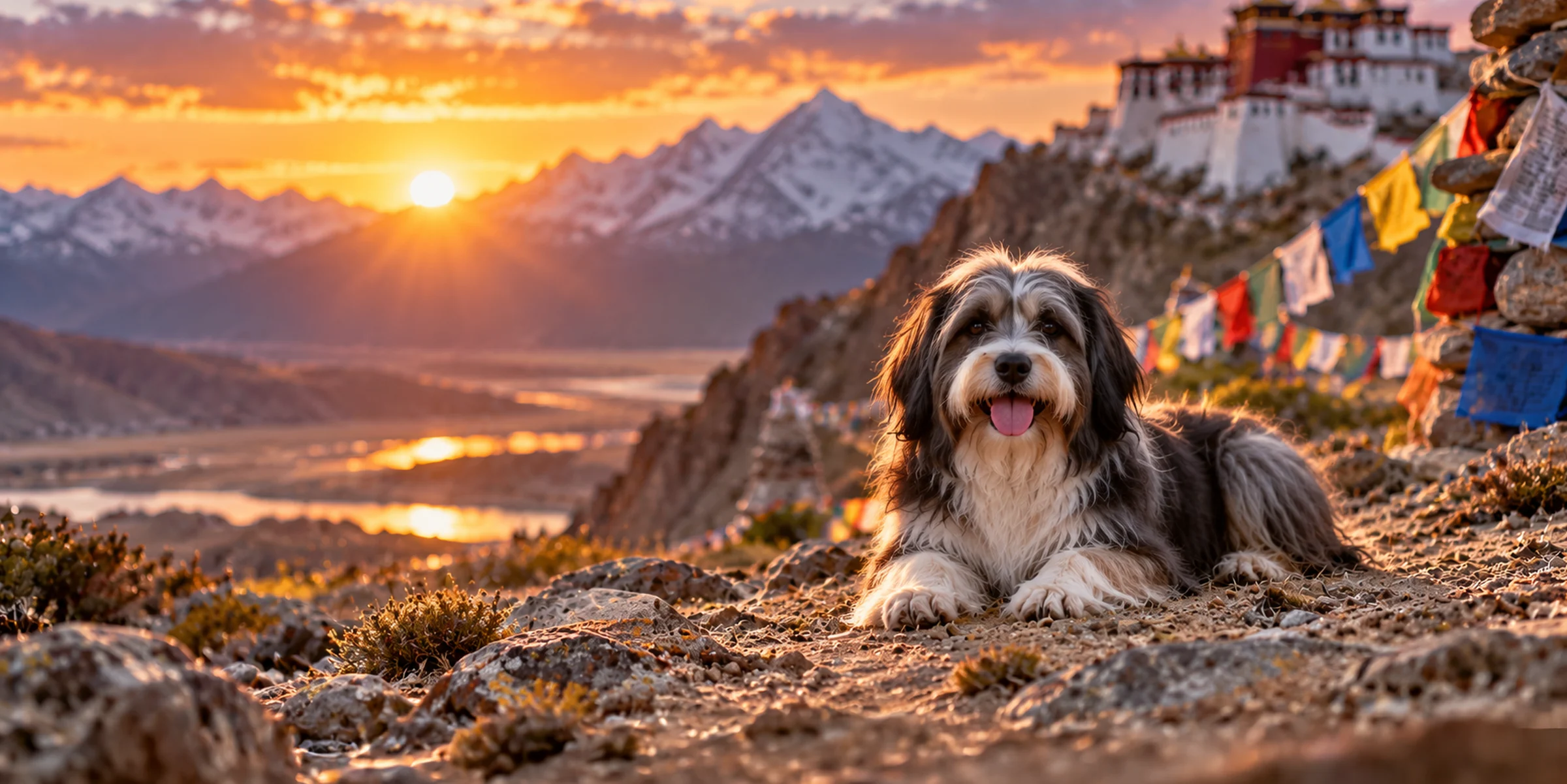
Tibetan Terrier
The bigger Tibetan monastery dog, and not a terrier despite the name. Tibetan Terriers carry a profuse double coat that mats and needs real grooming, and the large flat snowshoe feet that a Tibetan Spaniel does not have.