

medium-to-large breed
Yakutian Laika
The aboriginal sled and hunting dog of the Sakha people of northeastern Siberia, nearly lost when snowmobiles replaced dog teams and rebuilt from surviving village dogs in the 1990s. What sets a Yakutian Laika apart from most northern breeds is sociability - gentle with children, easy with other dogs, willing to work with a handler rather than around one. The costs are a sled dog's exercise bill and a coat built for forty below.

Pup Height
20.5-23.5 in

Pup Weight
40-55 lb
Males 21.5-23.5 in, females 20.5-22.5 in; the standard sets heights and no weight, and the AKC's typical figure is 40-55 lb. Any color, pattern or combination of colors is acceptable, white is the only permitted solid color, and any other solid color disqualifies. Eyes may be any color - brown, blue, one of each, or parti-colored - with eye pigment matching the nose. A medium-length double coat over a soft, dense undercoat, heavily feathered forelegs and trousers, a mane that is fuller on males, and a plumed tail carried over the back in a loose curl. In the AKC's Miscellaneous Class. Source: AKC breed standard.

Pup Lifespan
10-12 years
Your pup, at a glance
What’s Life With This Pup Really Like?

High. Camp dogs rather than yard dogs, kept inside the family for centuries, and they still want to be in whichever room you are.

Excellent. The breed standard calls them extremely gentle and considerate with children, and the bonds they form with them tend to be close.

Split. Unusually good with other dogs after generations of team work, and often happier with a canine companion - but the hunting half of the job left a prey drive that small animals should not be asked to test.

Moderate. Sharp ears and a readiness to speak up, though the noise is more often greeting than warning.

Very high. A working sled dog's requirement - an hour and a half to two hours daily, and running or pulling rather than strolling.

Heavy. A dense Arctic undercoat that sheds steadily and comes out in clumps twice a year.

Lively and game. Happiest running, pulling or roughhousing with another dog, and playful well into adulthood.

Minimal.

Good. Biddable and quick by northern-breed standards, provided the handler has earned trust - corrections shut a Yakutian Laika down rather than move them along.

Low to moderate. Keen senses and a voice to match, behind a temperament so friendly the standard says they will most likely fail as guards.

Moderate. A weekly brush and comb most of the year, daily work through the blowouts, and almost no trimming.

Low. Superb in deep cold and poor in heat, with a daily exercise bill that a quiet household cannot pay.
Lifestyle fit
Could This Be Your Best Breed?
A Yakutian Laika belongs in a house with a fenced yard in cool country, with an owner who will run, bike or pull with them for an hour and a half to two hours a day and rake the coat out twice a year. Ten to twelve years at $1,400 to $2,300 a year. There is no version of this breed that works in a hot climate on two short walks a day.

Living Space
A house with a securely fenced yard, and a cool climate if there is a choice. Yakutian Laikas are only medium-sized and settle well indoors once the day's work has happened, but a dog bred to haul sleds through Arctic winters does badly in a hot apartment on two short walks a day.

Pup Experience
Workable for a determined first-time owner, and easier than most northern breeds - the AKC calls training a pleasant task and the standard describes a biddable dog. The hard parts are supplying the exercise honestly every day and finding a breeder at all, because the US population is small and the registry is young.

Daily Pup Time
An hour and a half to two hours of real exercise daily, most of it running or pulling, plus a weekly brush and comb and daily work through the twice-yearly coat blow.

Allergies & Coat
The Yakutian Laika scores 9/10 for shedding and 1/10 for drooling. No dog is truly hypoallergenic. The allergens come from dander and saliva, and a dog that sheds this much will leave plenty of hair behind - especially on your furniture, floors, and clothes.
Quirks & challenges
The Not-So-Easy Stuff

A Real Sled Dog's Exercise
An hour and a half to two hours daily, running or pulling rather than strolling. A yard does not come close.
Built for Forty Below
A dense Arctic coat on a dog meant for deep cold. Heat is a genuine welfare problem, not just discomfort.
Prey Drive
Hunting was the second job and the drive survived the move indoors. A cat raised alongside them is usually fine; loose small animals are not.
Heavy Seasonal Shedding
A dense undercoat that comes out in clumps twice a year. Daily brushing for several weeks each time.
Rare Outside Russia
A small US population and a young registry. Expect a waiting list, a long drive, or an import.
Pulling Is Bred In
A dog built and selected to lean into a harness. Loose-leash walking takes real work, and a pulling sport is the easier outlet.
The good, the bad & the hairy
Health, Care & Costs
Understanding the health risks and ongoing costs of a Yakutian Laika helps you plan for a happy, healthy life together.

10-12 years
$60-$100
per groom (bath, blow-out, de-shed, nails, ears), every 8-12 weeks or done at home ($0-$500/year)
$1,400-$2,300/year
all-in (food, routine vet, grooming, insurance, incidentals)

Health Risks
Conditions this breed is prone to.

Worth saying first. The AKC describes a hardy breed, and centuries of work in a climate that punished weakness selected hard for soundness - but there are no breed-wide health surveys outside Russia and no breed-specific DNA tests, so screening here means OFA-style evaluations rather than a genetic panel.
The joints develop loosely and wear into arthritis, and both are on the AKC's short list of what responsible breeders check. Ask for OFA hip and elbow results on both parents, and keep a puppy lean with controlled exercise while the joints are still forming.
The AKC names eye anomalies as a breeding concern. An annual ophthalmologist examination catches cataracts and retinal disease early, and breeding dogs should hold current eye clearances. Blue eyes and odd eyes are normal coloring in the breed, not a defect.
The stomach fills with gas and twists, cutting off its own circulation, and it kills within hours without emergency surgery. The AKC lists bloat among the breed's concerns - split meals, and keep hard work clear of feeding.
Practical rather than inherited, and the most likely way a healthy Yakutian Laika comes to harm. A coat built for Arctic winter sheds heat badly, so summer work belongs at dawn and dusk with water and shade to hand, and the coat must never be shaved.
The breed was rebuilt from a limited number of surviving dogs, and the population outside Russia is smaller still. Close relatedness raises the odds of any inherited problem appearing, so ask a breeder how related the parents are and what the litter's coefficient of inbreeding is.

Insurance & Health Coverage
Insure young, and insure before anything is on the record. A rare breed with a short veterinary history outside Russia gives an underwriter little to price against, and a hip or eye note written at two years old becomes a permanent exclusion at three.

Bloat is the emergency to plan for. Surgery for gastric torsion runs into the thousands, arrives with no warning, and is the single claim most likely to pay for the policy outright on a deep-chested working breed. Read the annual limit rather than the premium.

Joints are the slower cost - imaging, medication and sometimes surgery on a dog whose whole point is running. Ask the breeder for OFA results on both parents before you commit, because no policy covers a condition a dog was born with, and on a breed this rare the parents' paperwork is most of the protection you get.
 Get a Pet Insurance Quote
Care needs
The Daily Routine

Grooming
A medium-length double coat that stays easy most of the year - a weekly going-over with a pin brush and a metal comb prevents mats behind the ears, in the trousers and in the leg feathering. Twice a year the undercoat blows and daily work with an undercoat rake is the only thing that keeps up. The coat repels dirt and carries little odor, so two or three baths a year is plenty. Trim between the foot pads so snow, ice and grit cannot pack in, clean the ears weekly, and leave the rest of the coat alone - a working coat is never trimmed and never shaved.

Exercise
An hour and a half to two hours a day, and the pulling and running half is not optional - canicross, bikejoring, scootering, a rig or sled in the cold months, and long hikes all suit a Yakutian Laika. Walks alone will not touch a dog bred to haul for hours. In warm weather move the work to dawn and dusk and cut it short in humidity.

Food & Weight
Two measured meals of a good-quality food scaled to the work, with hard exercise kept clear of feeding given the bloat risk. A Yakutian Laika in harness through the winter burns a great deal more than the same dog through a quiet summer, so adjust with the season and keep them lean - extra weight on a running dog goes straight to the joints.
Similar breeds
If This Isn’t Quite the One
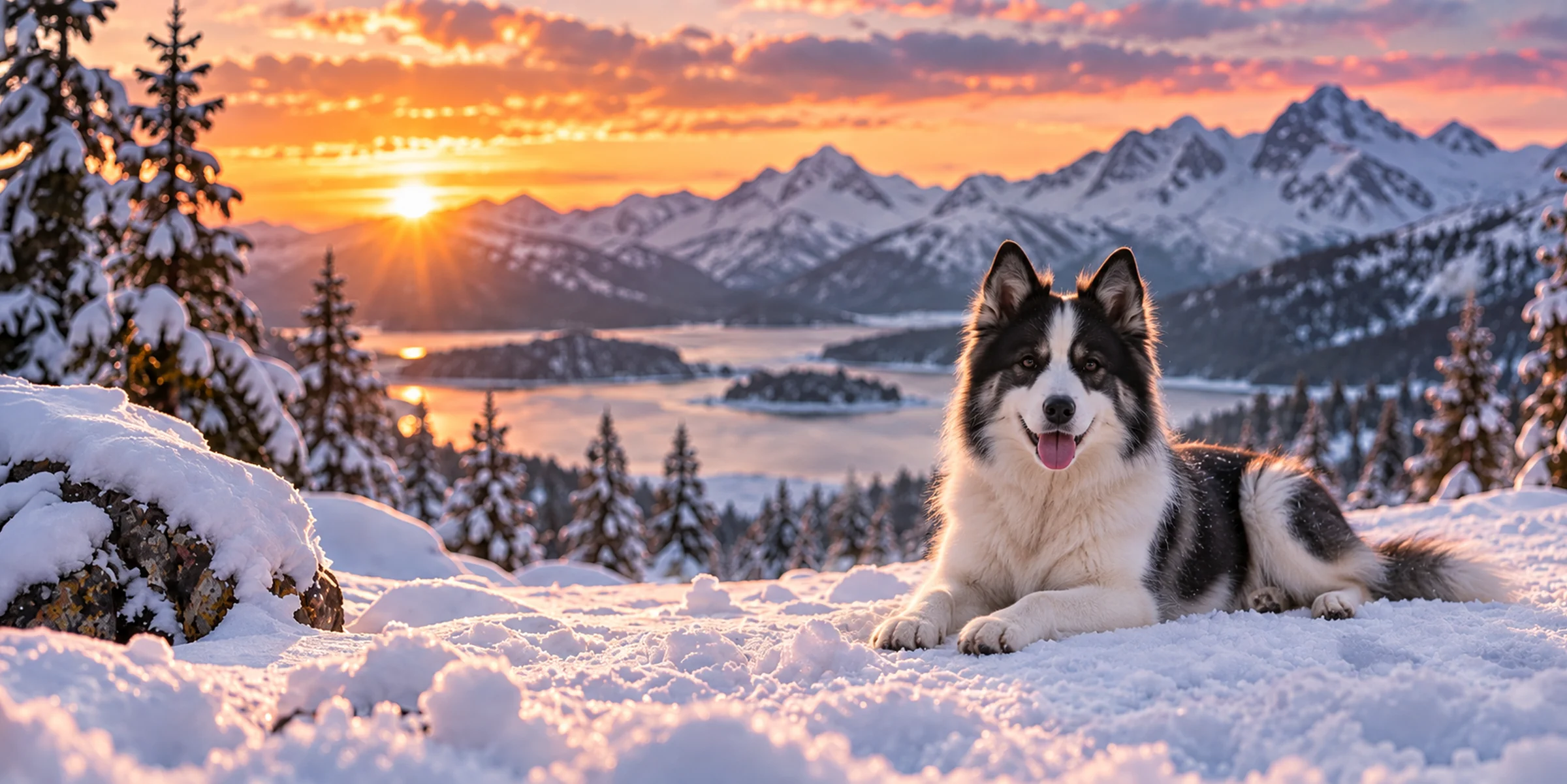
Nenets Laika
The other Russian reindeer-country breed on the site, and a different job entirely. The Nenets Laika is a smaller, lighter-coated herding dog from the Arctic northwest, built to move reindeer; the Yakutian Laika is a sled and hunting dog from the Sakha east - bigger, far heavier in coat, with real pulling instinct and considerably more prey drive. Both are rare and both handle heat badly.
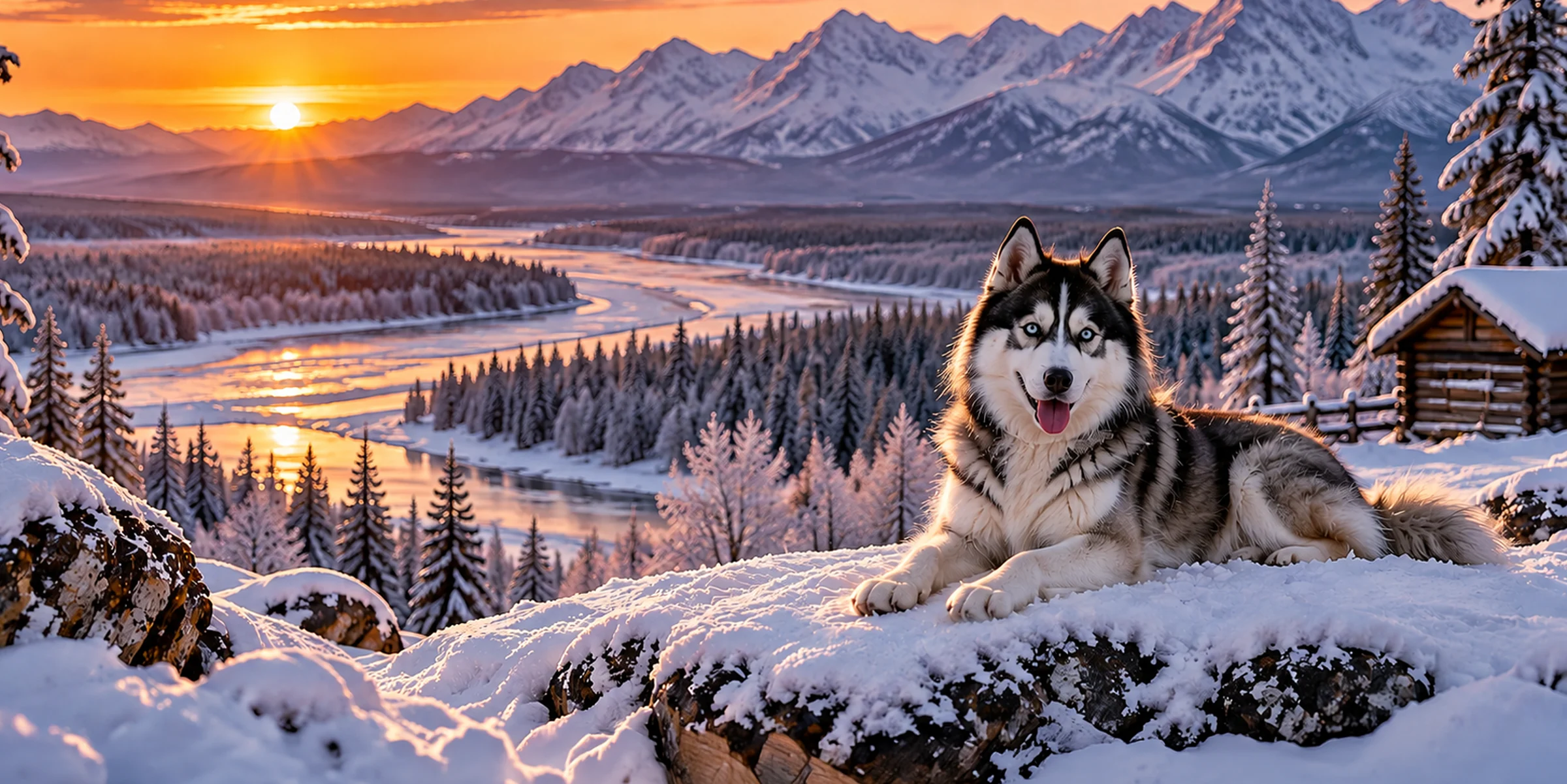
Siberian Husky
The closest familiar comparison - another Siberian sled dog of much the same size and coat, and openly friendly with people in the same way. The Husky is enormously easier to find and harder to live with: independent to the point of ignoring recall, a practiced escape artist and often difficult with small pets and other dogs. Yakutian Laikas pull just as willingly but take direction more readily and are genuinely sociable with other dogs.
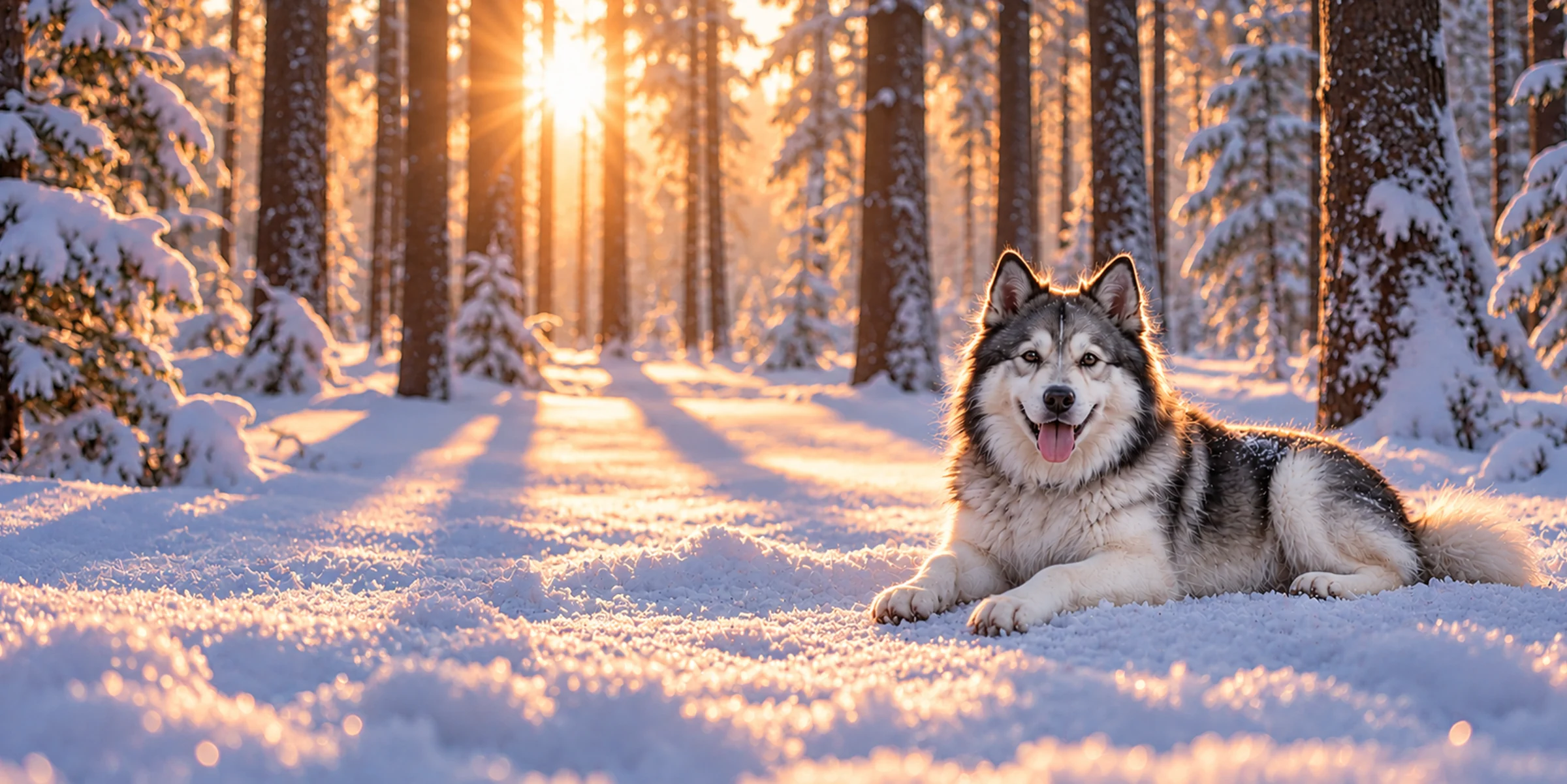
Canadian Eskimo Dog
Another aboriginal Arctic sled dog pulled back from near-extinction, and a much harder proposition. The qimmiq is considerably bigger, rougher with other dogs and not a companion breed in any ordinary sense; the Yakutian Laika is medium-sized, gentle with children and lives in the house.
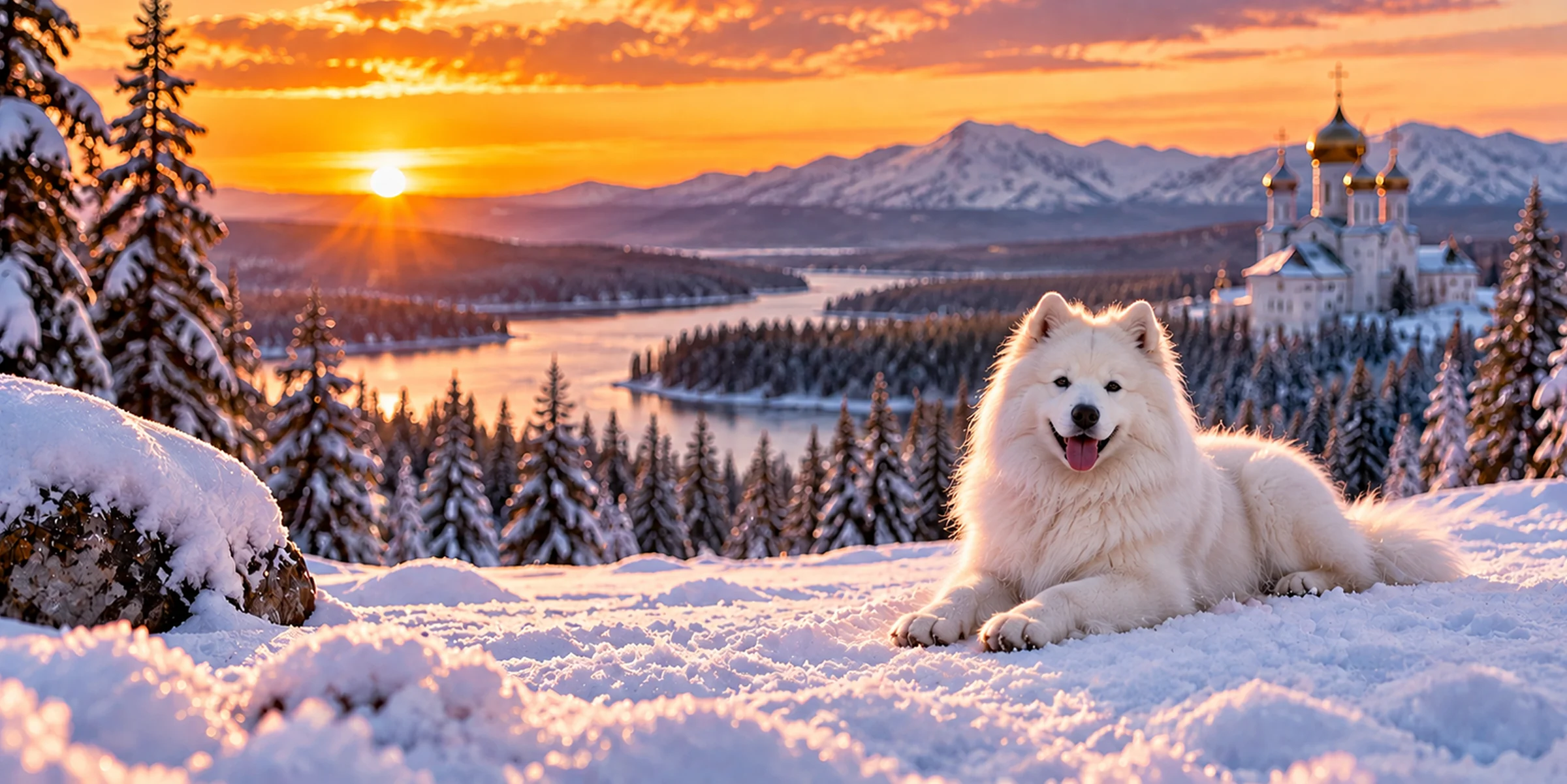
Samoyed
Another Siberian breed kept by a reindeer people, and similarly friendly with everyone. The Samoyed has been a show and companion breed for over a century, carries a much heavier grooming bill and talks a great deal more; the Yakutian Laika comes in any color, is still bred to work, and takes far more finding.